
The Sultan Qaboos bin Said Al Said ruled Oman from June 1970 having ousted his father, Said bin Taimur. His father was a figure whose rule had kept what was then Muscat and Oman as an isolated and distinctly un-modernised fiefdom that saw high illiteracy rates and endemic malnutrition. It was a state divided by sectarian, linguistic and cultural differences.
Fuelled by profits from modest oil reserves, and after a brutal civil war in the mountainous southern Dhofar region which ended in 1976, Qaboos began to modernise Oman, and in many ways transformed the country. Qaboos established infrastructure such as hospitals and schools, and acted as peace broker across the Middle East as well as a conduit for the West in the region. Literacy rates are now 90% and life expectancy is in the mid-70s.
Yet, Qaboos, an absolute monarch, never divested power. The late 2010s in Oman saw freedom of expression on the internet being curtailed and mass joblessness, but still Qaboos remained popular and there was an anxiety in Oman about what would happen when he died. An anxiety compounded by the fact he did not produce an heir and catalysed by his fight with cancer in 2014.
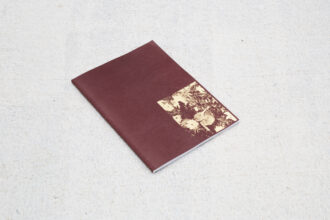
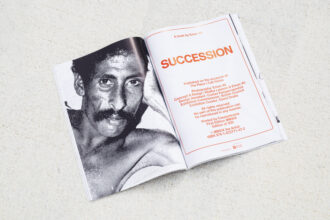
The anxiety surrounding Oman’s uncertain political future is explored in Omani-Bahraini artist and photographer Eman Ali’s photo book Succession, which was published in late 2019. The book was prompted by rumours of Qaboos being in poor health once again. Rumours that proved to be true, as Qaboos died in January this year.
Succession is comprised of images Ali sourced from Oman, a quarterly publication issued by the Oman Embassy from 1973 into the 1980s with the intention of presenting an image of the new modern Oman to diplomatic circles and the world, which were collected by Ali’s father whilst he was First Secretary in the Oman Embassy.
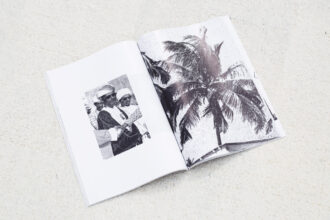
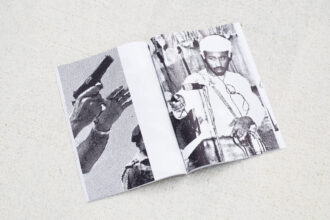
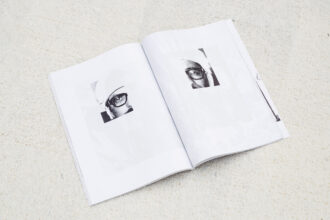
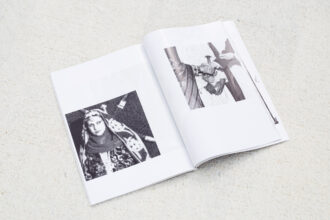
Ali has taken the original images, photographed and digitally altered them. Mostly from the first decade of Qaboos’s rule, the black and white images have been blown up and cropped to the point where all that remains is abstracted dot works, grainy portraits and strange symmetries that move away from the official narrative of Oman that they originally told into a much more fleeting and ambiguous collage of the country. Consequently, Ali can be seen alongside a body of artists across the Middle East for whom working with archives and interrogating the top down portrayal of national stories has become a dominant aesthetic strategy – an approach that can be seen as far back as the late 1990s with artists such as Walid Raad and The Atlas Group but has persisted since.
Void of captions and text the images and their composition are left for the reader to interpret. On one spread the curve of a road falls into the spine of the book to come out on the other page as a man leaning over the edge of a boat sailing. Images of jets, explosions, guns, and soldiers run through the book, but so do the images of bureaucratic procedure and – what could be – peace making: telephones, men sitting at desks signing letters, the passing of documents, and handshakes over and over again.
There is a filmic quality to how images flow through Succession. They return like motifs, and Ali will repeat the same image on one spread enlarging it each time as if zooming in. Images of Oman’s history and political players and the rhythms Ali creates are practically the only keys to decrypting the events and the signs within Succession’s pages, and even then this will come to an inevitable block for those who cannot identify the figures or events.
Reading Succession after Qaboos’s passing is a strange experience, as at least the most pressing concern about what would happen in the immediate aftermath of his death has been answered. The prospect of turmoil was quickly expelled by the appointment of Haitham bin Tariq, who was previously Oman’s former cultural minster as well as being Qaboos’ cousin, the day after Qaboos died. The empty chair that fills the final page of Succession has been filled.
Succession remains a challenge as much as the process behind it was a reckoning. The process of sifting and sorting the imagery into a sequence and composition can be read as Ali taking the official discourse presented in the newsletter Oman and treating it as an historical a priori in the Foucauldian sense, where the archival is “a condition of reality for statements” but not “a condition of validity for judgements”. Conclusions aren’t drawn here, but givens are blown open. This, exaggerated when the reader lacks the knowledge to make sense of some of the images in Succession, presents an almost new, tertiary “condition” – an interpretive anxiety, giving an impression, at least, of what it must be like to watch your country step away from what it has known.
__________
Succession was created by Eman Ali and self published in December 2019
Reviewed for Photomonitor by Stan Portus