__________
“I always think it’s nice to add ambiguity” – Brian Eno (1)
__________
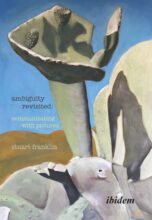
Why would Eno (or any other artist) think so? Magnum photographer Stuart Franklin’s ambitious and multi-faceted new textbook looks at this topic, exploring “ambiguity’s positive contribution to art, with much considerable space dedicated to photography”.
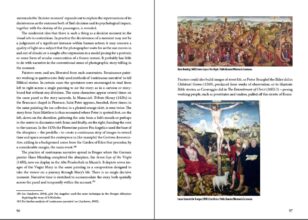
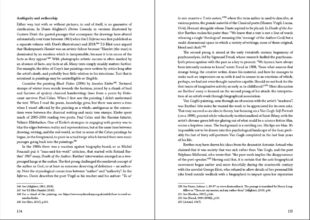
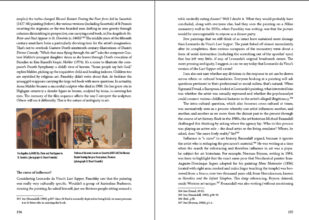
Ambiguity Revisited considers art from prehistoric cave stencils to 21st-century film stills, but focuses on photography and painting. Each of its twelve chapters deals with a different aspect of ambiguity, and gives ample room to the thoughts of other writers. Franklin’s tone is almost perfectly pitched between the academic and the accessible, and his writing is readable and pleasurable while retaining a fully-referenced rigour. The book is well illustrated, thus avoiding a frequent failing of textbooks about art in general and photography in particular. And while images by Magnum photographers crop up a fair bit as you might expect (such as Gueorgui Pinkhassov, Harry Gruyaert, Elliott Erwitt and Franklin himself), that’s not necessarily a bad thing and is by no means overdone.
The idea of the viewer completing the meaning of an artwork – as suggested by several mid-20th-century writers (such as Ernst Gombrich, Umberto Eco and Roland Barthes), and which for many has become a foundational aspect of postmodern art – is central to Franklin’s thesis, as is Umberto Eco’s notion that “ambiguity is intrinsic to the pleasure we derive from works of art and literature.” Refreshingly though, Franklin isn’t entirely uncritical of such sacred cows, and even takes a pop at one or two of their ideas. For example, he says of Barthes: “Despite its evident flaws, the idea of the punctum may have endured less because it is a coherent theory, more because of the heuristic nature of its offering – the prompting of us to look, at least, and to consider how pictures do attract us.”
An accomplished and at times formidable writer, Franklin is well read but seldom sounds showy, and only occasionally overdoes the connections between things (such as the beginning of the chapter ‘Space’, where a blizzard of literary and artistic references and examples obfuscate rather than illustrate). But such lapses are few and quickly redeemed (so in ‘Space’, Franklin soon recovers by shedding interesting light on the painter Giorgio de Chirico’s “ambiguity of temporal inspiration”, its influence on photographer Lee Miller, and her influence in turn on René Magritte). Only rarely does he go off beam (such as in the ‘Motion’ chapter, where his observations on Bragaglia, Muybridge, Richter and Bacon are thoroughly worthwhile but only tenuously relevant to ambiguity).
There are humdingers of pictures about which Franklin says unambiguously incisive things. For example, in photographer Diana Markosian’s darkly mysterious portrait of her erstwhile estranged father “almost everything in the photograph resides in blackness, the buried blankness of a forgotten or lost attachment.” He deftly links Chino Otsuka’s double self-portraits (as both a child and an adult) to late medieval and early Renaissance narrative painting (where the same figure appears more than once), and notes that she challenges “the reigning construct of the decisive moment that became a cultural imperative unique to photography.” And he tells us, drily and sharply, that “Leonard Freed used to say that ambiguity was one of the great strengths of photography. Everything else, he insisted, was propaganda.”
But ultimately – and perhaps appropriately – Franklin gives the distinct impression that the function and appeal of ambiguity in art is, well, ambiguous. “I have the sense that too much information can spoil the mystery,” says Franklin, illustrating that he never wants to know any more about the image he’s looking at. Except, that is, when he does: “I am curious to know why three girls are standing outside a house in Nottingham hoovering the lawn in Nick Waplington’s Living Room”.
If Ambiguity Revisited has a central point, maybe it’s that “art and photography that is ambiguous encourages us to engage with our own memories or experiences: to participate.” But a central point isn’t really the point at all. Because rather than the destination of a crystal-clear conclusion, it’s more the ambiguous mystery tour that Franklin takes us on which is well worth the ride.
__________
(1) In an interview with Miranda Sawyer, Sound and Vision, BBC 6 Music, first broadcast 25th October 2020
Ambiguity Revisited : Communicating with Pictures by Stuart Franklin was published by Ibidem Verlag.
With thanks to Simon Bowcock for this review