
In this multi-faceted, multi-disciplinary exploration of her childhood within the community of women labourers at the Kreenholm textile mill in Narva, Estonia – ranging from its post-Soviet independence, to its redundancy process and its eventual closure – Maria Kapajeva describes how “many saw the disintegration of the Soviet Union as a collapse of a great utopia”. Her focus here on mostly omitted experiences and social histories of women in transitional limbo, moving on from bygone livelihoods to seek-out new cultural identities, within a contemporary context, resonates widely. “My work is a journey attempting to understand myself and people like me, often women whose lives operate outside the mainstream.”
A visual compendium of her 2020 exhibition of the same name, the title is repurposed lyrics inside the song, ‘March of Enthusiasts”, from the Soviet film, The Bright Way (1940); where a female weaver underwent a ‘Cinderella’ story from peasant to ‘Stakhanovite’ (a heroic worker). The line was later censored, the word ‘unclear’ believed to increase doubt towards the Soviet Union. Moreover, the concept of ‘a wonderful dream’ appears throughout, ambiguously codifying and deconstructing the ‘idealism’ of past communist propaganda. Accompanying text printed in three languages – Estonian, Russian and English – further conveys Kapajeva’s own dual heritage as an Estonian-born Soviet, but her later adopted home of the UK, where she acquired her photography degrees.
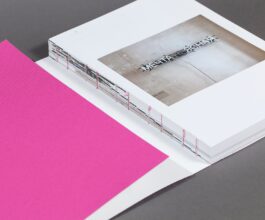
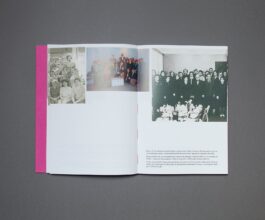
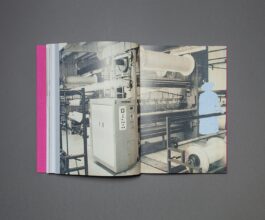
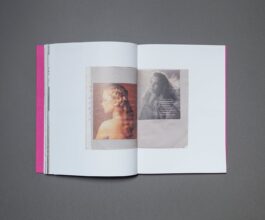
Being a multimedia artist, Kapajeva utilises various archived interviews and photographic elements; locally-sourced, worker-owned photographs – informal, professional, individuals and groups (the most common) – besides collages of found detritus from the mill’s vicinity, to her own ‘staged’ portraits and installations. The book’s design, by Dutch graphic designer Jaan Evart, further adapts this collected material within an unconventional approach: a fine-art, conceptualist mindset, rather than a factual, documentarian photobook with traditionally laid out images, or Kapajeva’s carefully curated exhibition space. The radical compositions allows the reader to experience all of these elements at once, in tandem from page-to-page, playing with negative space and layouts to the point of abstraction. Like an intangible scrapbook, allowing the reader their own interpretations of the subject matter, freely and unconstrained. Kapajeva leaves everything open-ended.
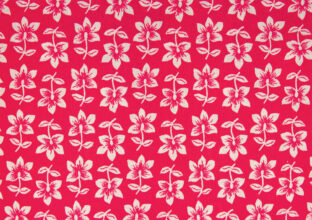
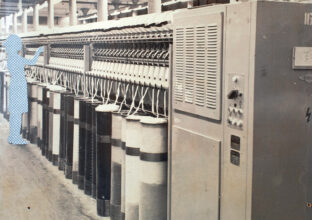
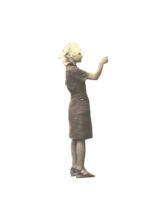
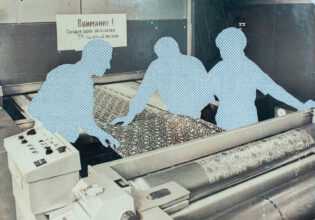
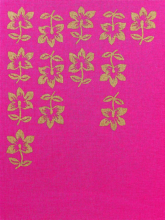
Cut-outs of the workers as depicted on found posters become abstract silhouettes or lone pieces on varying pages, like fragmented memories or puzzle pieces, alongside the collected group photographs. The concise assemblage and abundance of said group shots evoke shifting narratives, channelling remembrance and nostalgia through symbolic femininity. This influence extends to its intricately bound cover – the bold, screenprinted, floral-patterned fabric – replicating a design by Kapajeva’s mother, Natalja, the mill’s former head designer, who tragically, was one of the first to be made redundant. The mill itself played a fundamental role in Narva, an extended visual metaphor, a hub of powerful looms thriving with spirited clusters of women workers; all persistent as distanced spectres.
Kapajeva interweaves examples of her mother’s craft, her own unfulfilled childhood dreams, their combined failed ambitions and those of the other workers, underscoring separations between individual and shared memories that still form these collective historical narratives. Incorporating this broad range of assorted voices and approaches signals that said histories will never be absolute, but interwoven by numerous, often contradictory, forces. Perpetuating, rather than be forgotten, highlighting the ongoing dynamic of current individual identity, that is ductile and conjointly formed.
The co-winner of the 2021 Kraszna-Krausz Photobook Award, Dream is Wonderful, Yet Unclear showcases a pertinent story, beautifully told through meticulously curated ephemera with a feminist perspective, resonating with contemporary cultural relevance. Blurring the lines between personal relationships and communal memories, this retrospective analysis is deeply unified, yet equivocal in exploring tangled networks of generational cultural heritage.
__________
Dream is Wonderful, Yet Unclear by Maria Kapajeva was published by Milda Books.
Reviewed for Photomonitor by Paul Boyling.