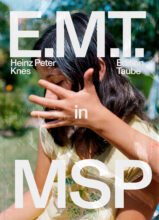
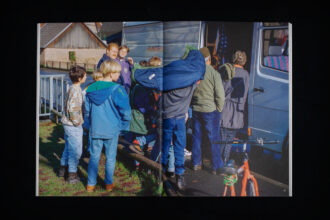
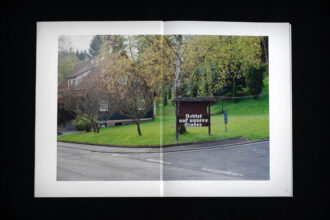
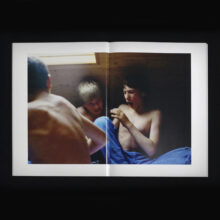
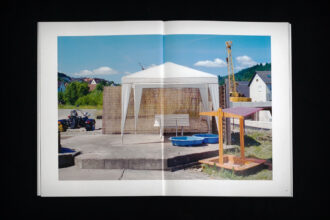
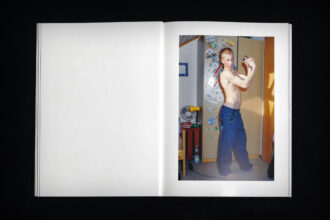
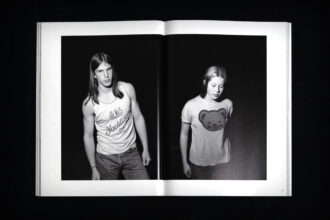
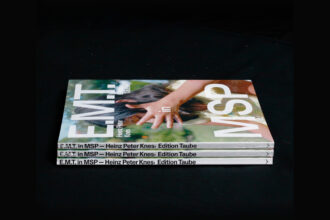
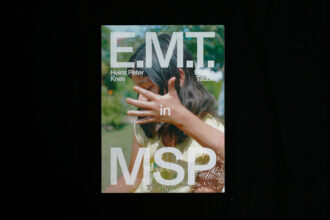
The book E.M.T. in MSP, recently published by German-Swiss Edition Taube, extends a project first exhibited at Gallery Crone in Berlin in 2007 and begins with photographs that set the scene in a filmic way. Entrance to the Town, 1995 and Village are the first photographs encountered, closely followed by Eva, Turquoise Swimsuit, Yellow Bracelet, 1996. In the image of Eva, a young girl is poised on the edge a metal girder above water, her sandals placed to one side and her bare feet a slight blur. Here is the literal jumping off point into this absorbing, intimate and at times problematic set of places and people shot by German photographer Heinz Peter Knes. The next photograph, The first sewage plant – opened in 1987 pans out from Eva’s finely balanced teetering, giving clear indication that this is no idyll but a much more complex concern.
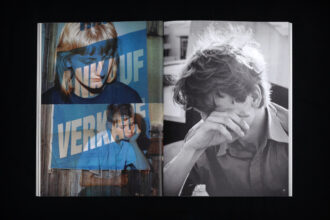
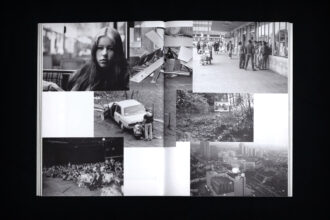
The odd title E.M.T. in MSP pinpoints, albeit in coded form, the most significant parts of the project. E.M.T. are Eva, Mirjam and Thomas, three of Knes’ siblings, while MSP refers to Main-Spessart in Lower Franconia, Bavaria. The landscapes and interiors depicted bear almost as much weight as the portraits here; they are tethered to each other. In the photographs that unfold we find multiple narratives: from childhood play to adolescent experimentation and bare-chested self-expression; piles of sawn tree trunks ready for milling; swim meets, social gatherings, make-shift hideaways, overturned chairs, abandoned cars and domestic environments. Many of these photographs are populated by Eva, Mirjam and Thomas,the artist’s family who appear like characters weaving in and out of the landscapes, and who age over time. That Knes was himself very young when he shot these photographs (the earliest published is from 1989, with the majority from 1995-2002) is significant. His intimacy with the subjects is afforded by trust, friendship and blood bonds but the occasional nudity, in his teenage sister Mirjam’s case particularly, is a challenging proposition that resists easy answer.
In the long multi-layered essay that accompanies this body of work, curator Bartholomew Ryan outlines the influences that exerted themselves upon Knes’ work, some of which continue to shape the reception of it. Friction between the worlds of fashion and art photography, particularly early shots of Kate Moss by Corinne Day and Nan Goldin’s The Ballad of Sexual Dependency (1979-1986); the lingering effects of right-wing nationalism and the reunification of Germany in 1990; the politics of the family album and the impact of contemporary social media, especially upon young people, all collide smoothly and sensually in the turning of this book’s pages.
Meadow, Negative Bar, 2001 is the last of Knes’ photographs presented in the book. While it is on the one hand tranquil, returning us to the rural context of place, like the closing shot of this fictional film, its thick black bar is a redaction on the landscape. It troubles the image, as if to remind us that this is a fragment, an edit, a personal and socio-political perspective that is as concealing as it is revealing.
__________
E.M.T. in MSP by Heinz Peter Knes was published by Edition Taube in 2021
Reviewed for Photomonitor by Anneka French
Images above © 2021 Heinz Peter Knes & Edition Taube