__________
The central place that publishing holds for photography has drawn out a series of specific responses in the present moment: for many, the photobook is now both a singular destination and a vehicle, a prestigious showcase but also a career catalyst, an edifice and a marker. Where it once might have been assumed that books marked the end of projects and acted as finalities, now the photobook is quickly adopted as a means to generate an audience. The photobook holds not only a dominant position as a primary outcome, celebrated for its distribution, but is positioned within the photographic ecosystem as a catalyst for careers and material for exhibitions. The book leads to the show rather than vice versa. A flood in the number of bookmaking and editing workshops, a central place for bookmaking in photographic education, and an expansion in the discourses and historiographies of photobook practices, all seem to reinforce the centrality of publishing. This seems to celebrate the book form a little more than it accounts for publishing’s wider possibilities of photography’s many capabilities.
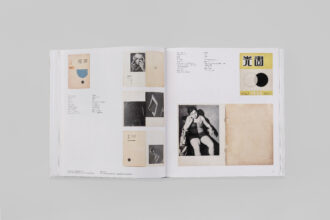
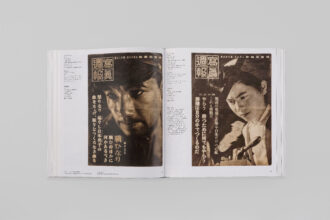
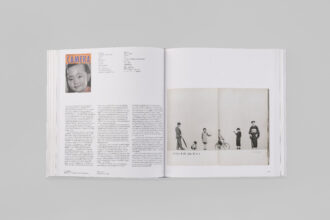
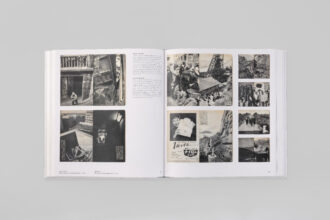
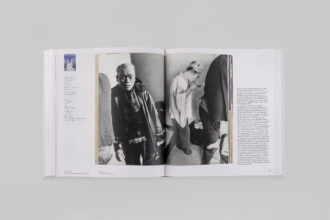
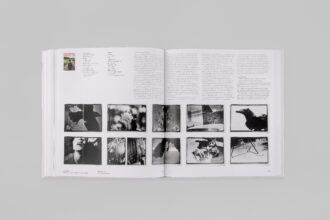
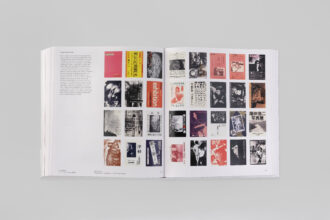
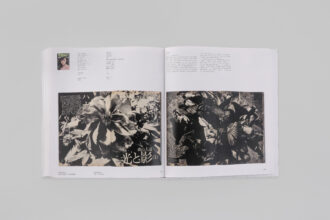
Japanese Photography Magazines contributes a much-needed reminder of both photography and publishing’s conditions as media and mediator, communicator and forum. In its presentation of Japanese magazine culture and photography’s evolution in Japan through its pages, it provides an alternative point of entry to consider the interlinked logics of cost, scale and circulation, communities, discourse and debate. Ivan Vartanian explains in the book’s introduction how Japanese photography built its central audience through magazines, fostering a public’s passion for the medium at the same time as facilitating distinctive, cutting-edge practice, side by side with advertising. As he observes, the magazine had no small role in the global significance of Japanese camera manufacturers, even as it was facilitating the rapid transmission of urgent ideas and debates from home and abroad (see for example, the very first photography magazine in Japan, Datsuei Yawa, or Tales of Photography in 1874, the cutting edge, European-influenced Kōga and the multilingual Nippon of the 1930s). The site of a consequential and thus-often contested discourse, with the articulation of different possibilities. In Japan, photography magazines nurtured debates at the same time as they promoted the industry of photographic production, its cameras, films and papers. Where else could the ecosystems of photography be quite as clearly drawn together without diminishing one or the other?
Japanese Photography Magazines performs an exhaustive and significant task of giving not only a thorough historical narration to a key cultural object, the photography magazine and its significance in Japanese photography’s influence today, but also gives a detailed recognition to the role of editors, designers, and a host of key collaborators – often other photographers – in publishing’s collective endeavours. A meticulously detailed and considered object, in addition to its primary function as a clear and informative history, Japanese Photography Magazines is a powerful parallel history to complement and, by necessity, extend the discourse beyond what can sometimes be a highly conventional and individualistic photobook discourse.
__________
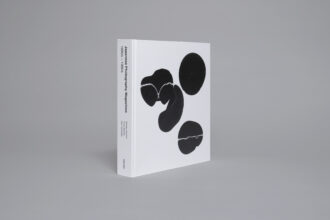
Japanese Photography Magazines 1880s – 1980s, edited by Kaneko Ryūichi, Toda Masako, Ivan Vartanian, was published by Goliga (2023)
Reviewed by:
Duncan Wooldridge is an artist, writer, and Reader in Photography at the School of Digital Arts, Manchester School of Art, MMU. He is the author of To Be Determined (SPBH Editions), and an editor with Lucy Soutter of the forthcoming Routledge Companion to Global Photographies (Routledge, Sep 2024).