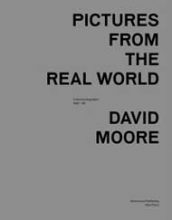
The more things change the more they stay the same – David Moore shot the images in Pictures from the Real World on a council estate in Derby in 1987-88, when Thatcher was in power and the post-war consensus on the Welfare State was giving way to harder attitudes towards the “undeserving poor”. Now the project has been published as a slim hardback book, while Thatcher is back in the headlines and a horrific murder case on a Derby estate is being used to question the role of welfare payments. Moore says he doesn’t believe photography can elicit social change and on the evidence, he could be right.
Even so, his project retains a palpable power. Shot while he was studying at the West Surrey College of Art and Design in Farnham (under Paul Graham and Martin Parr and alongside Anna Fox and Paul Seawright), the 18 images collected here show the everyday experience of poverty, a world in which children wear coats indoors, sofas have taped-up rips and bedrooms have bare floorboards. From a lower middle class background Moore felt uncomfortable with the “ethical dimension” of the project and didn’t push it at the time (although it was published in Creative Camera on Parr’s recommendation); now he feels time has taken the sting out of the ethical quandary but has still re-edited the work, replacing an unflattering picture of a woman watching TV with a kinder alternative, for example. Moore might not believe images can advocate but he knows this project is provocative nonetheless.
In fact Moore has kept the original title because he likes its sense of provocation, its assertion of the reality of the world he depicts over the young upwardly mobile aspirations being promoted at the time. David Chandler, in the essay published in the book, traces a similar ethos in Moore’s use of colour, linking his images to Graham and Parr’s and arguing that only colour photography could take on the brash world of competitive individualism and material consumption then prevalent in glossy ads (and other media). “The poetic gradations of black and white simply couldn’t deal with the fine details of this new social reality and the implicit ironies it offered up” he writes, and Moore’s images bear him out. In Pictures from the Real World colour only serves to heighten the dirt, the grease stains, and the sheer visual overload of large families crammed into inadequate homes. In other images the clash between aspiration and reality is laid bare – the cheerful world depicted in Care Bears wallpaper contrasting sharply with an orange smear and a retro wrestling poster, for example.
Moore says he wasn’t aware of any new tradition of British colour documentary at the time, but he was inspired by Graham and Parr and now recognises how his work sits with theirs and later series by Richard Billingham and Nick Waplington. Even so, his project remains an insight into a way of life rather than a dry aesthetic experiment and as such the “ethical dimension” remains, as it does with all the photographers he’s grouped with. A picture of three huge birthday cards suggests his curiosity about working class taste and style, for example, which in turn raises questions about his role. Is he a tourist in a world exotically different to his own? And is he holding up his subjects for sympathy or condemnation?
Moore says neither, he just recorded what was there and perhaps that’s for the best, because while the images certainly capture poverty, they remain silent on the key political question, then and now – whether the poor are deserving or not. It means his book avoids easy answers and patronising political posturing, leaving us with a time capsule that’s nonetheless still disturbingly relevant today.
I’m glad it’s finally become a book; I hope it inspires other young photographers to take on similar projects today.