In an opinion piece published in a popular newspaper, a columnist wrote that there is no point making work relating to experiences that are happening right now. This was not limited to works of art or photography projects – he included films, novels and everything in between. A comparison was made between documentary pieces about the ongoing war in Ukraine and lockdown projects with the argument that people have had enough of creative works taking their inspiration from the pandemic. The difference is, of course, that Covid-19 did not leave a single person untouched, whether that was through a personal brush or battle with the disease, a vicarious experience through a close friend or family member, or simply by the draconian restrictions imposed by the government and financial hardship that ensued. Everyone felt the pandemic in one way or another straight from the start, which is not the case with the current war in Europe. We read about it and see it on the news on a daily basis but unless we are directly involved or know someone who is, it is much more difficult to imagine what people in a country plagued by conflict are experiencing daily. It is not uncommon to live in a cocoon as it’s hard to imagine that there exists a world outside of our own. This is where photographers like Robin Graubard come in, to serve the purpose of visually informing us of what people are enduring while we are carrying on with our lives, at least for the time being.
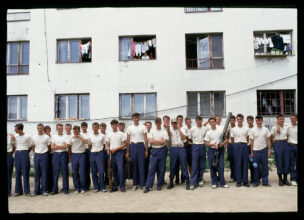
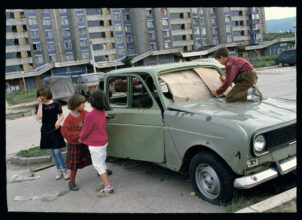
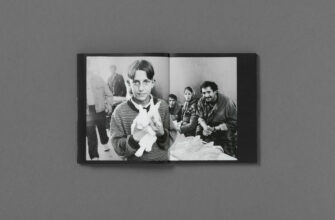
Graubard, a film school graduate, was born and raised in New York City in the 1950s. Her newly published book Road to Nowhere (Loose Joints, 2022) depicts Eastern Europe during the early 1990s in times of turmoil – the Bosnian genocide, the uprising in Kosovo and the Yugoslav War. There is a lot that has been said and written about the so-called “alien” photographers – normally white males who would fly off to a country in turmoil far away, and spend a few days photographing grief through the lens of their Western perspective. As true as this may be, one could also make the point that they bring a different point of view, a pair of fresh eyes, so to speak. Graubard is far from this because according to the text which accompanies the book she lived in Prague at the time with her friend Bruce – “young Americans looking for adventure and seeking to understand the former Soviet Bloc”, comparing their experiences to the Indiana Jones films. She offers her viewers a very nuanced version of these terrible times; of course hardship was real and very much felt, I personally lived through it in Bulgaria at that time and remember my parents having to queue for simple “luxuries” like bananas and milk for hours only to be told that they had to come back the following day with no guarantee that they will manage to get their hands on it. Nevertheless, people are resilient creatures and they would, in some cases, do their best to carry on with their lives as much as possible – an angle which doesn’t often make it to the news.
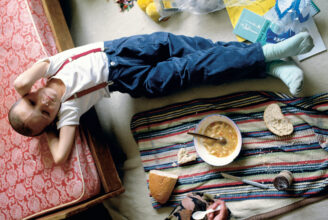
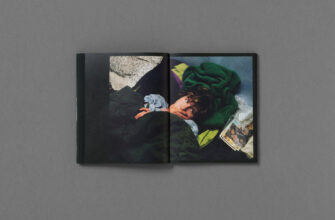
We see a boy sleeping on the stone-hard radiator but also people dancing even though they are far from care-free, having fun and even smiling. There are timeless pictures of raves that could have been taken yesterday, juxtaposed with shelled buildings and blood-covered faces. The contrast is uncanny and it makes one’s heart bleed. A boy in blue corduroy trousers, red suspenders and a white shirt is casually lying, legs on the floor, head and shoulders on the bed, hands behind his head. There’s a bowl of food and bread on the floor; the presence of another person, perhaps a mother or grandmother who had prepared the food, is gently hinted at by the sight of a hand holding a spoon in the lower right corner. A typical domestic scene, or at least it seems so at first sight until we noticed the scar on the boy’s face and the fact that only one of his eyes is open. Was he caught in the eye of the storm? It takes a good few seconds, perhaps minutes to notice details like this. Why is the mattress bare with no sheets or duvet? These are the subtle giveaways in the photographs which require the viewer’s attention and give clues that what we see are not normal times. The short written piece compliments the photographs by drawing mental images perfectly – the streets were anarchy, “shiny new Mercedes jostled with horse-drawn carts and crumbling buses”.
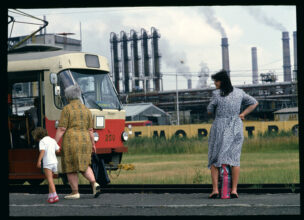
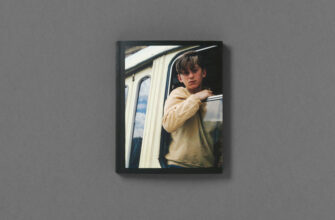
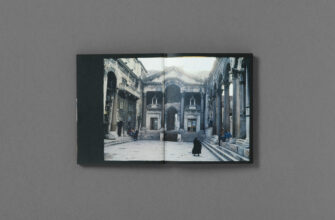
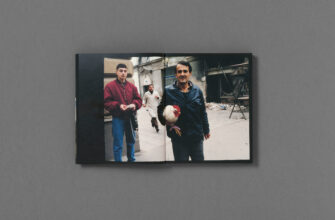
The book itself is fairly small, almost pocket-size, with a soft cover and black painted edges which are ominously representative of the horrors of its contents. On the cover we see a picture of a boy on a train, embarking on a journey, folded in half, the rest of it concealed inside like a secret tucked into a pocket. An interesting element of the book is the way the middle of the spine visually splits photographs in half, often separating people as is the case with the grandma and a grandchild boarding a tram on the left-hand side, and on the right either a stranger, but possibly the mother – some people leave, others stay behind.
Photographers have been at the forefront of war since the invention of the medium. Some images have achieved major changes, like the image of 9-year-old Kim Phuc running naked and crying, which some argue helped to end the war in Vietnam. Robert Capa’s falling soldier and Alfred Eisenstaedt’s Time Square kiss on Victory against Japan Day are some of the most iconic war photographs, yet it is rare to see what we encounter in Road to Nowhere for several reasons. First and foremost, many of the images are in colour, giving them almost a cinematic quality and affording us a closer, more intimate and accurate glimpse of what it felt like to be there and then. Second, the fact that the book is released almost 30 years later serves as a reminder that we should not only remember the past but be mindful that history often works in cycles and it repeats itself with slight variations. When this occurs it is not the lives of the politicians and military generals who made the decisions that get affected; it is ordinary citizens who suffer most.
__________
Road to Nowhere by Robin Graubard was published by Loose Joints and reviewed for Photomonitor by Zak R. Dimitrov.