






“I only photographed on Saturday afternoons, a time when people are out to meet friends, shop, hang out, to look and be looked at … there is still a freedom associated with Saturday. Saturday sparks with potential.”
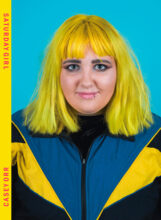
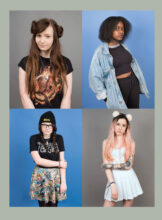
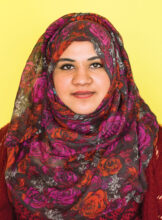
Casey Orr’s introduction to her new publication aptly sets the scene. This is a collection of celebratory, optimistic portraits of young women (within all the breadth that this term encompasses) whom Orr met on the streets of 15 UK cities and subsequently photographed in pop-up studios. It features a selection of the best from some 600 portraits taken between 2013 and 2019, before few of us had heard of coronavirus, and the freedom of a Saturday, for many, was a given.
The book is arranged in sections by city, with the majority of the photographs being full page bleeds of one sitter. This layout affords each photograph ample time, respect and consideration. Individual freckles, hairs, pores, piercings are all visible. Some of Orr’s subjects are confident and bold. Two friends in Birmingham, arms around each other, wearing cropped white tops and black jeans, are natural behind the lens and gaze out clear-eyed. Others appear much less comfortable. In one photograph made in Manchester, for instance, the sitter, dressed in Victorian Steampunk clothing, with short blonde hair pinned away from her face, carries a tension in her jaw. Her lips are pressed together and in her clenched fists, the very pink tip of one finger stands out against the rest of her fair skin.
Other images include small family groups. I am struck by one of a Liverpool mother and child. It foregrounds questions of representation, not only for current but for future generations too. Who are these women? What are their hopes, dreams, challenges? How will their portrait and being part of Orr’s project affect them in the longer term; how will they reflect on themselves retrospectively? Another portrait made in Manchester that includes the subject wearing a necklace adorned with a miniature camera may provide one answer to the latter.
One of the strongest elements of the book are the repeated portraits of twin sisters Immy and Ione Lamb, who appear four times in these pages, in different years from the ages of fifteen to twenty-three. These four photographs exemplify the relationship Orr has with her sitters, lending weight to her argument that the images are made in collaboration with them, that each person is documented how they want to be seen and documented. This particular set of photographs additionally evokes a sense of time’s passing; from the poignant loss of childhood to the inevitability of transformation.
Writer and critic Charlotte Jansen provides the book’s accompanying essay. She notes that “The camera and coming-of-age have always had a connection”. The social media selfie, the school photograph and the family album are some of the examples that spring to mind but being the subject of a formal portrait such as these is unusual and significant. Jansen continues: “These moments mean something for these girls and you can feel it”.
__________
Saturday Girl by Casey Orr was published by Bluecoat Press and reviewed for Photomonitor by Anneka French