

Reviewed by Zak R. Dimitrov
Britishness, its definition, the values it embodies and the question of its very existence – these have been hotly debated and polarising issues in the UK for decades, especially so in the five years since the EU referendum in 2016. Jamie Hawkesworth’s latest book, The British Isles, published by MACK, is an ambitious project. It is a retrospect of sorts, including images made during the span of 13 years. Beginning in 2007 it has covered the global financial crash and its repercussions, the election of the coalition and subsequent Conservative governments, the London Olympic games, the introduction of the ideologically flawed austerity policies and their dire consequences, the EU referendum and numerous other political and non-political events that have had a major impact on the lives of the population.
Readers may be pleasantly surprised, however, that Hawkesworth has deliberately steered clear of any political or dividing points, aided by the lack of language in his book. Many will welcome the ability to hit the pause button on the constant stream of political statements which, whether we like it or not, have engulfed a major part of our daily lives. People tend to forget that most countries are not as divided as they are purported to be in the media, because being a good neighbour or still talking to your friend who shares vastly different political views from your own simply would not make eye-catching headlines.
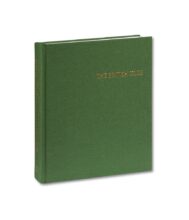
Hawkesworth’s book is a luscious green linen hardback with gold embossed lettering evoking fields and meadows basking in a golden sunset. It is a hefty tome, certainly a good value for your money – £50 for hundreds of photographs, marbled end papers and exquisite paper and print quality. It is certainly not one of those books which the viewer can grab with them on a train or a plane journey, unless of course they have a substantial luggage allowance, and flick through it one-handed. It demands one’s time, physical dedication and undivided attention.
The photographer together with his publisher (MACK) have jointly decided not to include any text in the publication and this could be seen as a double-edged sword. On the one hand, it is very open-ended and far from didactic – it does not impose the author’s vision on the viewer and it leaves them to draw their own conclusions and associations based on individual and unique experiences. On the other hand, however, one might feel stranded and unguided in a pool of hundreds of images, particularly because it is a large volume and it might be quite confusing and disorientating at times if one does not have any background knowledge of what Hawkesworth is attempting to achieve. The lack of text is neither a positive nor a drawback, it varies depending on whom you ask and at times it shifts from the beginning of the book to its end. When I first opened it I found the lack of text refreshing and liberating, yet towards the end it left me thirsty for words, even a caption or two would have helped. Be that as it may, some would argue that the definition of a good or even a great photo book is one that leaves you longing for more instead of boring you to death before the end; The British Isles absolutely achieves this.
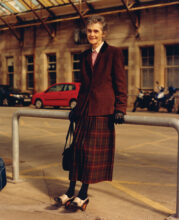
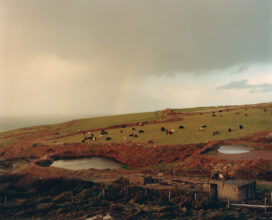
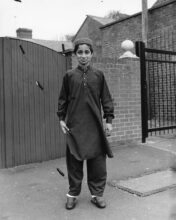
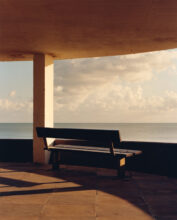
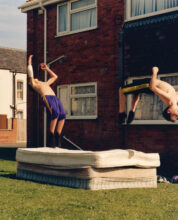
It is a poignant representation of the fabric of British society. It depicts landscapes and portraits, young and not-so-young, in black and white and colour, places, quirks, traditions and identities. One can find “schoolchildren and shop workers, markets and estates, priests and professionals, cities and construction sites,” according to the publisher. It embodies Hawkesworth’s skilful demonstration of one of photography’s fortes, namely its power to give a voice and platform to the marginalised or unremarkable. In the words of the photographer, if you give even ordinary people enough time and attention when photographing or even observing them, something extraordinary will occur. Think of those oddities and singularities your best friend probably has but does not show to everybody – it takes a while to reveal one’s true self. Regarding Britishness, the idea of it, the debate whether it exists or not outside of the political spectrum, and whether The British Isles is a true representation of that or not, whatever that may mean – it is all open to interpretation and a definitive answer would be futile.
__________
The British Isles by Jamie Hawkesworth was published by MACK and reviewed here by Zak R. Dimitrov.