__________
An archeology of the unknown
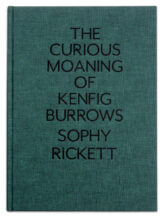
The village of Kenfig Burrows once stood on a vast reserve of sand dunes in Southern Wales. The shore was also home to Thereza Dillwyn Llewelyn, a little-known artist and astronomer working at the end of the 19th century and whose story photographer Sophy Rickett heard about from Jennie Eyres, a trustee at Penllergare Valley Woods. As a matter of fact, growing up in the late 19th century as a woman meant giving space to men, and Rickett soon discovered in the archive of photographs left by Dillwyn Llewelyn that many were by her but credited to her father. That was enough to trigger the artist’s interest.
While randomly browsing the collection, she notices a portrait of Thereza standing on a beach with her elegant Victorian dress and a telescope, looking out to sea. “[…] there are other details that I find even more intriguing; that this young woman, a photographer, a scientist, with her aptitude, her talent, her opportunity and her inquisitiveness, is also a beloved daughter”, she writes, juxtaposing text and photographs in her narrative that she poetically masters. With this anecdote, we get a sense of Rickett’s engagement with her subject, and how Thereza’s condition triggered in the artist questions about the roles women must perform – in society and in photographs.
“Thereza performs different roles in her father’s photographs; daughter, scientist, subject”, she says. On the page across the text stands a pornographic image of a woman, chopped off in the middle to conceal sexual features. The association is both deceiving and intriguing, setting the tone for the entire book. “I was thinking about how photography can be made to fail, and yet to seduce”, she says in an interview with David Campany that closes the book.
Not knowing at first how to approach this material, Rickett let women lead the narrative. Jennie, who implicitly decided the beginning and end of the project; Thereza, whose visual experimentations she appropriates; an anonymous model who offered her arms, hands, legs and torso to pseudo-scientific observations, her mole-filled skin evocative of astronomical constellations. And Rickett’s daughter, who makes an appearance in the book. “Each woman whose presence appears in the book holds the story in a different way”, Rickett notes.
“Archives are sites not of meaning but of potential meaning,” says David Campany. His remark summarizes the work. More than a repurposing or an interpretation of an archive, “The Curious Moaning of Kenfig Burrows” retraces Rickett’s creative process – her exploring an archive with confusion, surveying a place to the point of familiarity, figuring out how to make it make sense, and leaving questions to be resolved by the reader. “I’m interested in contesting the idea that photography can be the key to anything fixed”, she says. The landscapes spread though the book hold this paradigm. Be it a modern building perched above the sea or a stratified cliff where Thereza’s home used to stand, one wonders, “If you capture the land, do you capture the memories it holds?”
“I was more interested in hearing that [Thereza’s house] was ‘under the car park’ than I would have been in hearing that its ruins had survived: Ruins are fetishised in a way that carparks, generally, are not. The absence of an object in that case was way more productive; open and abstract”, Rickett says. Holding on to this thread, she made us wonder what we see and don’t see, what we decide to see or not. Or, as the title suggest, what’s said and not heard, and the other way around. “Thereza described in her diary the ‘curious moaning of Kenfig Burrows’; a whistling sound heard at the top of Margam Mountain, emanating from the beach far below; an eerie phenomenon of the natural world, signifying the advance of an approaching storm”, she hints. And with this, she makes us more alert.
– reviewed for Photomonitor by Laurence Cornet
__________
Sophy Rickett’s work is also on show in “Cupid and The Curious Moaning of Kenfig Burrows” at Glynn Vivian Art Gallery, Alexandra Road, Swansea SA1 5DZ until January 25th, 2020.