__________
Moths often lose their way from the garden behind my house and drift indoors. When I wake up in the morning, I find them clinging to the fold of a curtain or a white wall, motionless, and if I do not put them out carefully, they quietly stay where they are, unmoving, until the last breath leaves their small bodies.
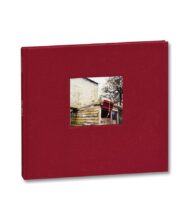
There is only one image of a moth in Jem Southam’s new photobook, which is named after the insect. It rests on a verdant shrub, and while its body is pure satin white, the wings already fray at the edges, its short life almost over. The book is a fictional work. Inspired by the Old English Elegies “The Wanderer” and “The Seafarer”, it imagines a narrator at sea, lonely in the company of seabirds, whose mind flares with memories of his past life.
It took the British photographer thirty five years to make this book, returning once a year or more to the mining districts of the Red River valley north of Penwith, in Cornwall. The region is steeped in marine and mining history, from the gargantuan Dolcoath mine, which reached one thousand meters deep, to the mythology of Celtic saints, who boarded ships in Ireland, vowing to build churches wherever the wind brought them. While Southam explored this damp Cornish place, he was also spending time with his brother, who was losing his own memory, and often searched his mind for scenes from childhood which he knew existed, but now escaped him somehow. The Moth, arranged in a series of loosely connected diptychs, unfolds like a walk through the Red River valley, and explores memory, both collective and individual, and the tension between wilderness and confinement.
The book opens and closes with images of sails vibrating from strong winds and choppy oceans. In between these parentheses, we move through villages, forests and fields, from water streams and abandoned homes to farms with caged dogs waiting for food. A view of a village from a hill comes back again and again, an insistent memory. Close-ups of strange scenes surge here and there throughout the book – a bird’s nest hidden away within a thorny bush, a lamb hanging limp from the branches of a tree – and suggest footsteps drawn close in curiosity.
Southam’s images elicit non-visual senses. This is a book of water and wind, which fills you with the briney air from the sea as rivers swoop and tumble and dust sticks to your hair and skin. In the distance, sheep baa amid the stillness of green fields.
W. G. Sebald loved moths, they populated his novels with their secret character and quiet deaths. It is easy to draw parallels between Southam’s investigation of collective and individual memory and the German writer’s favoured narratives of displaced errants seeking remnants of their past selves. Yet, while literature has an inherent capacity to cobble together fragments and cement them into a unified, aesthetic form, the photobook is perhaps a medium that is more truthful to the experience of memory, with its disjointed, visual nature. Moreover, the recollection of The Moth’s narrator is not one of soft stupor and prostration, as we find with Sebald. Nor does it have the sense of joy, and even pleasure, which we find in Marcel Proust, as he relates things and signs, sensations and ideas, and the accidental resurgence of a closed off memory. Instead, there is in Southam a sense of tenderness and grief, for what is inevitably left behind by departures, and the slow erosion of minds.
– reviewed for Photomonitor by Edmée Lepercq
__________
The Moth by Jem Southam was published by and is available from MACK.