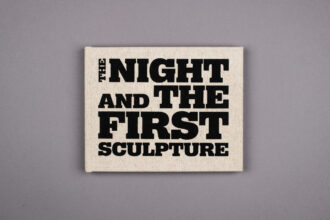
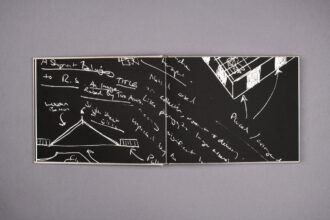
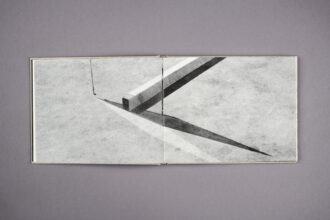
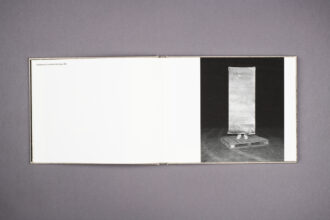
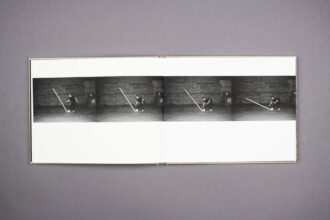
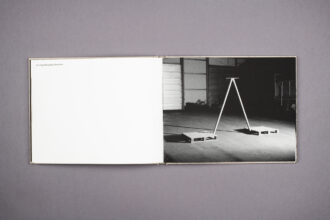
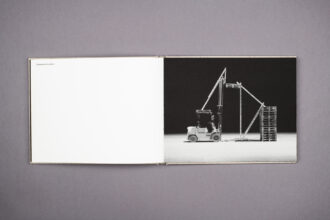
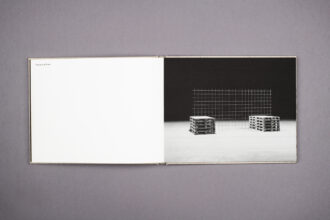
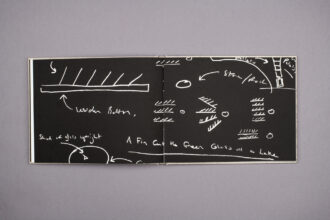
Alexander Mourant’s The Night and the First Sculpture (2024), his first photo book, is a welcome revelation. Rooted in Arte Povera with its use of simple materials available to him on the farm in Jersey where he took shelter during the 2021 pandemic lockdown, the experimentation reimagines the use of a barn, its functionality being redirected towards his experimentation and facilitating his sculptures, performances and photographs. The farm is on land his family has worked on for generations. For Mourant marrying his family background and interests in experimental novels such as Virginia Woolf’s ‘The Wave’ and Italo Calvino’s ‘If on a Winter’s Night A Traveler’ as well as the early sculpture of Mary Miss and Tony Cragg is paramount. His earlier project, available online on his website, On Living Stones and Reaching drew on his interest in Land Art and he created installations on the farm as well as photographing farm workers. Crafted in the shadows of night, Mourant’s method in The Night and the First Sculpture involves the symbolic infusion and arrangement of natural materials – glass, wood, and stone – all to bring his personal theories to life.
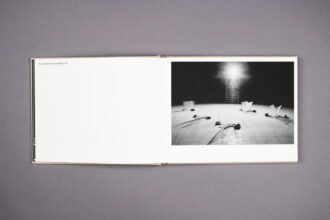
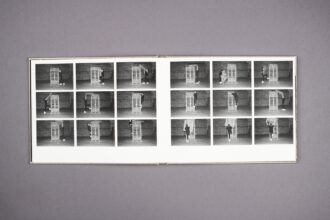
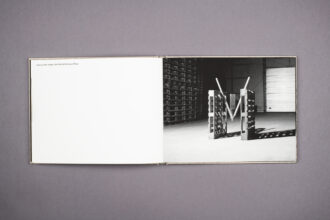
‘Ships that pass in the night’ consists of assemblages – stones, panes of glass in a V shape and wood on the ground. In front of them are pallets stacked on top of each other with a spotlight on the top. This configuration recalls a lighthouse. The brightness of the spotlight helps create a dramatic interplay of light and shadow. ‘Evidence of a failed marriage’ is a series of images that are the outcome of a failed project of Mourant’s where images he wanted to create on cyanotypes didn’t develop successfully. It’s as if he was wedded to the ideal prints but as they weren’t available, he decided to incorporate these failures into the photo book. In each of the three photographs, he is standing on a pallet, holding up the cyanotypes in front of him, just his jeans and shoes visible.
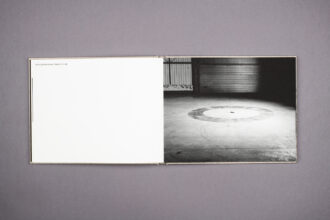
‘A place possesses me’ is a riveting six-page sequence in which he stacks multiple pallets on top of each other, climbs them and then sits on them. It is followed by ‘A week at the seaside with you’ in which he is seen emptying a wheelbarrow full of stones onto a pallet. As the lexicon that comes with the photo book indicates that stones signify stories and a pallet represents a place, it can be read as the narratives that a person can attach to a place they visit, the stories we tell ourselves about locations we know and love or loathe.
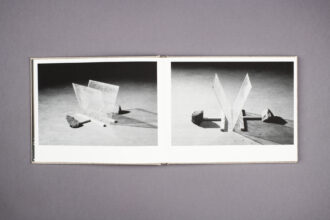
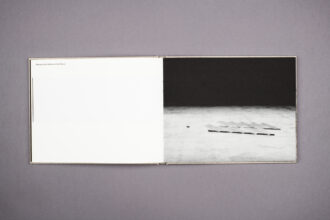
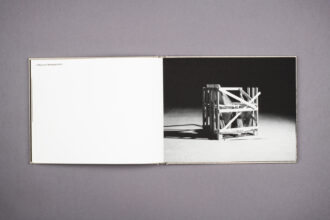
In ‘Waves and stone on the shore,’ we see a stone in front of two rows of sculpture – there are 5 panes of glass that seem arranged to create a domino effect, with one tipping over the others. The glass panes are on top of timber beams. The artist’s lexicon indicates that wood refers to knowledge and glass refers to an image. I deduced that Mourant is trying to convey the idea that stories are not truly fixed, and they can change with retelling, or the knowledge gained by a reader from a text in one period can change in another. ‘The Book of Stone’ simply features a close up of a piece of granite on a chair. The granite was found on the farm and reminded the artist of Robert Smithson’s essay “A Sedimentation of the Mind: Earth Projects.’’ According to Smithson, both the mind and the earth continuously undergo processes of disintegration and re-aggregation, much like the shifting of geological formations. Granite is mined in quarries in Jersey and has been used and reused for many years there, the recurrence of this industrial material spurring Mourant’s thoughts on how to depict his rootedness in the farm context. In ‘An image raised by two arms’ we see two pallets on the left and right. Between them there are two timber beams in a V shape and on top of them is a pane of glass. It might refer to the way an image goes from one place to another or the way our hands form a V shape when taking a photograph.
The project is bookended by a poetic introduction from Alan Huck whom I admire for his brilliant blend of prose poetry and photography in ‘I Walk Toward the Sun Which is Always Going Down’, and a conversation between Mourant and Eugenie Shinkle, a fellow photographer and lecturer, which covers the genesis of the project and the artist’s process.
The first lockdown started in March 2020. Britons blinked in the sunlight as they left lockdown in July 2021. Between those periods, Alexander Mourant worked on this mesmerising, playful project. It’s a book that deserves wide recognition.
__________
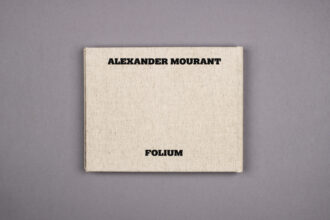
The Night and the First Sculpture by Alexander Mourant was published by Folium in 2024.
Akin Oladimeji is a critic, lecturer and writer. He is undertaking a PhD funded by the Arts and Humanities Research Council at University College, London on performance art.