In 1602 the Dutch East India Company started up, an amalgamation of several rival trading operations active in countries such as modern-day India, Indonesia, Japan, and South Africa. Trading and producing cash crops such as spices, coffee and sugarcane, plus textiles, wine, and shipbuilding, the Vereenigde Oostindische Compagnie (VOC) was the first mega-corporation and a forerunner of modern corporations and capitalism. It also used slaves and forcibly grabbed land; even so, when it finally folded in 1798, its territories were taken over by the Dutch state.
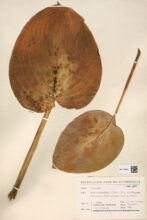
One of the VOC’s holdings was Dejima, a small artificial island in the port of Nagasaki; the VOC had long sent doctors with botanical training to Japan on research missions, and the Dutch government continued the tradition, sending Philipp Franz von Siebold to Dejima in 1823. Over the next six years he amassed a huge collection of plant and animal specimens, maps, books, newly commissioned botanical illustrations, woodblock prints showing Japanese life and culture, and even hand-crafted tools. Siebold’s plant collection lives on at the Hortus Botanicus Leiden, and the illustrations and prints he put together are also held in Leiden at the Naturalis Biodiversity Center.
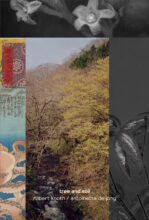
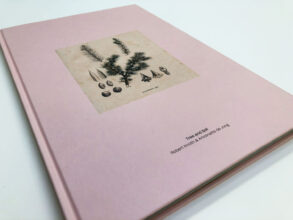
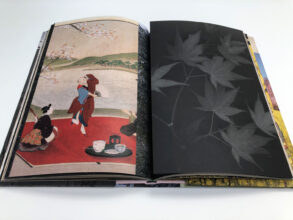
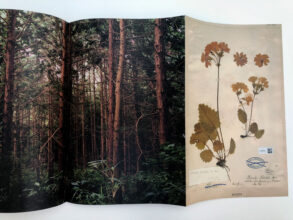
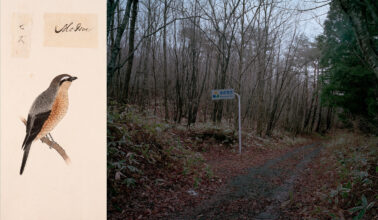
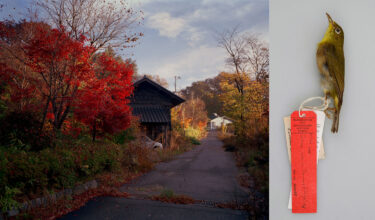
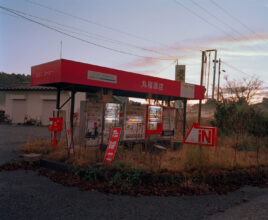
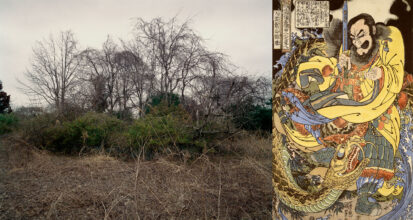
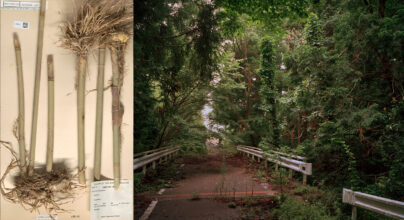
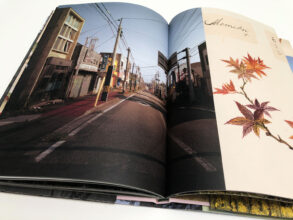
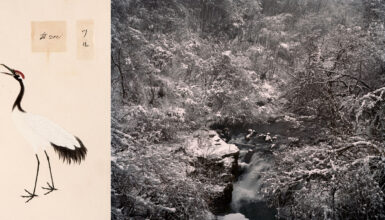
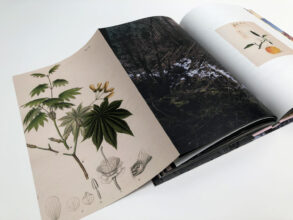
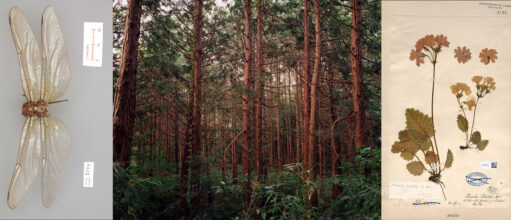
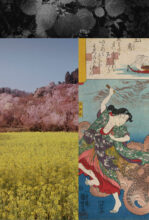
Robert Knoth and Antoinette de Jong used both collections when putting together their new book, Tree and Soil, which is on the shortlist for Les Rencontres d’Arles Book Awards 2020. Stemming from a five-year project, Tree and Soil includes scans of plants grown from Siebold’s samples, botanical illustrations and Japanese woodblock prints, scientific reports into the nuclear accident at Fukushima in March 2011, first-person accounts of life in Fukushima, and images shot by Knoth in the abandoned areas around the nuclear plant. There are multiple perspectives at work, a factor emphasised in the book design by acclaimed duo Kummer & Herrman – images, articles, and text run into each other, cross over from one page to the next, and live in foldouts that stop and turn the narrative flow.
There’s also a thought-provoking essay by Erik A. de Jong, ARTIS Chair for Culture, Landscape and Nature at the University of Amsterdam. Titled “The Fukushima Landscape: a Mirror of the Anthropocene”, it argues that the nuclear accident was both natural and man-made because, when an earthquake triggered a tsunami off the Japanese coast, 14-metre high waves hit the Fukushima Daiichi Nuclear Power Plant, three reactor cores melted down and exploded, and irradiated fallout spread over a wide area. It’s an example of man over-playing his hand, writes de Jong, of how “man’s wish for dominating the biospheres of the earth through political, economic and technological hubris, leads to major disasters”.
For de Jong that hubris has its roots in “the age of exploration”, the era in which the West adopted a newly “instrumental view of nature” conceiving of the world in terms of resources; it’s an era the VOC helped inaugurate, and Siebold and his collections were part of it. As Tree and Soil shows, Siebold meticulously logged, recorded, and collected samples, something which helped build scientific knowledge but didn’t mean humans were in control. And that’s something that Knoth’s images demonstrate, documenting the vast tracts of Fukushima where nature now runs wild and showing the abandoned streets and houses now being reclaimed by plants.
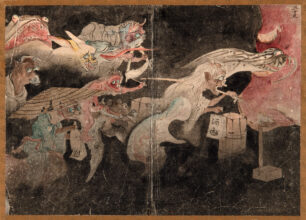
It’s a vision that could be depressing, but Tree and Soil also suggests a way forward. Rather than trying to control and exploit nature, mankind needs to collaborate with it, argues de Jong, “working with nature to find new solutions”; in the book, elements of human culture and nature literally intermingle. And though that approach sounds radical, the book also suggests this approach has been there all along, in Japanese traditions such as formal gardens and flower arranging, or in the idea of yokai and reiju – ghosts, demons and supernatural beasts that represent “the wilder forces of nature present in the life of man”, according to de Jong.
In the first-person testimonies collected by Knoth and de Jong, meanwhile, we hear from those who once lived in rural Fukushima, and their deep understanding of the natural world that surrounded them. “You could say I was brought up by nature,” says Kenta Sato. “The fields sway with the wind. You can hear the grains rustle in the breeze.”
__________
Tree and Soil by Robert Knoth and Antoinette de Jong is published by Hartmann Books.
For further viewing, the artists’ website: knothdejong.com
Reviewed for Photomonitor by Diane Smyth