



In his discussion of American photographer Lewis Hine, cultural historian Alan Trachtenberg challenged an entrenched way of thinking about photography by way of a question: “Why even today is he still described as a ‘documentary’ photographer, confined to that limiting category, as if his work consisted only of making illustrations for a future history textbook, rather than the making of a new order of social art in photography?” (1)
This insight remains relevant today, and it informs my understanding of the use of photography by Franki Raffles, whose work in the 1980s and early 1990s can be encapsulated by the idea of photography as “social art”.
Franki Raffles (b. Manchester 1955-1994) was an Edinburgh-based photographer active between the early 1980s and 1994 when she died after giving birth to twin daughters. Between 1973 and 1977, she studied philosophy at the University of St Andrews where she actively participated in the Women’s Liberation Movement and played a leading role in several feminist campaigns. She was also influenced by far-left politics, particularly Marxism-Leninism, which shaped her life and work. Much of her photographic practice was community-oriented and involved collaborations with local groups and institutions such as special schools, care homes, day centres, trade unions, local Women’s Aid groups, feminist magazines, and local councils. Raffles also travelled extensively throughout her career, photographing women in different social contexts and investigating the problems facing women through cross-cultural comparisons.
Unlike conventional practices of documentary photography (and perhaps art photography in general) whose intended viewers are a vaguely defined public, if not those who have the habit of collecting photobooks or visiting photography exhibitions, Raffles’ use of photography was often oriented towards a direct engagement with her subjects and the social issues affecting them. What distinguishes her practice is not so much how her photographs look, but rather how photography—from the act of taking pictures to the circulation of images—is employed to have a direct impact on social reality. This seems to be what unifies three key aspects of her work: to document, to empower, and to campaign.
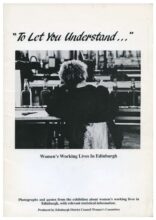
Much of Raffles’ work is marked by a dedicated endeavour to document, make known, and celebrate women’s lives through photography. Between 1987 and 1988, Raffles was commissioned by the Edinburgh District Council’s Women’s Committee to photograph women’s working lives in Edinburgh for the project ‘To Let You Understand…’ which led to a publication and an exhibition that toured community venues. In both formats, her photographs were displayed alongside quotes from interviews with her subjects and statistical information about such issues as low pay, childcare and lack of equal opportunities. In the following years, Raffles continued to work with both autonomous women’s groups and policy-making authorities on a variety of projects. Her photographs from this period resulted in a rich documentation of women’s lives in Edinburgh and Glasgow and appeared in various publications intended to promote women’s welfare.
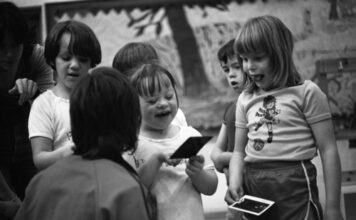
Raffles was also keen on exploring the therapeutic function of photography-based activities. For the projects ‘We can take pictures’ (1983) and ‘Photographers with Special Needs’ (1988), she worked with children and adults with learning disabilities and taught them how to take photographs with a camera and, in the latter case, make prints from negatives. Through a series of collaborative tasks such as making photo albums to document each other’s daily routine and making photo dominoes using images of everyday objects, she productively used photography as means to develop creative expression and enhance co-ordination, memory, and perception among the participants. Both projects attest to Raffles’ commitment to using photography as a tool for empowerment.
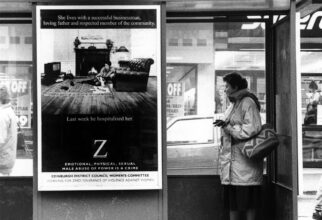
In the early 1990s, Raffles started to incorporate her photographic work in public campaigns. She is today best known for the galvanising posters she created for the “Zero Tolerance” campaign, which was launched in Edinburgh with the aim of at raising public awareness about domestic violence against women and children. In these posters, photographs depicting domestic happiness are juxtaposed with texts reminding viewers of violence towards women and children. Together, text and image address the concerning reality of domestic violence without stereotyping the female victim.
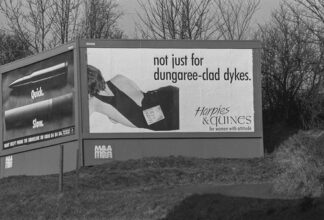
Other of her campaign-related works include photographs for the Artlink initiative “What is Disability” in 1992 and graphic design for Scottish feminist magazine Harpies and Quines in 1993. Printed in large sizes and manifestly displayed on billboards, bus stops, and other public spaces, these images function as an active intervention into in the contested space of the street.
These three aspects are co-existent in Raffles’ work, cumulatively forming a unique way of practising photography which explores the social and political dimension of the medium. Far from seeking the legitimate status of documentary photography so that the images can be appraised and consumed by viewers in a normalised manner, her practices point, in various ways, to concrete social transformations through the documentary function of photography. The immediate result is that, despite their aesthetic quality, Raffles’ photographs are marked by a deep indifference to the status of art and remain largely neglected within existing writings about photography and/or art. Perhaps it is time, echoing Allan Sekula’s call for a reinvented documentary in the late 1970s, to re-imagine the possibilities of a radically different notion of documentary photography, if not art photography in general.
__________
(1) Trachtenberg, Alan. Reading American Photographs: Images as History, Matthew Brady to Walker Evans. New York: Hill & Wang, 1989, p. 65.
For an introduction to the Franki Raffles Photography Collection held in the Special Collections of the University of St Andrews, visit this link. Images above © Franki Raffles Estate, all rights reserved. Image courtesy of University of St Andrews Library and Edinburgh Napier University.
About the author: Weitian Liu writes on photography and contemporary art. He studied at the University of St Andrews, where he completed a MLitt in Art History and a MPhil in History of Photography. He is the editor of QILU Criticism, an online platform for critical discussions on contemporary art in mainland China.