“Every time it feels like they are discovering my work for the first time” tells me artist Mariella Bettineschi during our conversation. Although she is now receiving conspicuous recognition for her work, it’s happening later in her life as often is the case with relevant women artists. “I allowed my work to take unforeseen directions at times, and I kept it clear from unwanted influences” says the artist, which in part might explain the challenges of an initial struggle to position a work that fails to fall into any category except for being intrinsically intertwined with feminism.
Mariella Bettineschi graduated from the Giacomo Carrara Academy of Fine Arts in the Italian city of Bergamo in 1970, when it was compulsory to attend all workshops including life drawing for the entire duration of the six years’ degree program. She believes that training to learn the craft has informed her art practice at its core in developing her ability to work with different mediums and materials. But it was the intense and vibrant cultural life she discovered in Berlin, where she lived from 1989 to 1995 sharing an artists’ studio in Kreuzberg, that had a strong conceptual influence on her work. “It was Berlin that helped me to broaden my mind, and to give a different dimension to my work making it less conventional” she reflects.
“Often things can happen casually, then they evolve” the artist says while we talk, and that perfectly describes her encounter with photography to me. It was during the project of the large sculpture Heavenly Carriage, 1994 (Carro Celeste) as an exception to the way she works that Bettineschi had to delegate the production as well as the installation of the sculpture because of its type of material and its large dimensions. “I micromanage every aspect of my work, but I couldn’t do that with Carro Celeste, so I documented the process taking photographs from the production phase to the installation of the work in Finland”. From that moment on, the artist continued to document her work creating an extensive archive of images, and yet she wasn’t using photography as a medium in her work. Then one day she realised that digital images could be manipulated on a computer, and suddenly an entire new world unfolded in front of her eyes. “I understood that my work could evolve in an exciting new direction with the use of digital images, and I realised that photography is just another material for me like paper or marble”, giving her a reason to learn how to manipulate digital images. It represented a milestone in her art practice.
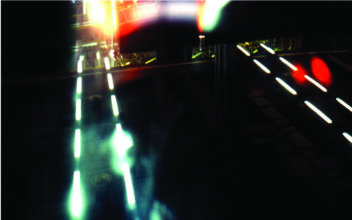
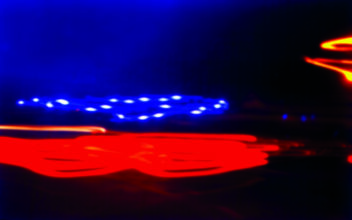
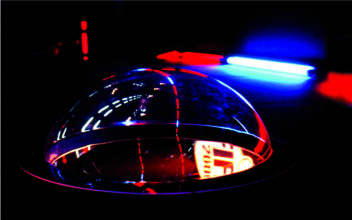
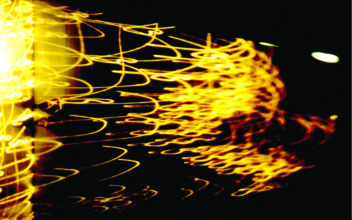
Results came quickly. The light-box series At the Speed of the Light (1999) was one of them. Taken with a digital camera while she was in the passenger seat of a moving car, the artist digitally manipulated the photographs and then printed them on transparent plexiglass. Since then, Bettineschi’s work has focused on photography and digital painting motivated by the fact “that I can transform images moving away from what they have been known till now”.
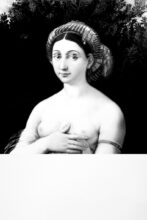
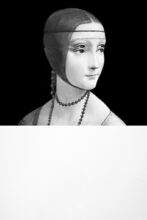
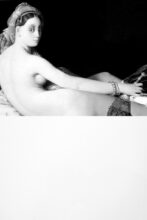
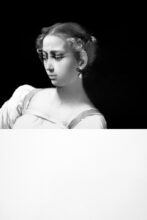
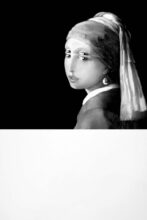
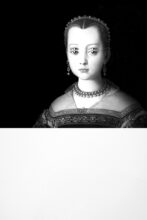
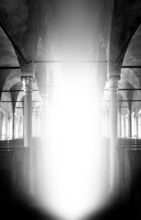
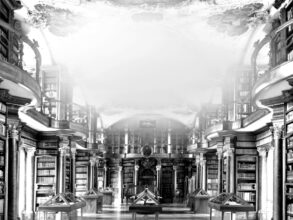
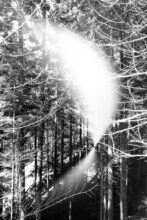
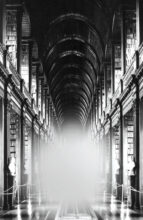
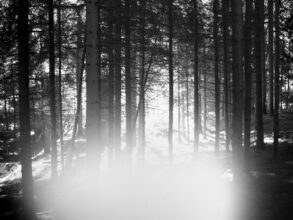
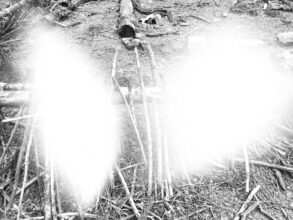
More recently in 2008, the financial crisis triggered a new phase of reflection and research for the artist that resulted in The Next Era (L’era Successiva), a new body of work comprised of the three series Portraits, Libraries and Natures. “Essentially The Next Era is a work concerned with the risks undergone by the environment and culture because of the subsequent lack of investment to respectively protect and provide for them, originated by the financial crisis. At first I created Natures and Libraries, where I digitally erase the centre of each image to visualise a disruptive presence” explains the artist. Then she worked on Portraits, a series dedicated to the visionary sense that naturally belongs to women and that guides their understanding of the fragile balance between the environment and the human beings. “Once an understanding and the respect of this balance will be gained by all in the world, only then we will enter the next era, but it may just be a utopia. In the Portraits series, I have chosen to work with images of women because I am convinced that they are the only ones that can save the world” she remarks.
In The Next Era the artist symbolised this visionary female sense by inserting a noticeable extra pair of eyes into the images of iconic portraits such as La Fornarina by Raphael, Dama con l’ermellino by Leonardo and Girl with a Pearl Earring by Vermeer among others. “I am obsessed with beauty, and attention to details in my work” the artist confesses, which explains why with an extraordinary detachment she goes on to transform each image further changing it from colour into black and white, and correcting all the imperfections that she can notice while working on the high resolution digital image. But the real revelation is when she says that “place and identity are like cages” because as a feminist she might be on a mission to liberate the women portrayed by male old masters throughout Portraits.
The Next Era played a crucial role for Bettineschi in attracting a wider recognition from curators and art dealers like Sara Zanin in Rome and Richard Saltoun in London. “Understanding a work that didn’t adapt to the art market, it is a complex issue. My work kept changing direction, and I allowed that in the studio. But implicitly it made it harder to establish myself because my work didn’t fit in any category in the art world”. Although the artist had been invited to the Venice Bienniale in 1988 and to numerous relevant exhibitions since the 80s, “every time it felt like starting from the beginning” as she says. A careful look into her work reveals that Bettineschi’s art practice followed a non-linear development that flowed into a mesmerising language in continuous evolution with feminism as a common thread along the years, nonetheless enriched by a good dose of resilience and an extraordinary open mind.
Day after day, month after month, project after project Mariella Bettineschi keeps working in her studio in Bergamo. “I don’t have a problem with a place or identity, but having a place where to return matters to me”.
__________
Text by Romina Provenzi for Photomonitor
For further viewing:
mariellabettineschi.it
@mariellabettineschi