









With text by Natalia Domagala
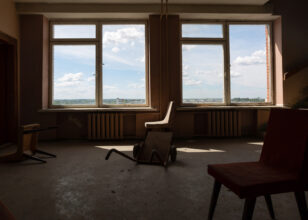
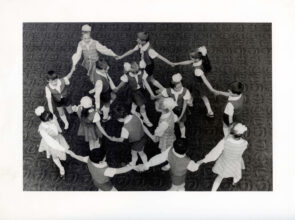
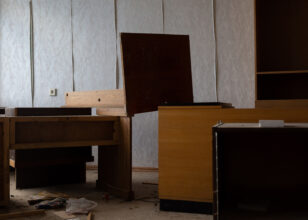
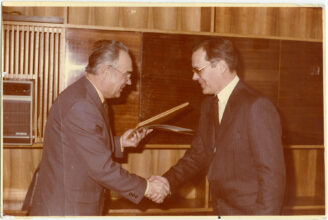
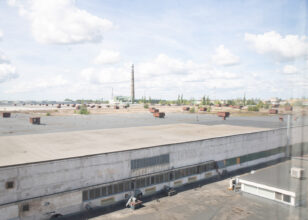
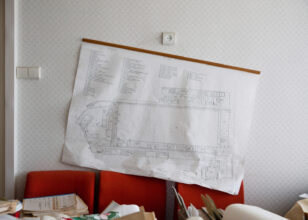
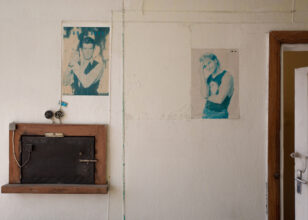
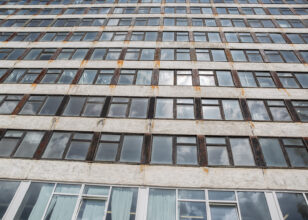
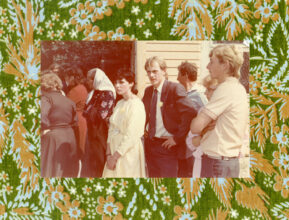
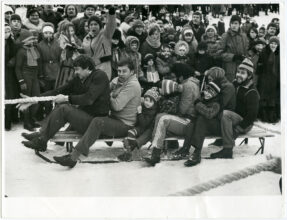
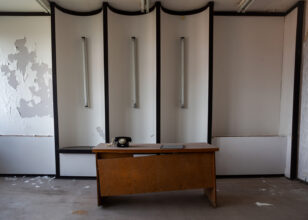
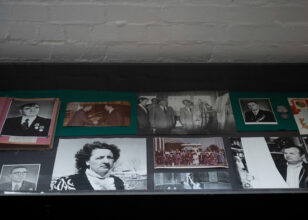
Udarny trud consists of archival material that Korobkiewicz found in an abandoned textile factory in Alytus (Lithuania) with contemporary photos she took of the building and its interiors.
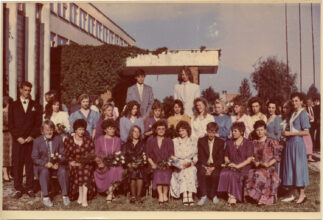
Born and raised in a borderland town in Eastern Poland near Lithuania, Korobkiewicz came across the factory when researching a project on aesthetics of post-socialist spaces in the summer of 2018. Upon entering the building, she discovered a wealth of neglected artefacts, textile samples, and personal photographs of the factory staff.
Alytaus Medvilnes Kombinatas was one of the largest textile companies in Lithuania and the Baltic States, responsible for the whole cycle of cotton manufacturing. Founded in 1969, the company went bankrupt in 2007, with the rising costs of production in Lithuania and the possibility of outsourcing labour from Asia cited as some of the reasons for its closure. At its peak, the enterprise employed approximately 6,000 people from all over Lithuania and it was crucial for the city’s industry.
Today, a dilapidated building and its monumental structure, cracked windows, and torn curtains represent the material remnants of the past. Concrete crumbling from the walls, abandoned rooms and broken furniture covered with layers of dust tell a powerful story of the rise and fall of a political system where labour was perceived as a right and a sacred duty.
Through juxtaposing the past and present of the textile enterprise set up during the socialist reign in Lithuania, Korobkiewicz poses questions about the meaning of labour in the previous and current political systems and explores social interactions shaping lives on the factory floor. She critically examines the cult of productivity and the role of the factory as a site of production and consumption through the archival photos that present the factory as a social centre and cultural platform of working-class communities.
Deriving from the Russian ‘уда́рник’, the title of the project refers to super-productive, enthusiastic labour that has been the backbone of the socialist conceptualisation of productivity. ‘Udarnik’ was a highly efficient worker exceeding the norm of required labour. Breaking records of productivity gained publicity and became a twofold mechanism to encourage other workers to increase their efficiency, and to create everyday heroes, raising the status of the best-performing labourers, with their photos honorarily displayed in factory halls and chronicles.
– Natalia Domagala
__________
Biography
Paulina Korobkiewicz (b. 1993, Suwalki, Poland) is a photographer and visual artist based in London. Her work explores public space, particularly in the urban context. She uses bookmaking and is interested in how the political transition influenced contemporary landscape and interiors in Poland and the neighbouring states. She derives inspiration from her hometown, documenting the striking aesthetic choices and contrasts in the region.
In 2015, she graduated from BA Fine Art Photography at Camberwell College of Arts. Paulina has exhibited internationally and is the winner of Camberwell Book Prize 2016. She was nominated for Prix Pictet 2018, Magnum Photos Graduate Photographers Award 2017, shortlisted for Belfast Photo Festival Open Submission 2017, Bar Tur Photobook Award 2015 and selected for Creative Review & JCDecaux Talent Spotting Guide 2015.
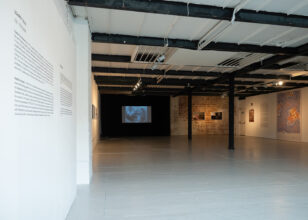
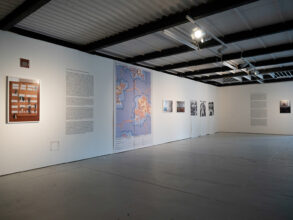
Udarny Trud was recently exhibited in Centrala Space, Birmingham, in Spring 2020, accompanied by short essays by Natalia Domagala, a Polish-born, London-based writer and researcher.
Natalia Domagala is a Polish-born, London-based writer and researcher. She specialises in research on urban anthropology, gender, civic tech, and economic development. Her portfolio consists of The Tourist, an independent project critiquing travel photography developed in partnership with British Council UK-Generation India, as well as essays accompanying the work of photographers and performance artists and contributions to magazines including The Calvert Journal and Huck Magazine. Her research on the impact of open data and ICT skills initiatives on the empowerment of women in Kosovo was presented at TICTeC 2019 in Paris, the Open Data Research Symposium 2018 in Buenos Aires, and will be featured in the upcoming book on the impact of open data. Natalia received her MSc with Distinction in Local Economic Development from The London School of Economics and Political Science and her BA in Anthropology and Media from Goldsmiths, University of London.
For further viewing: paulinakorobkiewicz.com