
__________
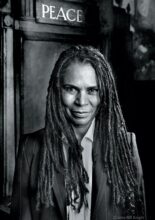
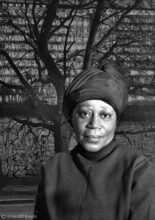
According to the latest figures from Advance HE, an educational charity, there are more than 19,000 professors in the United Kingdom. Black women represent the smallest group when both gender and race are considered together. The last official statistics show that there were just 35 Black female professors working in UK universities. I set out to photograph them.
I have wanted to photograph Black academics ever since my friend and occasional photographic assistant Amelia Odida proposed it after starting to read for her PhD. She said it wouldn’t take long. But how to find them? I didn’t see myself emailing every university asking for names and addresses. Then in February 2019 I read about ‘ Staying Power’ a report into the UK’s Black female professors by Dr Nicola Rollock. I was excited by the thought that she would have the email addresses. I emailed Nicola proposing a photographic project and to my delight she was thinking along the same lines.
We met. Nicola was cautious. Why would a white man want to do this? I told her that any portrait photographer worth his or her salt would want to photograph these women. She had in mind a Vanity Fair/Annie Leibovitz group shot but I told her I couldn’t do it. Quite apart from the problems of getting them all in the same place at the same time, I didn’t have the studio, the lighting, or the assistants. And what would they wear? And could they all take direction? We settled on a series of portraits
I felt I had to offer caption approval. But what about image approval? I had much rather not. What the sitter wants and what the photographer wants are not the same. But this exhibition is politically charged. If I shot them flying down the university steps a la Lartigue nobody apart from me was going to be happy. In the end I did offer image approval but, of course, I was only ever going to show the profs images I was happy with.
Nicola contacted the profs and gave me email addresses of those who were willing. I sent off the information sheet and the model release. I had to learn about data protection and GDPR. I was collecting data! The internet to the rescue. It seems to boil down to only asking for information if you need it and keeping what you have been given secure, only using it for the project. So, for example, I only asked for addresses if the prof wanted a print.
My first sitter was Tessa McWatt. She is an established novelist and professor of creative writing at the University of East Anglia – the heir to Malcolm Bradbury. I read about her books and memorised a line from one of her early novels about dementia. ‘Sweet keys of sun in the dusk of the toaster.’ I thought it might come in handy. I took the shot in her flat and duly said the line just before I took the first image. I think it worked, Tessa was intrigued, and it shifted the mood. We talked about diversity and I asked her if she might be interested in joining the board of a charity I work with. She said that if we wanted our work to be more diverse it was up to the board to do it themselves. It was a lesson I took to heart. She also gave me a great quote for her caption. ‘Everyone should do something creative. Those who don’t are in trouble.’
When I processed Tessa’s image, I tried it in black and white. It leapt from the page. Tessa agreed and it later became our cover image for the catalogue. That decision – to keep the image in black and white – made the decision for the entire exhibition.
Then the email addresses started to come in and I was off round the country. For those who are interested I took the first few images with a Pentax 645Z and then switched to a Fujifilm GFX100, which despite some very irritating buttons and dials has a superior autofocus system which resulted in many more keepers. I lit the images with Profoto speedlights using a softbox and, sometimes, a shoot-through umbrella for the fill.
But it’s not about the kit. They say the personal is political. It seemed to me that it was my job to remember that the personal is personal. It is no small thing having your photograph taken for public exhibition. Some of the profs took it in their stride and put on their photo face, which I had to spend some time penetrating. Others found in the process a moment for reflection. Wherever I went I was met with warmth and kindness – sometimes overwhelmingly so. One professor insisted on carrying my gear to the station. She explained that it was a custom in Zimbabwe to walk with the departing guest – it’s called kuperekedza and it is a well-known method of getting out of the housework…
Portrait photography is a right-brain activity. The photographer and, with luck, the sitter get lost in the moment. Thinking about it afterwards it became clear to me that the quality that I was trying to show was strength – sometimes cheerful, sometimes not, but always there. I was made to think about my own lens. The profs and I have different identities. Gender, race, age, experience and social class all come into it. I am still thinking about how that affects my role as photographer.
On the whole I had no trouble agreeing the images with the sitters. Occasionally there was one I would have preferred which was vetoed by the sitter – usually for obvious reasons – and one prof memorably said, ‘Show me ten!’ but my tactic of only showing the shots I was pleased with worked well.
We finished up with 40 portraits, including five sitters who had been working professors within the past three years. We had two launches planned. One at the law firm who had sponsored us and another when the exhibition moved to City Hall for public show. Thanks to Covid 19 we only managed the first one, but it was wonderful. Most of the profs were meeting for the first time and it was a moving celebration. I got some very warm emails afterwards. One prof said that it was obvious that for me it had become a labour of love. She was right.
– Bill Knight
__________
Phenomenal Women, an exhibition of photographs of the UK’s Black female professors, was curated and researched by Dr Nicola Rollock, Reader in Equity & Education at Goldsmiths, University of London and photographed by Bill Knight. Its run at London’s City Hall was curtailed by Covid -19 but the organisers plan to show it again in London and around the country once the emergency is over.
Biography
Bill Knight started in professional photography when he was 18, as a beach photographer at Margate. After a long career break in the law he started again some 19 years ago and now specialises in portraits, opera, theatre and dance.
Bill’s exhibition The Refugee’s Gift at St Martin in the Fields in London’s Trafalgar Square showed refugees who have made a contribution to the United Kingdom. His portraits of photographer Elsbeth Juda and scientist Gustav Born from the exhibition are now in the permanent collection at the National Portrait Gallery. His work has included portraits to celebrate 40 years of women at Brasenose College, Oxford and images for Christ’s College Cambridge. His exhibition Where I come from, about graduates from migrant families, has been shown in London and Windsor. Bill has been twice a winner in the Portrait of Britain competition.
In a former life Bill was senior partner at international law firm Simmons & Simmons, President of the City of London Law Society, Deputy Chairman of Council at Lloyd’s of London and Chairman of the Financial Reporting Review Panel. In 2012 he was awarded the OBE for services to financial regulation.