


![Ope Lori, film still [detail] from the commission I, Becoming You, 2020. Commissioned by Autograph for Care | Contagion | Community — Self & Other](https://photomonitor.co.uk/wp-content/uploads/2022/01/20-Ope-Lori-film-still-detail-from-the-commission-I-Becoming-You-2020.-Commissioned-by-Autograph-for-Care-Contagion-Community-—-Self-Other-341x220.jpg)
![Ope Lori, film still [detail] from the commission The Lines Between Us, 2020. Commissioned by Autograph for Care | Contagion | Community — Self & Other](https://photomonitor.co.uk/wp-content/uploads/2022/01/19-Ope-Lori-film-still-detail-from-the-commission-The-Lines-Between-Us-2020.-Commissioned-by-Autograph-for-Care-Contagion-Community-—-Self-Other-288x220.jpg)
reviewed by Shyama Laxman
In an essay, ‘How art deals with disaster, from Guernica to the climate crisis’, writer JJ Charlesworth says, ‘when faced with catastrophe – war, famine or natural disaster — most peoples’ first priority is simply to survive. Art is often not made until the aftermath, by those who survived or were far away. It’s this distance – of both time and place — that produces the tensions at the heart of art’s response to human catastrophes, since, in the end, the question asked of such an artwork is always: What good can this do?’
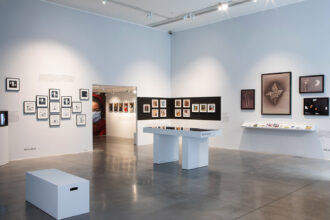
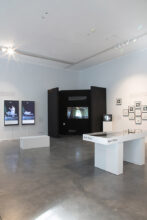
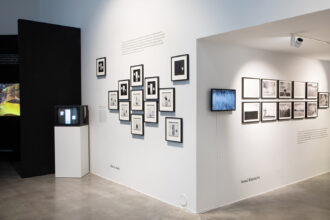
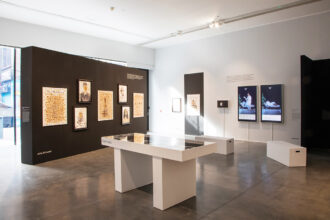
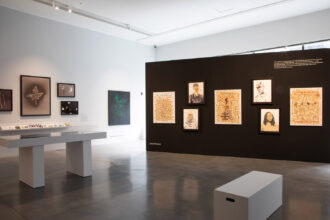
Care | Contagion | Community — Self & Other deviates from this idea, in that the art is being created whilst in the midst of crisis. Commissioned by Autograph, London the exhibition features ten UK-based artists – Mohini Chandra, Poulomi Desai, Joy Gregory, Othello De’Souza-Hartley, Sonal Kantaria, Ope Lori, Dexter McLean, Karl Ohiri, Silvia Rosi and Aida Silvestri – who have created works that respond to Covid-19 ‘exploring ideas of loss, family, home, belonging and diaspora while considering different lived experiences, and the inevitability of change’.
On entering the gallery, one is met with Dexter McLean’s Untitled, a series of coloured portraits of McLean’s friends, family members and carers. It emphasises the importance of close relationships during the pandemic as well as being a comment on the disproportionate way in which people of colour have been impacted by Covid-19. McLean says ‘society often forgets just how valuable these relationships are, especially in difficult times like these’. As someone who hasn’t been able to see her parents since January 2020, I found Untitled to be the most moving because of the quiet strength it possessed in its simplicity.
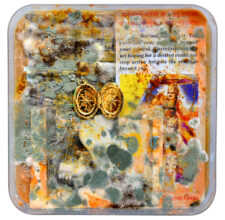
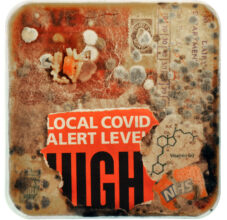
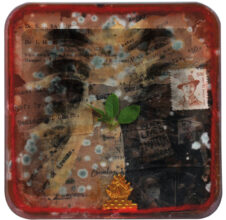
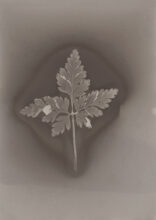
The exhibition is broad in its scope in that it talks about macroscopic ideas such as ‘home’ as seen in Sonal Kantaria’s Ghar, which investigates concepts such as home and cultural heritage, through a series of landscape prints, inspired by Kantaria’s family’s migration from India to Kenya, and Joy Gregory’s very personal mixed media work, Madam Photo, which is a compilation of objects she encountered during her regular walks such as leaves and sticks which are captured as sun prints, as well as notes from her diary and screenshot of a Zoom conversation. Poulomi Desai contributes Our cultures are the portals – the gateways between one world and the next, which evokes the idea of the virus at the microscopic level, when Desai photographs petri dishes, that she’s created with her mother, inoculated with bacteria, and extends it to the socio-political discourse around the virus, by adding elements such as a grocery bill and newspaper clippings. Desai encapsulates Covid-19 in a petri dish right from its inception to its impact.
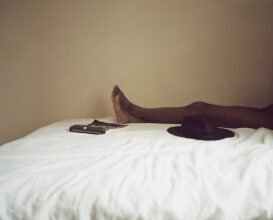
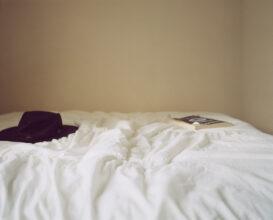
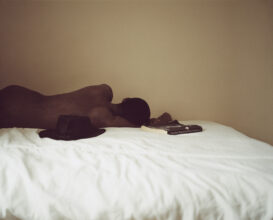
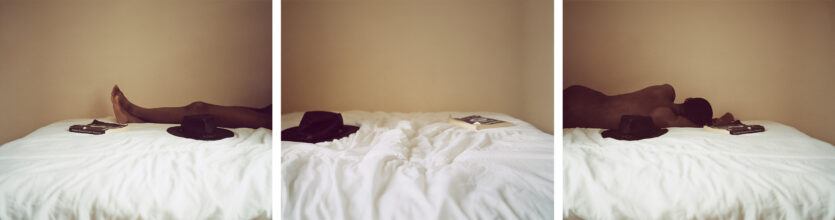
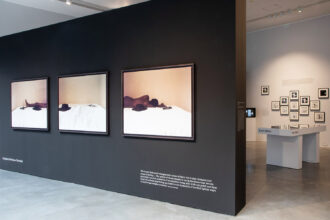
Othello De’Souza-Hartley’s Blind, but I can see is an interdisciplinary work inspired by the unexpected death of the artist’s father. Comprising a triptych, titled ‘Absence’, it features the artist lying on his father’s bed with a hat and a copy of Profound Honesty / Limitless Prosperity next to him. The display, which also includes a large-scale abstract painting titled ‘Study 17’ and a video of a moving tree outside his apartment, is an experiment in processing grief, the inevitability of change and finding peace and joy in the everyday, symbolised by the video of the tree with its branches swaying in the wind.
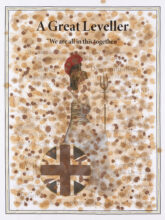
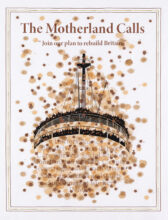
Silvia Rosi’s Neither Could Exist Alone examines fear of the outside world, solitude and isolation through a series of self-portraits. Rosi was in Togo at the start of the lockdown and later left London to be with her parents in Italy. The prints show her performing daily activities such as changing clothes, reading, listening to music, and sometimes not wanting to face the world when she wraps herself in a blanket and sits with her back to the viewer. In an interview Rosi refers to her London flat as ‘something between a shelter and a safe prison’ reflecting on her own fear of going out, partly stemming from lack of social interaction. One can feel a sense of suffocation and time slowing down due to the tight and minimalist set in which Rosi photographs herself. Her small and barely furnished space brings into sharp relief the Covid-19 jargon ‘We are in this together’ which was a pointless platitude, considering that economically poorer, ethnic minorities and older people fared worse.
Care | Contagion | Community — Self & Other is perhaps one of those rare artistic endeavours that reflects on an ongoing global crisis. Considering that the news, our social media feeds and life in general is saturated with Covid-19 related information, one might wonder whether we need another addition to the continuing debate. Yes, because art is important for posterity to engage with a time they haven’t lived through, and for the present to make sense of said time.
__________
1) ‘How art deals with disaster, from Guernica to the climate crisis’ by JJ Charlesworth, published by CNN, 29 July 2019 can be accessed here
Care | Contagion | Community — Self & Other continues at Autograph ABP in London until 12 February 2022. Reviewed for Photomonitor by Shyama Laxman