


Curated by Carla Mitchell, Eleni Parousi, with Anthony Luvera
Reviewed by David Rule
Four Corners proves a pertinent venue for this exhibition of photography representing over a century of ‘conditions of housing and homelessness’ in East London and featuring new work by Anthony Luvera. The gallery is identified in the excellent 40-page exhibition guide as occupying the site of ‘a poor men’s metropole and cheap food depot’ from 1891 to the 1950s on what was then named Green Street. It’s a photograph of the building’s exterior as a Salvation Army hostel, along with poster offering affordable food (think: mutton, boiled jam pudding, and, ‘for a child’, cocoa or coffee), that opens the show. Any sense of serendipity fades given the difficulty in locating a street in London not in some way associated with a history of housing precarity, community displacement, or structural inequality (those are broad strokes, but encompass a literal workhouse currently undergoing conversion into luxury flats, and ‘affordable’ or ‘living rent’ schemes generously open to those earning over £30,000). Tower Hamlets, in which Four Corners sits, has the highest rate of child poverty in the UK, while the average salary of those working in the borough (which includes Canary Wharf) is reportedly the second highest in the country. As valid a response as outrage or would be, Conditions of Living manages to generate something else: solidarity – a welcome feeling given the timeliness of its content (which turns out to have been ‘timely’ for at least a hundred years).
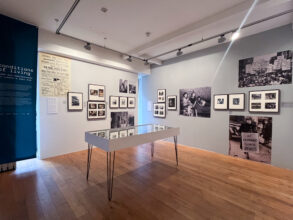
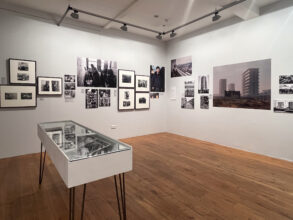
The exhibition is divided into wall-sized chapters and a loose, often eerily looping, chronology logging slums, clearances, protests, and squatting. ‘Solutions’ – from the philanthropy of Victorian social Darwinists to the tower blocks of the 1960s – are shown as flawed, with wall texts unflinching but undramatic in their cataloguing of broken promises and neglect. A salon hang, floor-to ceiling, offers visitors enlarged reproductions alongside framed original prints. Many of the photographers included are unknown or unnamed, their work held in local or agency archives. Others will be familiar and include Edith Tudor-Hart, Humphrey Spender, and Markéta Luskačová. The role of popular journalism is given prominence, specifically publications uncynically aligned to working-class interests (Picture Post campaigned for a health service in the 1940s, and it’s a tonic to be reminded that the Daily Herald – the world’s best-selling newspaper in the 1930s – had its origins as a ‘strike sheet’ and was firmly on the side of rent strikers). There’s a familiarity to the scenes shown: some photographs reminiscent of today; others so similar to those on neighbouring walls that checking the year regularly proves surprising. What could be a companion to a 1920 photograph of slums at Shadwell scandalously housing ‘ex-Service heroes’ turns out to be from a series shot for Shelter by Nick Hedges in 1969. These images show few clues in the styling of their subjects to date them – bricks crumble and wallpaper peels much the same, regardless of the decade. While colour helps date later images, there remains a sense of slipping and repeating (rent controls introduced then removed; change promised then withheld). Where residents are shown – whether in claustrophobic interiors or marching in protest – their expressions are often resolute (again from the excellent guide: ‘press photographers such as Reg Sayers created populist images of a spirited and robust British working-class’).
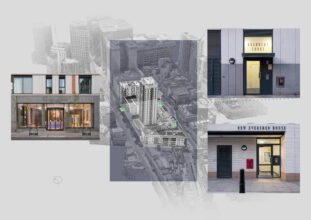
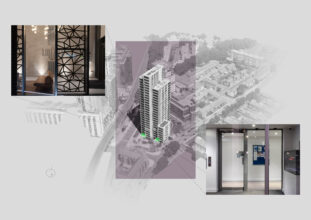
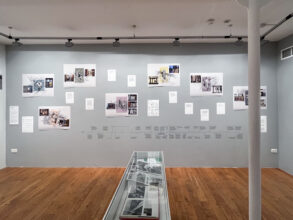
Images of poverty are necessarily surrounded by a familiar and important discourse involving Othering and consent. A recent Guardian interview with photographer Paolo Woods is titled ‘No poor person decides how they get photographed’. Luvera’s practice proposes an alternative and includes his ‘assisted self-portraits’ co-created with people experiencing homelessness – a tell-tale cable release in the hand of his subjects is the tip of an iceberg that involves an extended period of collaboration and learning. Luvera’s ‘Conditions of Living’ (2022-23) forgoes human subjects for a visual language not seen elsewhere in the exhibition: renders show newbuild luxury high-rises at unflattering angles – their rooftop apparatus exposed; their ‘dynamic’ shapes revealed as maximising available footprints – floating darkly in a pale void. These precise (but somehow ungainly) illustrations are further tarnished with annotations connecting the semi-CGI geometry to street level photographs of ‘poor doors’ – entrances to the legally required ‘affordable’ housing, segregated from the amenities available to residents of the luxury flats and often positioned where vents and bin stores remove unwanted elements from the building. Styling again becomes a feature in Luvera’s images, partly because the rich doors have so much of it: their chandeliered lobbies swing between Trumpesque ‘glamour’ and geometric fretwork that looks so corporate you’d almost feel sorry for the residents calling this home. Below these prints and along an entire wall runs a timeline of housing acts and their consequence (more slips and loops). Color-coding by governing party makes the priorities of each black and white – or blue and red. This isn’t antagonistic but, as is the exhibition as a whole, generous and factual. Luvera’s ‘Conditions of Living’, like much of his practice, is about asking questions and giving space for responses: those handwritten by residents invited to community forums line an adjoining wall (an example: ‘Every day it breaks my heart’).
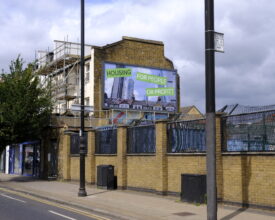
Not only because of Luvera’s work does this feel like an exhibition for community – a word perhaps once meaningful for developers, now as hollow as the Matisse quote on hoardings photographed by Chris Bethell (“Creativity takes courage”). This language (and the absurdly vague “Placemaking, not just housebuilding”) falters against the crystal-clear demands for lower rent and ‘HOMES BEFORE HOTELS’ – voices from the 1940s just as resonant as those from today. The exhibition guide, again, mentions a ‘tradition of tenant resistance’ – a phrase which gives pause. There’s strength in tracing the lineage of today’s battles; in finding a fellow tenant (yes, from 1939) holding very current thoughts with pride and determination on a sepia placard. One of the participants in Luvera’s forum writes about the ‘huge taboo’ around ‘where you live and where you come from’. This show does much to address that taboo, and it does so with frankness and with heart.
__________
‘Conditions of Living: Home and Homelessness in London’s East End’ ran at Four Corners 30th June – 2nd September 2023.
David Rule leads the final year of the Photography BA (Hons) course at the University for the Creative Arts, Farnham. He holds an MA in Fine Art from the Slade School of Fine Art, UCL and is co-editor of Photomonitor.