Throughout photographic history, the image has been used to document an event, both personal and political. Indre Serpytyte’s images work in the opposite way, to investigate past events and explore the potential of the image to create subtle and moving photographs drawing on human emotion and engaging with memory. Drawing upon the artist’s family history, as well as the political landscape of Lithuanian history, Serpytyte’s work attempts to create a greater understanding of these events.
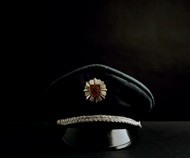
A State of Silence pays tribute to the artist’s father, Albinas Serpytis and the circumstances surrounding his death. Serpytyte’s father was the Lithuanian Head of Government Security who died in a car accident on the 13th October 2001. The facts surrounding his death are uncertain and no official enquiry or investigations were undertaken. Suspicions around the event suggest foul play, but all the artist is left with is a state of silence.
The images present still-life objects investigating the bureaucratic system that her father was a part of. Folded shirts, stacks of paper, an unused phone are positioned within the frame to create a sense of ambiguity and uncertainty to these objects. Elements of the story are withheld, mirroring the lack of information that Serpytyte knows about this tragic event. Books are closed, the phone line is inoperable, the pristine white paper bears no mark or explanation. In contrast the folds and materiality of the clothing reveal an absence of their former wearer, a reminder of the personal implications. Silence echoes throughout the frame, laying bare the frustration and futility of the artist’s attempt to pierce the bureaucratic system and establish the truth.
From the series 1944-1991, intricate wood carvings of houses are presented next to Serpytyte’s stark black and white studio portraits of the objects. The effect turns the gallery space into a miniature village, which becomes poignant when considering the former occupancy of the structures presented. The buildings represented are domestic dwellings in Lithuania used as control centres for interrogation, imprisonment and torture by the KGB. Stalinist Soviet rule in the USSR began to expand beyond its borders leading to the Cold War conflict. The houses hold the memories of this time period in their walls. Serpytyte’s images reveal the scale of the operation; the use of the buildings previously occupied as domestic residences has shifted, revealing a much darker presence. Serpytyte’s muted colour palette suggests something more sinister.
A single image from the Forest Brothers offers a glimpse of resistance. The Forest Brothers fought against the Soviet regime, providing an active and forceful resistance that lasted 10 years. The forest became a place of refuge but also acted as a burial site of many killed in the conflict. The dense thicket of the forest acts as a counterpoint to the domestic houses, the wild untamed landscape acting as a metaphor for this act of defiance.
Throughout the exhibition, Serpytyte provides the viewer with the facts and objects, from which they become the interrogator. The framing and composition of the images leave enough space for the viewer to interpret their own reading. The work reveals a merging of personal and public memory, creating a poignant document of a past history: a reconstruction of inherited memory, informed through in-depth research, in an attempt to understand and reclaim it.