

Reviewed by Shyama Laxman
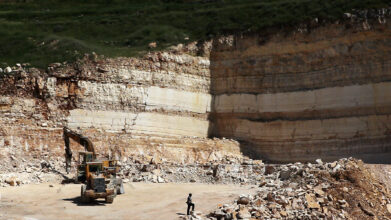
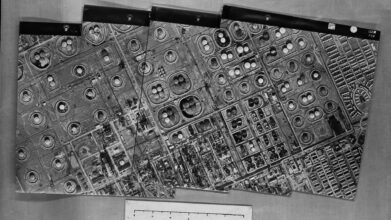
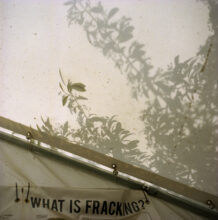
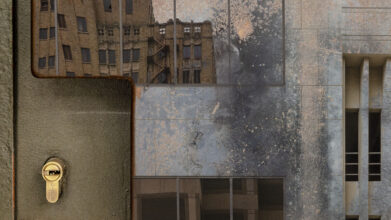
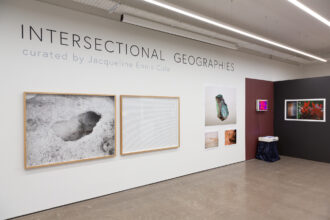
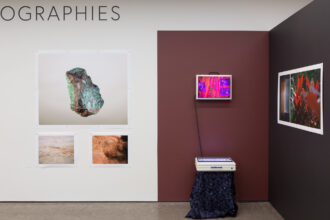
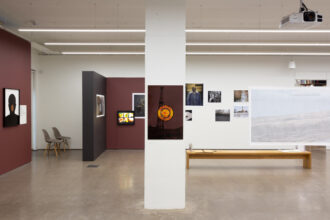
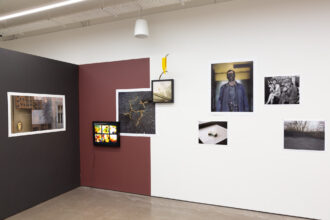
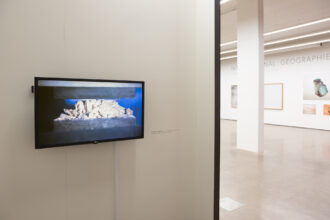
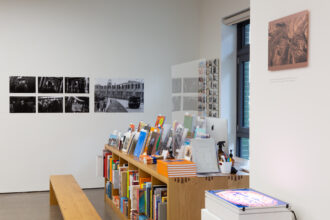
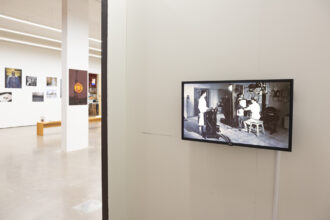
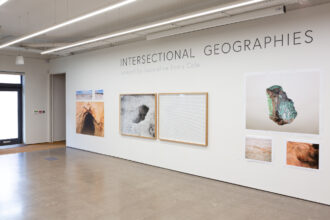
In Intersectional Geographies currently on display at the Martin Parr Foundation in Bristol, Jacqueline Ennis Cole, a neuro-diverse artist and curator, brings together 12 lens-based practitioners including herself, Xavier Ribas, Aida Silvestri and Darek Fortas, to explore how landscapes, ecosystems and lives are being destroyed “as a result of our individual and collective wants, needs, and desires”. Ranging from mining practices in Chile and Guyana, the rights of black collar workers to female genital mutilation, Ennis Cole combines the concept of intersectionality with geography to create a narrative that calls for “accountability, social justice, rights and an engaged practice of care”.
Intersectionality means that an individual’s experience of oppression or discrimination is unique and determined by the overlapping verticals of gender, race, class, sexual orientation and physical ability. The origins of the term can be traced back to Black feminist and activist Kimberle Crenshaw who used it to describe the dual oppression faced by black women in an essay she wrote in 1989. (1)
At a time when discussions around the impact of climate change haven’t been more rampant, Intersectional Geographies is a visual reminder and documentation of the impact of our exploitation of nature through extractive practices such as mining, as well as the oppression of the people involved in such practices. ‘I am interested in who is expected by society to do this work, how they are valued, what their labour conditions are. And what happens when these unsustainable industries collapse and/or are no longer profitable to the capitalists who govern them?’ says Ennis Cole. (2)
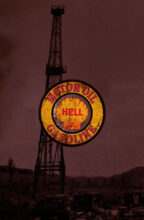
Combining photography, film and interspersed with poetry and prose, Intersectional Geographies throws light, among others, on gold mining – through Lisa Barnard’s The Canary and the Hammer — an industry that produces 180 million tons of toxic waste annually (3) which ends up in rivers, lakes, and oceans.
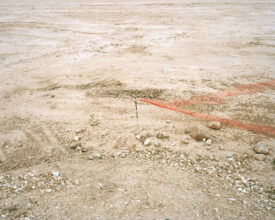
Xavier Ribas looks at the plight of nitrate miners in Twenty-Eight Points, which was a list of 28 demands presented by nitrate miners in Iquique to the government in 1904. Three years later, a group of workers who were on strike demanding better wages and working conditions, their wives and children were massacred by the Chilean army in 1907.
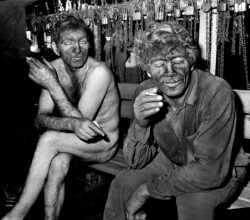
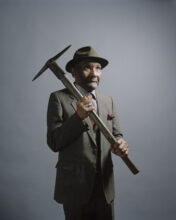
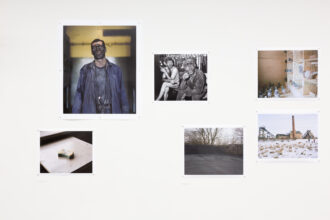
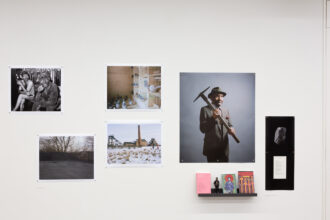
David Severn looks at the coal mining industry in Thanks Maggie. It is a personal project inspired by Severn’s “own roots and identity” and throws light on the “creativity of the coalfields”, as well as represents Black coal miners, who as per mining historian Norma Gregory, “had not received the full attention, recognition, respect or registration in print literature, online or broadcast media”.
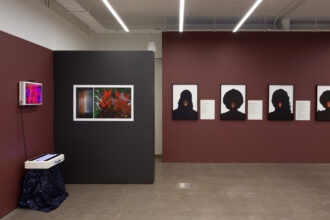
Aida Silvestri’s Unsterile Clinic is a visual activism project inspired by personal experiences, intending to not only raise awareness among girls and women affected by Female Genital Mutilation (FGM) to seek medical help in order to avoid further complications, but also “empower medical staff to have the courage to speak openly and the visual tools necessary, when examining women affected by FGM”. Each piece comprises a blacked-out silhouette of a woman with a piece of leather moulded to represent the female genital organ and different types of excision women are subjected to. This is accompanied by a harrowing first-person account of the incident. I struggled to understand how Silvestri’s work sat in relation to the other artists on display until I came across an investigation (4) by journalists Neha Wadekar and Will Swanson that revealed that climate change in Kenya had led to increased cases of FGM and child marriages in exchange for dowry.
Intersectional Geographies comes at a time when there is increased consciousness about sustainability, preservation of the environment and better working conditions for all kinds of labour. A recent example is the protests during fashion influencer Molly-Mae Hague’s brand Pretty Little Thing’s runway debut in February 2022, demanding less waste, better wages and a safe work environment for the people who make the clothes. Intersectional Geographies will not turn us into overnight climate activists, but it will sure challenge us to think and do better.
__________
(1) Kimberle Crenshaw ‘Demarginalizing the Intersection of Race and Sex: A Black Feminist Critique of Antidiscrimination Doctrine, Feminist Theory and Antiracist Politics’ in Chicago Legal Forum, Vol 1989, issue 1. Link here
(2) Izabela Radwanska Zhang ‘Intersectional Geographies: How can photography be used to understand unsustainable industries and our demand on the environment?’ an interview with Jacqueline Ennis Cole in British Journal of Photography, online February 2022. Link here
(3) ‘Gold Mining and the Environment’ on Brilliant Earth website, online February 2022. Link here
(4) Neha Wadekar and Will Swanson, ‘Climate Change Pushes Girls in Northern Kenya Back to Early Marriage and Female Genital Mutilation’ published on Pulitzer Center website, online February 2022. Link here
__________
Intersectional Geographies, a group exhibition curated by Jacqueline Ennis Cole at the Martin Parr Foundation from runs from 27 January – 3 April 2022. Including works by Ignacio Acosta / Rhiannon Adam / Lisa Barnard / Jacqueline Ennis Cole / Darek Fortas Roshini Kempadoo / Miranda Pennell / Judy Rabinowitz Price / Xavier Ribas / David Severn / Aida Silvestri / Janine Wiedel.
Reviewed for Photomonitor by Shyama Laxman