

Reviewed by Ricardo Reverón Blanco
__________
Photography’s Partial Gift
Photography is a gift. Those who have been luckily bestowed with cameras to capture the world have the power to disseminate the realities of this life. This is what Marilyn Stafford accomplished with her trusted 35mm SLR portable camera.
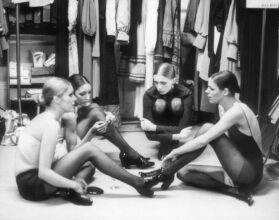
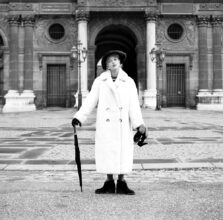
In the current exhibition at Brighton Museum & Art Galleries Marilyn Stafford: A Life in Photography, containing images spanning from 1948-1980, depict Stafford as an empowered woman who ventures as an urban flaneur to immortalise the many lives of celebrities, lifestyles, streets, and humanitarian affairs through her photography.
The retrospective exhibition of the US-born Sussex based photographer, displays the artist’s most comprehensive work to date. Curated by Nina Emett in collaboration with Marilyn Stafford’s daughter Lina Clerke, the show chronologically documents decades of this international archive which includes celebrity portraits, fashion and street photography as well as Stafford’s archival ephemera.
From portraits of Albert Einstein and Edith Piaf to documented Parisian street life in areas of highest deprivation as well as a record of Lebanese society, Stafford’s eclectic body of work is a snapshot of life through her travels. Yet, Stafford’s work is far more than a nostalgic remembrance or a travel log. It is a detailed and evocative record of society which would be often misrepresented and misunderstood by her contemporaries. More importantly, Marilyn Stafford’s photographs made the front page of newspapers and brought civic hardships to the attention of a Western readership, such as the Tunisian refugee crisis during the Algerian War of Independence that made the cover of the Observer in 1958.
“Bringing the life of the streets into it was part of who I was” – Marilyn Stafford
Documentary photography has a troubling past. Now almost six decades after these images were taken, ethics and our approaches to documentary practice have vastly evolved. I, for one, have a hard time observing celebrity photography curated alongside socio-political conflicts. However, diverging the conversation of this archive towards its ethics would dilute what I find most productive to highlight, which is the legacy Stafford has created and continues to foster for women in photography.
Influential women in the arts must be recognised, especially when even to this day there is disparity between how many women study creative arts and how many are recipients of photography awards and solo shows. As recently quantified by the Freelands Foundation ‘Representation of Women Artists in Britain’ annual report: “while 54% of solo exhibitions in non-commercial galleries in London were by women artists in 2020, this is almost 20% less than those on postgraduate programmes”. This exhibition is therefore important in establishing an equitable playing field for women in the arts.
Stafford is not merely a passive figurehead to inspire women, she is an active supporter and has in association with FotoDocument, established The Marilyn Stafford FotoReportage Award for Women Photographers for solution focused documentary photographic projects.
To quote Stafford: “photographers don’t grow old – they just grow out of focus” an axiom that is still very much alive and perhaps photography’s gatekeepers (and by extension in the arts) have not only grown old but have (for way too long) focused on mainly gifting men with accolades that are deserving to be shared across all genders.
__________
Marilyn Stafford: A Life in Photography continues at Brighton Museum & Art Gallery to 8th May 2022. Reviewed for Photomonitor by Ricardo Reverón Blanco.