




reviewed for Photomonitor by Romina Provenzi
A myriad of exhibitions are peppered around town at museums, arts spaces, commercial galleries, restaurants for Photo Oxford 2020 until November 16th. Responding to the theme of ‘Women and Photography: Ways of Seeing and Being Seen’, the exhibitions span from vintage to documentary photography and contemporary art practices, from displays in spaces to online exhibitions. According to Lena Fritsch, Curator of Modern and Contemporary Art at the Ashmolean Museum in Oxford, “defining the difference between an art photograph, a documentary photograph or a journalistic photograph is difficult, as these categorisations are complex. The differences can relate to the images themselves, but primarily they relate to the context in which the photographs were created and in which they are presented. Images often have a clear purpose in photo journalism, whereas photography can be used in much more flexible ways in art, conceptually and aesthetically. To me, a good photograph is an image that can grab my attention regardless of the context it was made for ”.
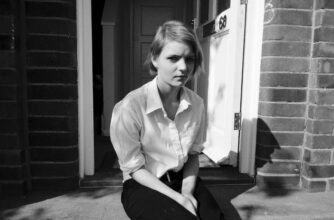
Within Photo Oxford 2020’s dense program, the exhibitions differ enormously one from another for the use of photography, the response to the festival theme and their curatorial aspect. Presented in the format of a film to watch online, the work Helena, Every Day is a Morning After by British documentary photographer Jim Mortram documents the life of a British teenager with mental health issues giving her centre stage instead of making of her just another passive subject ‘behind the lens’. Grant Scott, Head of Photography at Oxford Brookes, selected this work as Oxford Brookes’ contribution because “the work seemed an important addition to the festival responding to its title, and to instigate discussion around the testimony as well as around the images themselves”.
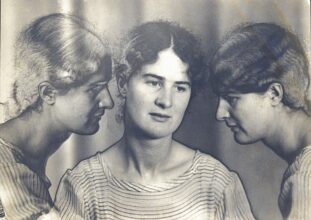
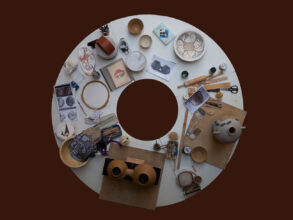
Exhibited at the Bodleian’s Weston Library, the work of late photographer Helen Muspratt is of a particular beauty. Muspratt studied photography at a polytechnic but was later inspired to develop more experimental techniques when she discovered Man Ray’s work with solarised photographs. She started to apply solarisation in her work too, as it can be seen in the displayed Triple Self Portrait (1993), which is also the leading image for Photo Oxford 2020. But photography can also function as a source of inspiration and research for a new project as artist Mariana Castillo Deball did for her solo exhibition Between Making and Knowing Something at Modern Art Oxford. Her work adds a more conceptual feel to the festival theme with an installation of ceramics and textiles created for the upper gallery in response to the late anthropologists Makereti and Elsie McDougall archival photographs, displayed within the exhibition space, from the Pitt Rivers Museum collection.
Festival goers are also given the opportunity to glimpse into the art collection of photographer Joanna Vestey at her studio nestled within the leafy streets of North Oxford. Her collection includes photographs from early modern to contemporary art that she started to collect in her twenties. “The first few pieces I bought were a couple of small Bruce Rae cyanotype tableaux, and at the time buying photography was relatively accessible in the UK” Vestey explains. She curated the display whose gem is a piece by Francesca Woodman, described by the collector as “a small square vintage silver gelatin print, part of a series of self-portraits wearing a polka dot dress that she made in 1976-1977. As with much of her work, we do not see her face and there is a sense of a fleeting moment and movement suggested by the softness of her dress, there is something ephemeral and at the same time so poignant about it”.
It is the work of portrait photographer Fran Monks for The GateHouse that is particularly relevant to Oxford as the location of the festival because of the significant presence of charities working with homeless people that take refuge in the city from all parts of the UK. ‘Strength and Resilience: Celebrating the achievements of the community of women at The Gatehouse’ is an outdoor exhibition in the St Giles churchyard of large scale photographs of guests, volunteers and staff of The Gatehouse that identify as women.
Not far from St Giles, La Maison Francaise presents inside its concrete building the research of French curator Clara Bouveresse that is about the work and photo-books of three American photographers from the Magnum Agency: Susan Meiselas, Eve Arnold and Abigail Heyman. Their work fought female gender stereotypes in photography already in the 1970s, when having women behind the lens was still an exception to the norm as well as portraying women in their real life. Their work also contributed to pave the way for a more radical role of women in front and behind the lens that is now widely accepted, at least in the art world. An excellent example is the online exhibition A Dangerous Field, the contribution to the festival of a group of artists based at Magdalen Road Studios: Claudia Figueiredo, Helen Ganly, Kate Hammersley, Asma M Hashmi, Joanna Kidner, Lucas McLaughlin, Annabel Ralphs, Ann Rapstoff and Vicky Vergou, Catalina Renjifo, Cally Shadbolt, Wig Sayell. They explain that their exhibition “demonstrates how artists use photography whether to explore or subvert their ‘field’, or to record and research their subject whilst engaging in the examination of their practices”. In the excellent fifteen-minute film, the online exhibition brings very relevant art practices in front of the festival’s public, as a testimony to the excellent artists working in Oxford currently.
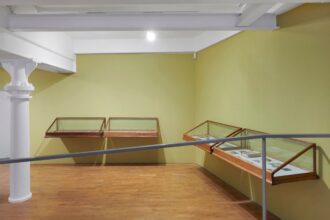
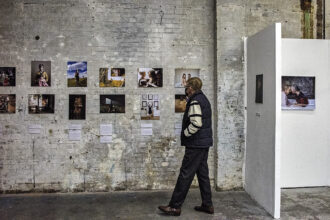
Undoubtedly the star of the festival for public engagement has been the successful Photo Oxford Open Call. After receiving numerous submissions, the festival has awarded twenty photographs selected by the public and twenty photographs selected by a panel of judges that included artist Cornelia Parker and curator Lena Fritsch. The forty images are now exhibited together in the art space of non-profit arts organisation OVADA in Oxford. It is striking to see these works in a variety of styles and of varied responses to the festival theme all displayed in a bare warehouse space where they are given enough space to be observed, much the same as Photo Oxford 2020 did in successfully giving space and celebrating equally all forms of photography.
__________
Photo Oxford 2020 takes place October 16 to November 16, 2020 in venues and public spaces across Oxford. Numerous online exhibitions and resources for further exploration and learning are available via the Festival’s Website Instagram Twitter
Romina Provenzi is an Arts Journalist based in Oxford, and she writes about visual arts in the UK and abroad. She contributes regularly to arts magazines with essays and features based on artists’ interviews, studio visits and specific visual arts scenes; she also reviews museums’ exhibitions and writes reports about the art market. Her work appeared in digital and print editions of Elephant Magazine, Printmaking Today, Photomonitor, The Design Edit, Art Africa, and several other titles; until 2015 she was also London correspondent for Belgian art magazine Hart. She is a trustee at arts organisation OVADA in Oxford, and has recently curated a series of art talks for OVADA to explore artists practices and connect them with the local arts community. rominaprovenzi.com