September 24 – October 25, 2020
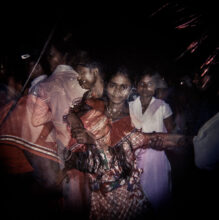
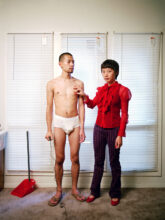
Propositions for Alternative Narratives is the first photographic festival post-lockdown and is conceived to be experienced in three distinctly different ways. It features work from international artists Farah Al Qasimi, Lotte Andersen, Poulomi Basu, Roger Eberhard, Ivars Gravlejs, Pixy Liao, Alix Marie, Ronan Mckenzie, Sethembile Msezane, Alberta Whittle, Guanyu Xu, and Queer History Now, whose voices originate from a range of countries across the globe. The work presented does not have one overriding narrative; instead, as the festival title suggests, it aims to examine a range of intersecting questions that include: humour in the everyday, post-colonial territories and structures, race, sexuality, transcultural identities and epistemological belief systems.
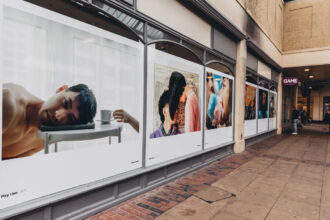
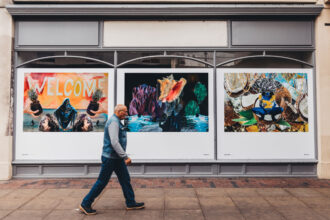
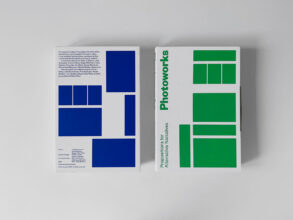
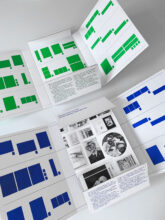
The festival can be engaged with as a physical outdoor photography exhibition presented on posters and billboards across Brighton, Hove and Worthing and as a limited edition ‘festival in a box’ publication which contains artworks from all of the participating festival artists. This publication can be purchased on the website and is free to those with a Photoworks membership subscription. According to festival director Shoair Mavlian the ‘festival in a box’ draws from Marcel Duchamp’s idea of the mobile museum, that is the Boîte-en-valise (first launched 1936) that sends artwork to the audience.
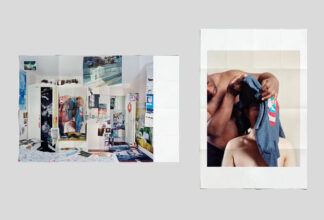
In consultation with each artist, graphic designers Gilliane Cachin and Joshua Schenkel have designed a series of posters for each of the featured artists. Alongside these is a selection of scholarly essays which are unique to the publication and sit in dialogue with the artists’ posters. They include contributions from Simon Baker, Julia Bunnemann, Pamila Gupta, Shoair Mavlian, Lucy Soutter, and Queer History Now. The aim of the ‘festival in a box’ is to encourage the audience to actively engage with the work and curate their own version of the festival.
There is an additional festival presence on the Photoworks website that presents a portfolio of work from each of the festival artists along with both oral and written texts, as well as an online programme of events which can be accessed across a number of social media platforms.
All of the festival artists are also involved with the online events programme in different ways. This includes a play list supplied by Liao, live artist talks on IG and Zoom, Instagram takeovers, online talks from the festival director, curator and a number of invited speakers who have added to the free online resources. The online event programme allows the audience to engage with the events programme remotely.
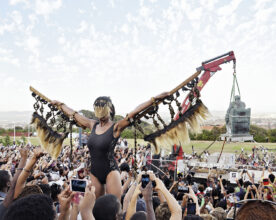
For example, I attended a virtual tour of the outdoor exhibition in Worthing, led by festival curator Julia Bunnemann, in which she explained critical curatorial decisions made when selecting individual pieces to present in the outdoor exhibition. I also listened to the inspiring online Zoom talk by Aurella Yussuf and Hudda Khaireh, of Thick/er Black Lines (T/BL), whose interdisciplinary research typically examines gender, race and class. In their presentation they attempted to (de)colonise dominant hegemonic narratives that memorialise history through the reverence of the white male body, by pivoting discussions around the practices of three black artists, whose work investigates the relationship between power, hidden histories and public monuments. This included photographs from festival artist Sethembile Msezane, whose subversive performances captured in The Public Holiday (2013-14), raise questions about the way in which heritage and power is embodied by the normative male white body. Hew Locke’s controversial mixed media sculptures, Patriots (2018), that see ‘prominent’ American historical figures such as (slave-owner) George Washington excessively adorned with golden chains, beads, medals, and coins; and Nona Faustine’s performative naked self-portraits White Shoes (2015) that draw attention to the supremacy of white history by highlighting significant locations in New York City that are historically linked to the slave trade. The presentation was critically grounded by references from black literary scholars such as Stuart Hall and bell hooks, who underpin T/BL’s ideological propositions for thinking through and memorialising alternative historical narratives. In addition to their presentation T/BL have also contributed to the resource list which is freely available as part of the festival presentation on Photoworks website.
As we know, traditionally most international photography festivals follow a similar shape to the grandfather of photography festivals Les Rencontres d’Arles, that had its 50th anniversary last year. I was curious to see how a photography festival is conceptualised post-lockdown when audiences remain nervous about social interaction. It is encouraging therefore to see the consideration with which Propositions for Alternative Narratives has been conceived to meet the needs of a twenty-first century audience, after an international pandemic. Within this context not only does the festival succeed in raising the visibility of alternative voices by showcasing a diverse selection of work from international artists, it also radically reimagines the form of a photography festival.
The three strands of the festival intersect but do not repeat each other, and arguably reinforce each experience. So frequently we walk past work but do not know the context, read about work and never see the actual piece, or hear an engaging artist talk but fail to investigate their practice further. Within this festival framework the audience is able to enrich their engagement with the festival by interacting with it across multiple platforms.
Whilst it is unrealistic that every aspect of the festival is experienced by each visitor, perhaps, we can see this festival framework as more democratic than previous photographic festivals. By this I mean that the audience is no longer reliant on the privilege of mobilities to experience the festival. Although the experience of seeing an exhibition cannot be completely replaced, the online events programme (some of which has a suggested paywall) draws on all those new ways of connecting culturally that have been engaged with over the last six months and embeds them at the heart of the festival. We get to see the portfolios of the festival artists, read comprehensive biographies and listen to a range of talks. The ‘festival in a box’, can be understood as an additional way of engaging with the work. It is not a souvenir of a festival never visited but is another dimension to the festival, with which the audience can interact and claim ownership of the festival work.
Overall my experience of the festival is very positive. It offers alternative ways in which to engage with current debates around contemporary photography and is democratic in this process.
__________
The physical outdoor exhibition remains on display until October 24 and the live online events continue to take place during the festival month. Further details can be found on Photoworks website: photoworks.org.uk/festival2020/
With thanks to Caroline Molloy for this review.