

Reviewed by Rachel Segal Hamilton
The world is in a state unrecognisable from 2019, when GRAIN held their national symposium. That was a world before the Covid-19 pandemic. Before the Ukraine conflict. Before temperatures hit 40.3 °C in the UK on 19 July 2022, making it the hottest day recorded here. And before Black Lives Matter protests swept the globe, shaking up long-held narratives. Then, as GRAIN Director Nicola Shipley reminded us in her opening address, “the backdrop was Brexit and social inequality.” Though these issues have not gone away, the talks this time looked forward. There was something in the air – a sense of hope, of doing things differently.
The symposium was broadly divided into two, with morning presentations from Arpita Shah, Maryam Wahid and Lydia Goldblatt and a live video link up with Mark Neville in Kyiv, while in the afternoon we heard from Sam Laughlin, Jermaine Francis, Joanne Coates, and Clare Hewitt, each section followed by a chaired Q&A by Katy Barron and Camilla Brown. This structure was broadly thematic, the earlier section focused on identity, family, and belonging, the later one exploring the rural, our connection to nature, and the semiotics of the British landscape. And yet those themes overlapped, re-emerging throughout the day – a testament to GRAIN’s considered and nuanced curation. Born out of the Birmingham Library in 2012, GRAIN has evolved over the past decade. They have nurtured the talent of many of the day’s speakers, through commissions, artist development, socially-engaged projects and publications.
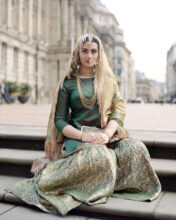
One major shift in photography explored at the event was the foregrounding of personal perspective. This is a generation of photographers who draw on lived experiences to unearth stories that have been absent from visual culture. Arpita Shah, Maryam Wahid and Lydia Goldblatt, for example, all touched on the maternal influences at play in their work. Shah and Wahid discussed the role of their South Asian mothers and grandmothers as muses, while Goldblatt, who finds poetry in the domestic, talked candidly about mothering young children. Goldblatt explained how photography (and writing) allow her to be both present and reflective, while Shah describes the therapeutic properties of the camera, “a tool to express feelings” when words alone don’t quite cut it. Mark Neville, meanwhile, talked about how photography turned him into a campaigner, working with veterans to raise awareness about their shared reality of PTSD. After visiting Ukraine in 2015, he felt instant affinity, and it’s a place he now calls home. In documenting the conflict, he is continually pushing to keep public attention on the war.
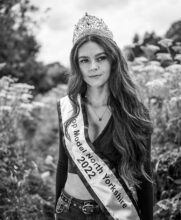
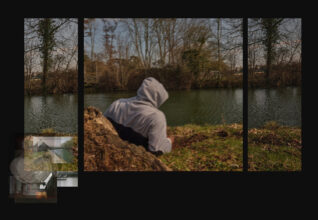
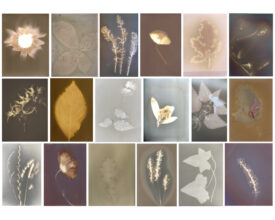
In their work, Jermaine Francis and Joanne Coates each invite viewers to look again at the English countryside. Francis turns a critical eye on the idea of England as monoculture, tracing lesser-known histories of Black presence in the landscape and layering them, ghost-like, onto contemporary images in a form of montage. Coates powerfully portrays her own community of working class women in Yorkshire, disrupting the Instagram filtered fantasies of city dwellers. Nature is more than a subject for Clare Hewitt and Sam Laughlin. It is a collaborator. Hewitt spent time in the company of a community of oak trees who ‘helped’ her to make images in pinhole cameras nestled in their branches or buried near their roots. As such, they became participants in the image-making process. Sam Laughlin is grounded in slow and careful observation of the environment. In addition to his studies of nests as fascinating, material constructs of animal behaviour, he showed his most series of images of water photographed in moonlight – their constantly shifting, chance interactions creating magical results.
Photography, like all art, articulates the mood of the times in which it is produced. But this line up felt particularly well chosen. The present moment can feel bewildering, divided and perilous. Much of the Q&A discussion centred on conflict, climate crisis, the threats of AI, the difficulty in making a living as a photographic artist when funding is scarce. But the GRAIN symposium was a tonic, a chance to think deeply about race, class, colonialism, patriarchy and ecology. An event that left you with a sense of contemporary photography’s rootedness, despite everything. In their embeddedness in time and place, their complexity and care, these artists and their work are a testament not only to the richness of photography as it is but to what it could be.
__________
Rachel Segal Hamilton is a writer and editor, specialising in photography and visual culture, for magazines, publishers, websites, awards, agencies, charities and brands. Contributing Editor for the Royal Photographic Society Journal, she also works in digital at University of the Arts London and is the author of Love Story, published by Hoxton Mini Press.
GRAIN Projects’ The State of Photography IV took place on 21st April 2023 at Birmingham City University.