


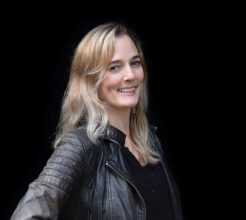
Lena Fritsch is the Curator of Modern & Contemporary Art at the Ashmolean Museum, University of Oxford. Previously Dr Fritsch was Assistant Curator, International Art at Tate Modern and she holds a PhD in Art History from Bonn University. She is the author of Ravens & Red Lipstick: Japanese Photography since 1945 (2018, Thames & Hudson) and The Body as a Screen: Japanese Art Photography of the 1990s (2011, Georg Olms) among numerous other books and exhibition catalogues. Here we learn more about the background to her current practice, in a recent interview with Romina Provenzi.
__________
RP: How did you end up working in the visual arts?
LF: You could probably say that Tokyo opened my eyes. At the end of secondary school, when I was 19, I lived in Tokyo for 7 months to do an internship. I was really excited to live on my own in this big city. I experienced work life in a Japanese company but worked out that I didn’t want to pursue a business career or a career in the fields of economics or finance. Instead I enjoyed visiting modern and contemporary art museums at weekends and meeting with artists and curators, which made me realise that I wanted to work in the visual arts. After the internship, I went back to Germany for a master followed by a PhD in Art History at Bonn University. As I returned to Tokyo to study at Keio University while working on my master thesis, my supervisor from Bonn University encouraged me to do some research on Morimura Yasumasa’s work, which is what got me into photography at first. Later I focused my research on Japanese photography, which really is a small field outside Japan. After completing my PhD, I was selected for a two years’ curatorial traineeship in Germany at the National Museums in Berlin before moving to Tate Modern in London as Assistant Curator, International Art, and then to Oxford as the inaugural Curator of Modern & Contemporary Art at the Ashmolean Museum in 2017.
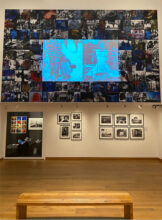
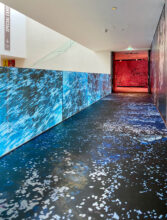
RP: Recently you co-curated the successful exhibition ‘Tokyo: Art & Photography’ at the Ashmolean Museum. Due to the pandemic, the exhibition opened a year later in 2021. What sort of audience did you want to reach, and what did you want them to take away from the exhibition?
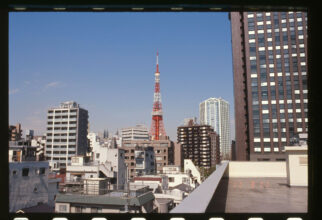
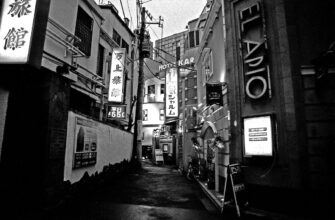
LF: I tried to reach a wider and younger audience with ‘Tokyo: Art & Photography’. In my role as a new post, I wanted to bring more modern and contemporary art to the museum. Considering that the Ashmolean holds very few photographs in its collection, I was very excited to bring photography to the museum and its public with this exhibition. As a matter of fact, the Ashmolean exhibitions’ program should always link to the museum collection or the city of Oxford. This is why we thought that showing the woodblock prints alongside Japanese photographic prints would create nice connections. We went on to create a dialogue between the historic works in the collection and the modern and contemporary works on loan from Japan including a large number of photographs. There is a massive photography scene in Japan. Given the limited available space for the exhibition, we wanted to give a taste of the Tokyo art scene in exhibiting works about Tokyo’s inner life and Tokyo’s richness and diversity like works by Moriyama Daido, Tokyo Rumando, Naito Masatoshi, Takano Ryudai and Ninagawa Mika among many others.
RP: What is the level of appreciation of photography as a form of contemporary art in Japan?
LF: Despite the fact that Japan has had such a big scene in terms of photography for long time, the appreciation of photography as a form of contemporary art is fairly new. Photography is a field that used to run separately from the art world with its own circuit of galleries, photo magazines and photo books supporting the work of photographers. Things have changed enormously in the last few decades and photographs are now displayed in museums’ exhibitions and contemporary art galleries. For example, Moriyama Daido is a classic Japanese photographer but only in the last twenty years Moriyama Daido has had his work exhibited in art museums, which shows that something has shifted.
RP: Can you describe the recognition of photography as contemporary art in the UK compared to other art scenes?
LF: Firstly, Oxford is strong in collecting historic photography and British early photography. Its public is familiar with that field of photography rather than photography as contemporary art. Overall in the UK, the appreciation of photography is fairly new. There are exceptions like the photography department at the Victoria & Albert Museum, the significant collection of photography (including Japanese photography) at Tate and the wonderful The Photographers Gallery. But overall the appreciation of photography as a form of contemporary art is recent compared to cities like Paris, Dusseldorf and Essen where there is a longer tradition and history with huge institutions that have been collecting and supporting photography for quite a while now.
RP: How has the pandemic changed your way of working as a curator? What challenges you have encountered in the last couple of years?
LF: Certainly the pandemic posed challenges to my work as a curator. There’s been a negative effect on the exhibitions’ budget. The budget is considerably reduced if you start planning with a projected number of visitors and ticket sales, which suddenly drops for unexpected circumstances like a pandemic. A diminished budget means readjustments on all levels of an exhibition. It could be crossing out lenders due to higher transport costs given their location or expensive requirements in terms of display costs. Therefore it has been challenging in the last few years.
RP: Recently you have been appointed as guest curator for the Roppongi Crossing 2022, a triennial organised by the Mori Art Museum in Tokyo that offers an insight into the Japanese contemporary art scene. Would you like to talk about it?
LF: It is a great honour for me to have been appointed as one of the curators, and a fun and exciting project to be involved with. I am working together with Kondo Kenichi, Senior Curator at the Mori Art Museum, independent curator Amano Taro and Hashimoto Azusa, Curator of the National Museum of Art in Osaka. At the moment we are working closely together especially in terms of concept. We have already met several artists on zoom, but in a little while we will start working individually with the artists that we had personal contacts or worked with previously. Finally I hope to be able to travel to Tokyo in the Autumn before the exhibition opens in December 2022 and I very much look forward to it.
For further viewing: ‘Tokyo: Art & Photography’ at the Ashmolean
With thanks to Dr Lena Fritsch and Romina Provenzi for this feature