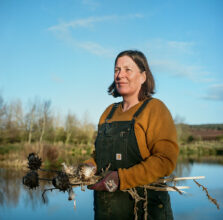
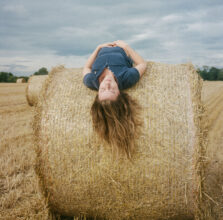
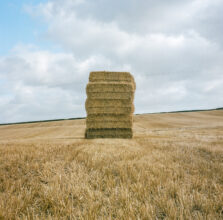
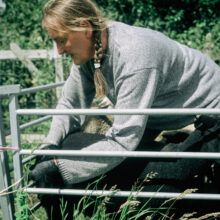
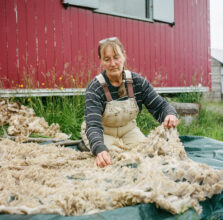
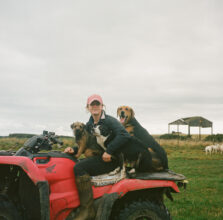
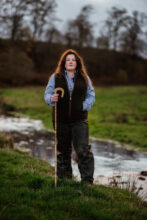
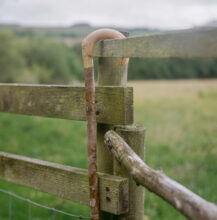
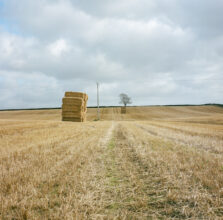
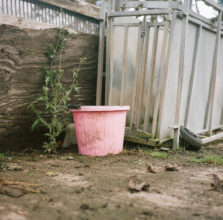
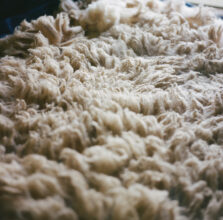
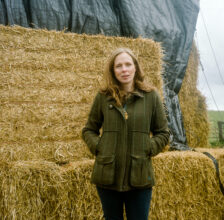
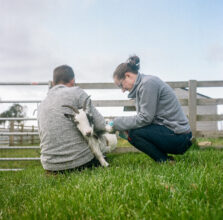
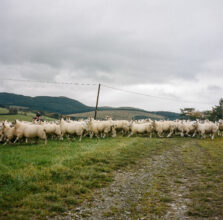
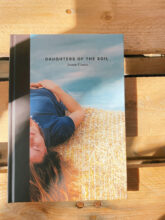
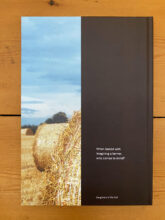
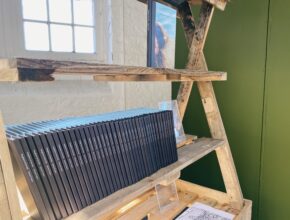
Daughters of the Soil is the culmination of twelve months of research by documentary photographer Joanne Coates into the role of women in agriculture in Northumberland and the Scottish Borders. In tandem with an exhibition earlier this year, Coates’ work was published in photobook form and will tour to Newcastle in August, as well as to the Jerwood Space in London and a further venue in Yorkshire later in the year . Below, Zak Dimitrov spoke with the artist about the background to this important documentary project.
__________
Zak Dimitrov: Could you just start by giving us a little information about yourself and what made you work on your project Daughters of the Soil?
Joanne Coates: I’m a working class photographer based in a very rural area in the North of England. These factors have ended up influencing much of the work I make and what I’m interested in. The work started in earnest in 2014 when I began thinking about females in rural spaces. I first made an image on the subject in 2014, but as I was still studying I had to put the idea on the shelf. I was working a lot to get by and found it really hard to be able to do the photographic work I often wanted to. I saw a residency announced in 2019, Maltings Visual Arts (it used to be called Berwick Visual Arts up until 2021) and it was around women and farming. I had been doing work on it when and where I could in the years before but this meant having the time and space to work on something in a way I’ve always wanted to. I applied and ended up getting the residency.
A bit of a backstory: my partner is a farmer, I make work with him and about him but don’t really put it anywhere. I’m not from a farming background and I believe that the more I discovered about it, the more it helped in small ways to make the work more genuine. I did and still do work as a farm labourer / worker, only a small amount of hours a week but that gives me an understanding of my work and is necessary as a low income photographer. I can understand many of the words used, the processes, the people involved. I often see the countryside depicted by outsiders, which I sometimes enjoy, but really felt it was missing to have someone who truly lives the life being depicted. This is what I explained in my interview, after which I went home feeling unsure, but I got a phone call saying I had got it. The residency was paid and I got to work on the project for 8 months, with some interruptions due to Covid. When it was nearly finished I showed a work-in-progress body of photographs and was offered a show at The Gymnasium at Berwick. I wanted to make a small book that explored the issues within the work and to share the view with more people. I worked with Newcastle University and an academic, which gave me an insight into all the statistics and figures. There is a part of me that is a woman who works, lives and has a partner in agriculture but I have a stronger separate identity as a photographer.
ZD: Was the process important to you (whether you shot film or digital, printing, editing, etc.)?
JC: I’ll start with the slightly negative side, but I believe this is important – for many years I just worked with what I had. It took me a long time to acquire cameras, film and general equipment that was right for the projects I wanted to work on. Would that stop me from making work? Of course not. Ideally I would have a studio, work on film, print myself, have time to pore over images, have a space to put them. I still don’t have these things but I work in whatever way I can. I didn’t manage to have a studio for this work because of Covid and had to be flexible with how I made it and my ideas. You have to be able to identify the things that are important for you and make do with what you have – it shouldn’t stop you from making work.
The positive, of course, is that having to work around these challenges opens up my mind to what and how I can make work. I think what you use and how you use it can and should change between projects. Process in terms of methods of social engagement, talking to and responding to the women was really important to me. Sharing quizzes around farming, recording audio and making portraits afterwards. One day I might have a studio with a darkroom where I can afford to be strict, which I would like, but unless you experiment with what you can and play, which I hope I do all my life, you won’t grow as a person and an artist.
ZD: What were the challenges in working with the book form and how do you think the work benefits from it?
JC: I worked with a designer, Sail Creative. I placed the images and I spent months moving them around in different places. I had a main theme around the cycles of nature and the cycles a woman experiences but I didn’t want this to be blatantly obvious. I would take out a favourite image because it didn’t fit, or move it to the other end of the book. I knew I wanted quotes in and writing but it was tricky finding the balance. It was lovely to work with Ruth and Mandy at Sail as I sent them ideas, which they really understood and would question if the images worked best in this particular way. I usually work alone all the time so this was a welcome change.
The work can really show that experience of a woman in this space. From girl, teenager, mother, mentor, woman. At different stages women are expected to change, the land is expected to change with the seasons. As women from a young age we are introduced to this idea of our ‘selves’ and I think that having this template can at first be incredibly daunting. Blank canvas staring at you, but it can also feel refreshing and strangely empowering.
ZD: The book is self-published, is that right? What are the benefits of this versus going with a big publisher?
JC: Yes, I worked with Malting Visual Arts and it was funded by Arts Council England. I’ve never worked with a large publishing house, I worked with Another Place Press in the past and it’s a very different experience doing it on my own but it still feels collaborative and working with a designer enables me to translate ideas over.
ZD: It’s interesting to hear that you’ve been working on Daughters of the Soil for almost 8 years now and it sounds like the work has taken many twists and turns since its conception. How do you think the project, or your idea of it, changed from when you started to when it finished?
JC: When I first applied for the residency I wanted to look at domestic space and the often invisible work that women do on farms, but with Covid it just wasn’t safe to do that. I talked about the hidden work and that’s where photographing women who manage the farm and motherhood in general came in.
ZD: What’s one thing you would have done differently in hindsight?
JC: This is hard! I think with this work I’m happy with how it went. I don’t look back and ponder over what I would have done under different circumstances because those were the conditions under which I took the photographs and they couldn’t be changed. Ideas change with any project as you create and reflect afterwards, hopefully always exploring different possibilities along the way.
__________
Daughters of the Soil was created by Joanne Coates.
Coates will be exhibiting The Lie of the Land at Jerwood Space, London (23 September – 10 December 2022) as part of the Jerwood/ Photoworks Awards .
With thanks to the artist and Zak Dimitrov for this interview.