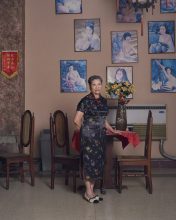
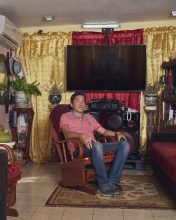
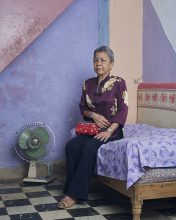
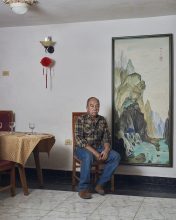


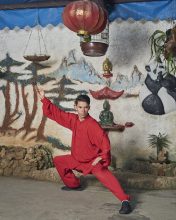
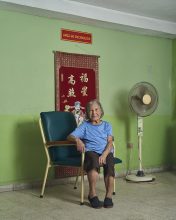
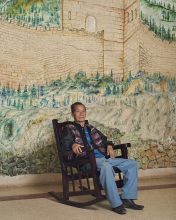
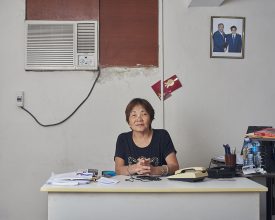
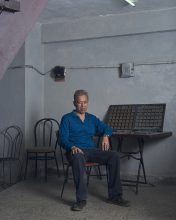
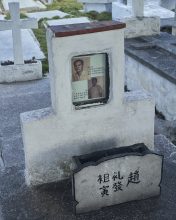
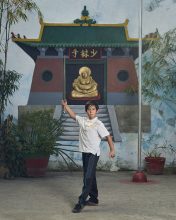
Sean Alexander Geraghty is a London-based photographer whose has recently undertaken a project in Cuba, researching the Chinese community and their descendants in Havana to create a compelling series of portraits documenting these families and their surroundings. Below, Sean spoke with Photomonitor about this project and how it was created.
__________
Christiane Monarchi: How did you decide to start this project? Is this a community close to you personally?
Sean Alexander Geraghty: I’ve been to Cuba before and toured a bit, but I had never been to the Barrio Chino. I was randomly reading articles about Cuba and came across the story of the Chinese community and how they got there. After that I bought this book, did more research and realised it hasn’t been photographed much so decided to go and give it a try.
CM: Looking at your works one can read an interest in the persistence and resilience of this small community, as well as a nostalgia for its slow but inevitable disappearance. Is there an overall idea that you’d like the viewer to hold in mind?
SAG: Their story is incredible and really opens the question about national identity and heritage.
As for myself I am born in France to an Italian mother and English father; I have always been really interested in what defines identity. And yes I would definitely want to pay tribute to all the people who try to keep a community alive via its culture and tradition. But as you said unfortunately it’s slowly dying and I can hardly imagine the young generation fighting for it, also keeping in mind Cuba still has a socialist narrative where being Cuban is your main identity.
CM: How did you gain access to this community, as an artist coming in from the ‘outside’? It’s a question many photographers negotiate in their practice, and it would be nice to hear how it worked for you on this project.
SAG: It definitely wasn’t easy and to be honest at first I was a bit discouraged; no one would accept an interview, let alone a photo. Then after some time I think they realised it was a “serious” project and a bit more than just a photo of them. I managed to interview and photograph some senior members of the historic societies and that opened a lot of doors.
I think it was of meeting the people and talking about the project first, then letting things happen slowly.
CM: What made for the optimal portrait, and composition?
SAG: As you can tell by the images, the location is an essential part of the picture for me.
I really wanted to put the story back in the context of Habana. Surprisingly, the colourfulness of Cuba really blended with the story, and weirdly enough it looked like it could have been shot anywhere, in Mexico or Spain for instance. The optimal portrait for me is a location that can be equally as interesting as the subject.
CM: Did you ask people where they wanted to be photographed or just find them in situ?
SAG: All the pictures are carefully composed, lots of furniture has been moved around, I always play with what’s available on the spot. I like the idea of staged pictures but still trying to keep it natural, there is a thin line between real and staged that I really like. Ideally the viewer would spend as much time looking at the subject as looking at their surroundings.
CM: Is this series finished, in terms of your engagement with this community?
SAG: Not yet ! I just got back from a one month trip and will go back again another time this winter. Eventually I want to do an exhibition over there (work in progress) and maybe publish a book. The images will have text as well since I got interviews of everyone.
__________
For further viewing: seanalexandergeraghty.com