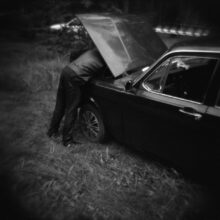
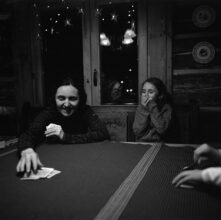
Brigitte Grignet is a Belgian photographer represented by L’ Agence VU’. She creates intimate, almost poetic, documentary projects made in Chile, Guatemala, Colombia, Palestine. In 2016 she received a Magnum Emergency Fund Grant for covering the life of unaccompanied children seeking asylum in Belgium. This year her project Poland became the finalist of the Grand Prix ISEM in France.
Project Poland started as a conversation with a friend, but opens more topics for a discussion, as the country itself is going through a far-right political and social storm. As 2020 marks 15 years’ reign of the national-conservative Law and Justice party (PiS), the government slowly erodes women’s rights, LGBTQ tolerance, independence of the judicial system and other areas, while protecting doubtful “traditional family values.” In this conversation with Anna Akage, the photographer tells about her path through documentary photography and what she has seen in rural Poland.
__________
AA: Why did you take documentary photography, and what is a personal documentary for you?
BG: I got an MBA in Brussels and worked a little bit afterwards, but wasn’t happy. I moved to New York with my boyfriend and suddenly found myself in love with this city. It felt like an electroshock: I felt deeply alive, suddenly – connected to myself and to the outside world. I was drawn to the people – so different from what I’d known, the way they walked, they represented themselves, the energy on the streets. The perception of the outside world became more vivid. My eyes were wide open and I started walking around with my camera.
Before that, I never thought photography could be a path for me. I went to ICP, and this changed my life. It was an incredible experience to meet so many different, inspiring people, teachers, but also the students. That is how I started photography.
From the very beginning, I knew I wouldn’t be making conceptual work, I chose to be in the world, to anchor myself, and document both the feeling and the experience.
I think photography is an amazing excuse to travel, it helps me to understand the world, to get in touch with people, enter their homes and lives. I worked for many years with Mary Ellen Mark, and she used to say “there is nothing more extraordinary than ordinary life.” And for me, this ordinary life is greater than fiction.
I call it personal or emotional documentary photography, because it is never objective, and shouldn’t be. Photography shouldn’t just describe. Photographers should face their feelings and their pictures bear witness to their emotions. Now, as a teacher myself, I see how hard it can be for students to allow a point of view in photography.
AA: Aren’t younger people more concerned about their point of view and egoistic than the older generation?
BG: It is sometimes hard for them to go beyond aesthetics. I teach at an art school, not a journalistic school. They are young, in their early twenties max, and at times they don’t understand that an image should not just be pretty. It is not because something is beautiful that you take a photo of it. I’ve also noticed many students are less open to the world than I thought a young generation would be.
AA: Speaking about the long-term documentary: eventually, these projects always become personal. Was it like that between you and Poland?
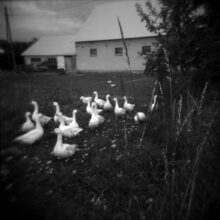
BG: One of my best friends is Polish, we met at ICP. When she returned to Poland, I started to visit her regularly and take some pictures. In 2015 PiS took all of the political power in the country, and my friend became restless, talking more and more about the dramatic changes that were happening in Poland. Her words and active position absorbed me. She and her friends all live in Krakow, they share the same political beliefs, and from time to time take part in anti-government demonstrations. These are well-educated, intellectual people from the city, who do not support the anti-democratic, right-wing ideas of the party, its totalitarian control, infringement of freedoms, and discrimination. I’ve listened to many of these conversations, then one summer I came to Poland and we left progressive big cities and set off to the Eastern rural territories. There I saw a whole different world. The further East we were going, the more divisions I saw between them and the city residents, at times they seemed almost unfriendly.
I follow the news about Poland and all Eastern Europe, which gives a lot of worries about the empowerment or the right-wing movement. And I find it surprising how poorly this topic is covered in the media, getting attention only when something dramatic happens.
AA: Yet, your images from Poland do not tell much of the political disturbance.
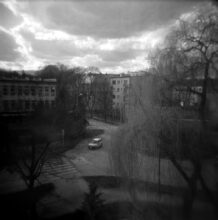
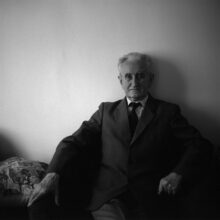
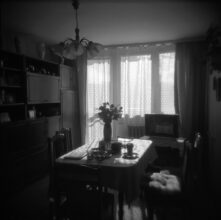
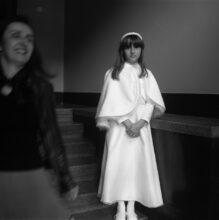
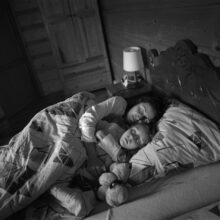
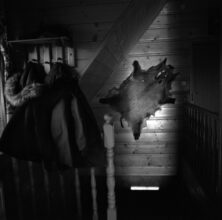
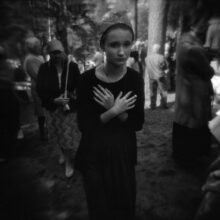
BG: Yes, I shoot ordinary life, not the demonstrations. The images of the protests or revolutions are something you will easily find if you research the situation in the country. What would I add to that pool by taking just another similar shot? I am more interested in making people feel something about the life of the others, tell their everyday stories, rather than illustrating a political speech. In the intimacy of people’s homes, we can feel what it is like to live in Poland these days.
AA: You also noticed people being less friendly in the countryside in Poland, what was it?
BG: It was not that they were unfriendly, but it was just a feeling I had when noticing how people look at you. Maybe this is the way they carry themselves or a certain distance with what they don’t know. And of course, what I had is just a tiny glance, I cannot even pretend to know what it is to live there. It is a different culture, a different way of life, where people do not have the same interpersonal relationship.
That is why I love to go back to places: after you take off the first layer of typical images, you start to go deeper and develop relations with the place and the people. But of course, this happens not with every place; I had a very strong connection to Chile as if I had lived there in a previous live. But I did not feel the same in Ecuador.
AA: And how about Poland?
BG: I developed relations with Poland through my friend, and now I am discovering it.
When working in the field, I try to put away the known facts, the preconceived ideas and work intuitively; I came not to prove the point but to learn. That doesn’t mean you have to be ignorant; there is this fine line where you want to know about the place, but you don’t want to take a preformed photo. It is shooting more with your heart than with your mind.
I discovered that in Chile: it appeared you cannot talk about Pinochet. I learned you have to leave your concepts and prejudices when you are coming to a new place. Eventually, you realize how small you are and that your work is not going to make any changes because you are just a human being. You cannot pretend to change the world. In this work, you can witness heartbreaking situations, but you can only take a picture. And I am trying to be okay with that.
__________
For further viewing: brigittegrignet.com
Interviewed for Photomonitor by Anna Akage