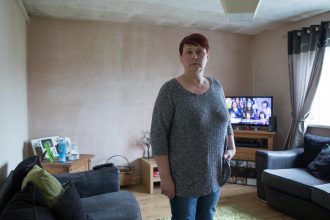
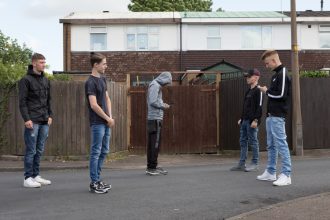
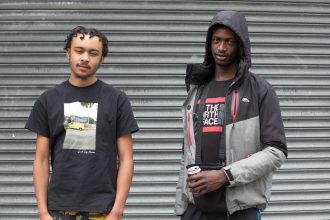
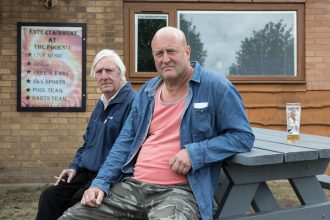
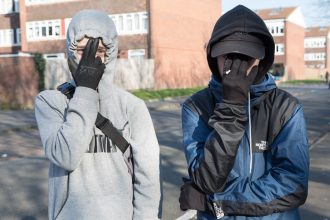
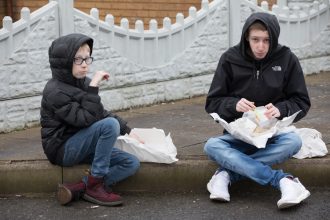
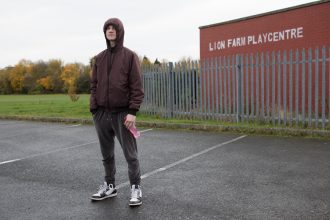

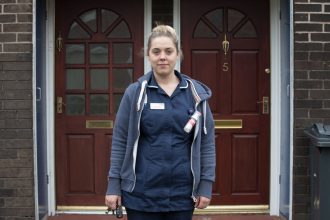
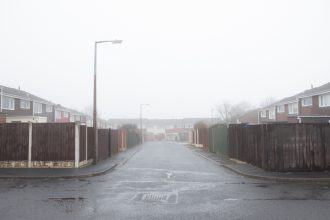
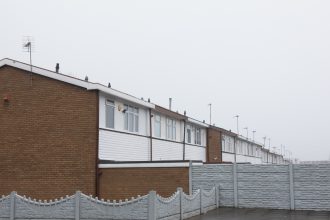
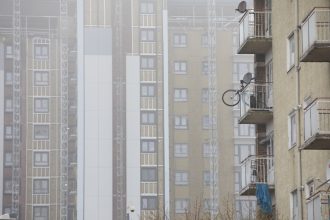
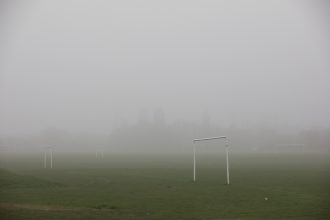
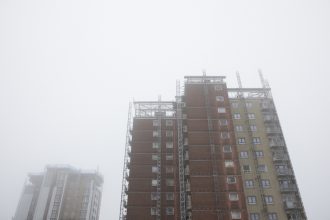
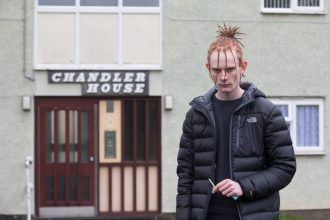
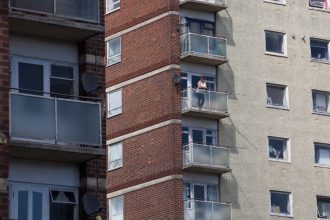
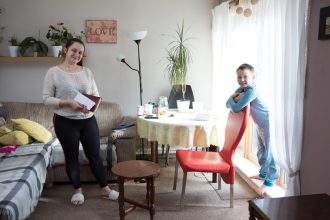
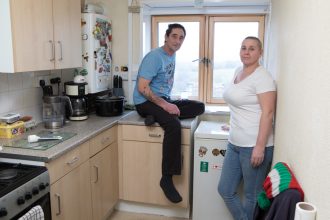
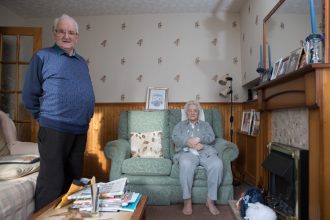
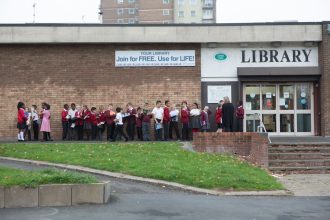
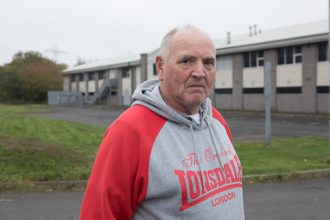
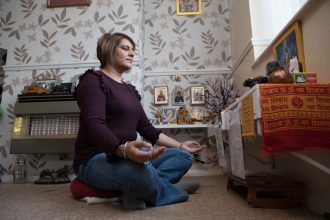

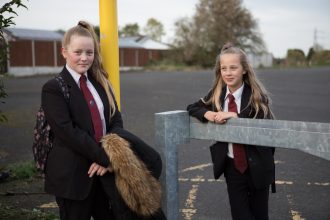
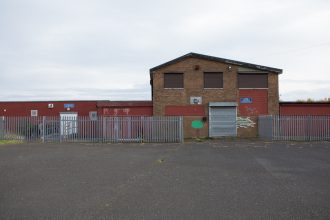
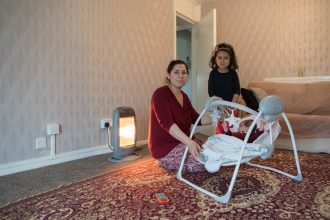
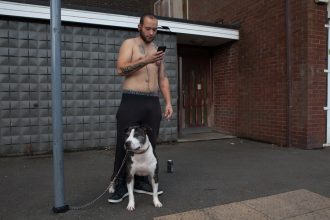
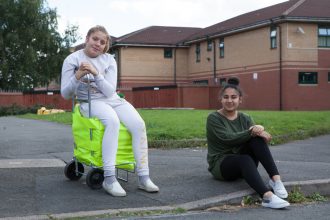
In 1991, Robert Clayton completed his social documentary project on the Lion Farm Estate in Oldbury under the guidance of photographer Nick Hedges at Wolverhampton University. Years later, in 2015, the original work was published in a book Estate (Photomonitor’s interview from 2015 can be read here ). Clayton was subsequently commissioned in 2017 by Multistory to return to the same location. Almost three decades have passed and the artist’s latest body of work, culminating in an exhibition and newspaper publication, continues to explore this working-class community.
The exhibition ‘Estate Return’ was first shown at Rounds Green Library on the Lion Farm Estate as part of Blast! Photography Festival during May and June 2019 and is touring to three more Sandwell libraries from September to November 2019. Below, Clayton shared some insight into the creation of his newest images.
__________
Christiane Monarchi: How did the idea arise to commence this project now?
Rob Clayton: I self published my book of 1990 images in 2015. Its huge thing to do; the endeavour, cost, risk etc. One never knows what will happen on that journey and where the risk of publishing will take you. Fortunately for me there were several very positive outcomes, one of which was being pointed in the direction of Multistory, the West Midlands based arts organisation that specialises in bringing photographers and local communities together to participate in photographic projects.
Ever since I published the book, and exhibited in London and Birmingham, I had entertained the idea of returning to the estate again – at the very least out of curiosity. I sent a copy of the book to Multistory, which they were very complimentary about and we met up and they agreed to commission me to return to the estate and produce a new body of work. This work would be exhibited at the inaugural “Blast!” Photography Festival in 2019.
CM: Did you approach the estate from the outside and work your way back in, like you described in the interview from your practice in 1990, or did you have any relationship still with subjects from that time, and start from there?
RC: It was like starting anew as I had no contacts on the estate, yet it was different. My published 1990 work preceded me, and some were aware of it. There is an organisation called “Lion Farm Action Centre” on the estate, and the women there were aware of my work and were most welcoming to me. They had offices I used as a sort of base (tea and a chat were always on offer which was nice respite from street photography). I also used the introductory line often that “almost thirty years ago as a young man I photographed this area and I am back a generation later…” It was a good ice breaker – occasionally people did know of my work but often not.
The early work certainly gave me some credibility. Nevertheless, most images were produced by the good old adage of “being there” and “putting the time and effort in”. It was hard work, but I felt confident, I felt at home there because of the legacy of my work plus I’m a 50-year-old now – a bit wiser, if far less agile.
I did engage with more organisations this time; the library, the action centre, the council a little, shop owners, community groups. That said, I did post flyers through doors and “cold called” and just met people that way too for interior photographs.
CM: What kind of impressions did you have of the actual estate and how people find their community and life there, compared to 30 years ago?
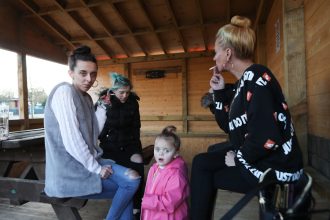
RC: It felt that little had changed in many ways. It is a solid working-class community, the sort within which I grew up. It is perhaps to the credit of the estate and its design that despite years of neglect and austerity it is quite a cohesive community. Sure, there are problems there and some people are certainly struggling to get by, but I felt there was the same sense of strong community and kinship that prevailed a generation ago. There needs to be of course; people have to depend on each other, the debilitating effects of factors such as loneliness, isolation, poverty, addiction, lack of opportunity etc. are never far away. My representations are intended to be subtle and balanced and despite the hope and resilience I encountered, the imagery reveals undoubtedly an aesthetic of melancholy. Personally, I felt that I was treated well and moreover some people were really keen to help, support and participate in my project.
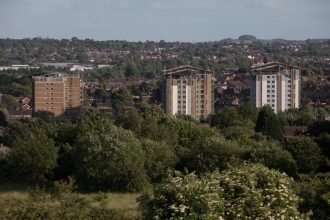
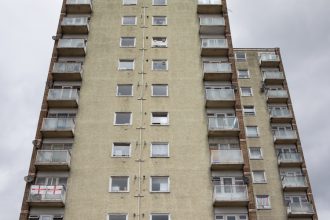
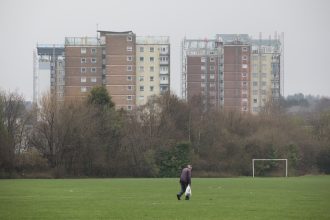
Regarding the actual estate much was the same apart from the mid 90s demolition of six of the tower blocks leaving only three. Interestingly, when I first arrived eighteen months ago, these three blocks look virtually identical to 1991. However, my visit coincided with their complete external refurbishment and cladding – I was assured after inquiring that the cladding and insulation was of the highest fire safety standards. It appears that after so many years of neglect some money has been spent on the blocks, with care and to a decent standard – and so it should be.
CM: Could you share a story behind a favourite image from your new works?
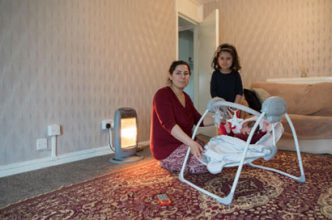
RC: This is one image I like to talk about:
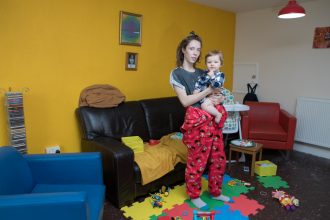
Over the 18 months I visited the estate, I worked hard to make contacts to photograph people at home. This wasn’t easy to achieve so I wrote up some flyers and posted a load through doors, saying I would knock the following week to see if a resident would take part. Often this leads to very few people agreeing (which is fine, people are out, busy etc.) but I never got any bad reactions and occasionally was greeted with a yes and had the privileged opportunity to be invited into strangers’ homes.
This particular woman and her children were wonderful. New residents to the estate, when I knocked their door the lady greeted me but could speak virtually no English. She recognised the flyer and called her husband so we could have a three-way conference call to ascertain whether I would be invited in. My instinct was that this would probably be a “no” as trust building is a precarious process and people are warned quite rightly to be wary of “cold callers”. However very soon the lady said “yes” and in I went. I love this chance encounter lottery that photography creates and was so happy that trust was being formed there and then that this family wanted to help me with my project when they could easily just not have answered the door. So I removed my shoes and was taken to their lounge – and to my surprise there was another child, a newborn baby in a swing seat which was beautiful. We communicated by gesticulation, facial expression and body language. The flat was quite bare furniture-wise but it appeared that very room had just had fresh carpet so there was a lovely new carpet fragrance.
To me this new family represented all that was good about council housing – this modest 60’s high rise dwelling, perhaps often looked down upon by others, was going to be home again for a new family like it has been many times over. It was offering new beginnings, opportunities, safety, security, warmth and love – all the ingredients we all need to get on in life. It isn’t much to ask to give people a decent basic start in life in a rich country such as ours – a principle that has been discarded in recent decades to the detriment of us all. I feel hope and humbled when I view this picture. The subjects have little but have everything too; and I hope their grace is evident in the photograph.
__________
Details of Rob Clayton’s touring exhibition ‘Estate Return’ can be found on the Multistory website which includes details of an artist’s talk and film screening on the 23rd November 2019 and how to buy the newspaper ‘Estate Return’. For more on the project, visit www.lionfarmestate.co.uk