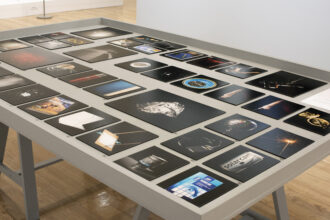
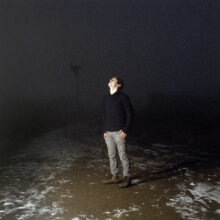
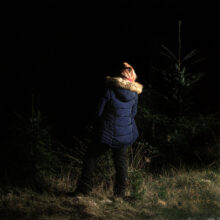
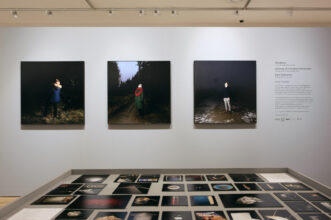
In a year of staying mostly close to home, it has been an enticing time to consider far away places, particularly looking up at the summer sky and considering the vast cosmos. The people who make sense of the unknowable places beyond our sight lines – including astronomers and other scientists studying space – have intrigued artist Helen McGhie, who is currently working on a practice-led PhD at the University of Sunderland, exploring the relationship between photography and astronomy in partnership with Kielder Observatory, Northumberland. Below, Christiane Monarchi caught up with Helen to discuss the progress of her research, engaging with the physicality of the experience of stargazing, and sometimes hanging out in cold, dark forests.
__________
CM: Having had the pleasure of meeting you a few years ago when you were planning the ideas for ‘Kielder’, I remember thinking this is a great project to test out the possibilities and limits of photography and seeing in relation to deep space, as well as exploring representation of the scientists working in astronomy. Could you remind me, what was the first starting point for you in terms of creating this new project?
HM: Thank you for this question, it’s useful to reflect on my starting point for the project – the PhD research has developed quite a bit since our initial conversation! Yes, I am very interested in the possibilities and limits of photographic seeing in conventional representations of astronomy. In 2017, I was thrilled to find an opportunity to explore this in partnership with Kielder Observatory, a wonderful science-communication organisation located in Kielder Forest, within Northumbria’s International Dark Sky Park. My work is a collaborative PhD funded by the National Productivity Investment Fund (AHRC), designed to investigate how creativity can impact a research partner.
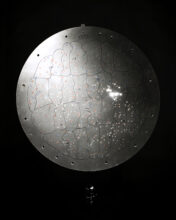
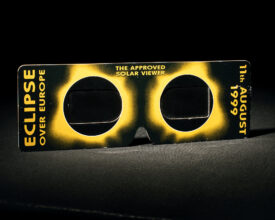
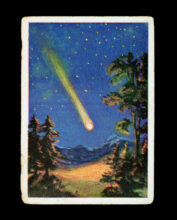
Like many photographic genres, there are visual conventions within the images of outer space that are created by organisations such as NASA or the ‘Astrophotography’ created by amateur and professional astronomers. Clichés include high detail (often captured through the ‘stacking’ of multiple long exposures), and vibrant colour that ‘reveals’ dark sky objects, usually invisible to the human eye. Images often have aesthetics of what Elizabeth Kessler described as ‘The Astronomical Sublime”, a style reminiscent of historical depictions of the American West in art history. Further, Astro-images are informed by the cultural cosmos in science-fiction, where the photographic ‘spectacular’ becomes an intense something that is far removed from the actual experience of stargazing! In my work at Kielder, I am more fascinated by a grounded, physical experience of astronomy practice.
In all photography, perspective is always entwined with representation, no matter how ‘objective’ one attempts to be. Donna Haraway famously described problematised scientific optics as presuming a “view from nowhere”, for perspective is fixed from a specific position of privilege (traditionally white and male). This is something I have been intrigued to unpick by producing alternative photographic encounters with dark skies, informed by personal experiences at Kielder. Initially, I wanted the project to focus on the literal representations of those excluded from photographic depictions of science (considering class and gender) but discovered that this would expand way beyond the confines of my PhD. It is something I may return to at a later stage.
CM: Now that you are halfway through your PhD work with this project (congratulations!), it would be great to know how your ideas are developing, as I can see a multiplicity of approaches to subject matter, photographic process and observation at work in the images you’ve shared. Particularly, I am interested in your working title “Stargazing at the ‘Invisible’: Photography and the power of obscured light” Could you tell us a bit more about your interest in ‘obscured light’
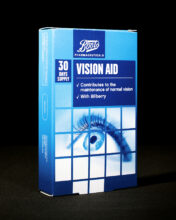
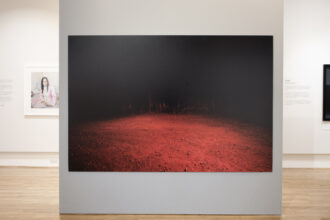
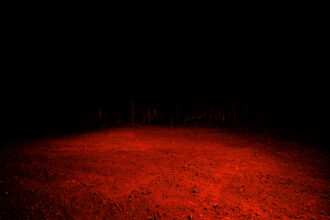
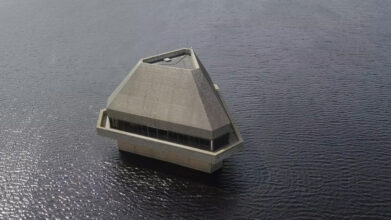
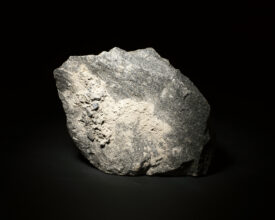
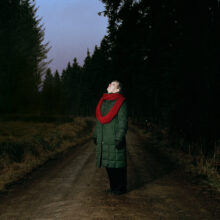
HM: Thank you for your congratulations – I can’t quite believe that I’m halfway there! And absolutely, I have experimented with different photographic methods: constructed portraits, landscapes lit by ‘safelight’, still life photography and moving-image experimentation. My fluid way of working seems to suit the practice-led research process, where constant experimentation and reflection helps to find new critical approaches and contributions to the field.
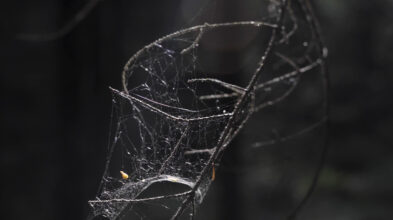
‘Obscured light’ is my way of making sense of the research process. I am attempting to reveal something previously obscured within photographic practice—located at the intersection of ‘vernacular’ and ‘fine-art’ representations of astronomy. It also refers to my interest in how photographic encounters with darkness might be considered within the context of astronomy, i.e. the dense darkroom or brief moment before re-charge after a studio light has flashed. In astronomy, spending time in the wild, in the non-light polluted darkness is crucial to observe and capture cosmic skyscapes. So much emphasis is often placed on what is revealed within Astro-images; instead, I am interested in what cannot be seen, in the context of northern England. Images of astronomy often exclude the encounter with night: perhaps alone, waiting for clouds to clear, the experience of cold (I was very poorly prepared for my first Kielder trip!), or an astronomer’s imaginations, dreams and motivations etc. My work is based on revealing these ‘invisible’ aspects, which I have learned about through various conversations with the wonderful staff, visitors and volunteers at Kielder Observatory. I also spent five nights sleeping in on-site accommodation this February, which was an extraordinary experience.
CM: The ideas you are revealing to me about your research seem to touch on many different senses, as well as haptic and physical experiences beyond the expected visual images – like cold, fear, awe, even hearing imagined data crackling in over the radio from space. Yes, the cliches, perhaps. Might this project include or address elements of experience that go beyond the photographic?
HM: Absolutely! I am exploring the moving image, by shooting in the environment at Kielder, in the forest and my studio. Sound has become a large part of this work; I’ve explored the crackling of the data that you mention – the crackling pops and bleeps from the sounds of space found online. It’s curious how well these sounds link to the sonic ‘Kielder Observatory experience’ – the radio beeps of staff communication, the hum of boiling water for hot drinks and the vibrating chatter of enthused visitors.
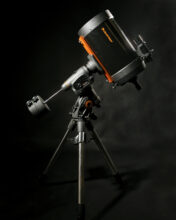
Part of what I wish to do with my project is to get closer to the physicality of the ‘stargazing experience’ in Northern England. This is certainly haptic. Early on in my research, I conducted several conversations with Kielder Observatory staff, volunteers and visitors to find out about their experiences of dark sky observation. Many have described extended moments watching the heavens, hoping to spot specific specks of ancient light above. The telescope, naked-eye or photographic observations conducted may expand prized star journals or existing Astro-images, comprised of multiple exposure shot from the same location over days, months or years.
Conversations revealed how fast time moves when one observes, the hours pass by – something I have also felt when working in the darkroom. There are stories of the bizarre and unnerving sounds of the night. Owls that sound like the sawing of wood, foxes who steal food and move shoes from tent-to-tent in Kielder campsite, and of course, the unlucky car breakdowns. There is so much more to the observing experience than what is communicated in traditional photographs of outer space. My work is one attempt to get beyond the literal, but I’m not there yet, trying to get there will likely keep me going for a long time!
CM: I am interested in the scientists you are working with in these settings; do their testimonies or experiences influence your visual experiments at all?
HM: Yes, for sure, and my creative interventions influence them too. There is a bit of an artist-scientist creative cycle going on in this project. The Kielder astronomers inspire the work that I produce, and my creative outputs inspire them. For example, Natasha (Astronomer and ‘Arts Lead’ at the observatory) wrote a compelling review of my work in the ‘Observe, Experiment, Archive’ exhibition curated last year by the North East Photography Network at Sunderland Museum and Winter Gardens: https://kielderobservatory.org/news/latest-news/148-observe-experiment-archive.
My PhD is collaborative, and my contribution should have a mutual benefit to the photographic field and partner organisation, so I am working hard to build this. This way of working feels right. For me, photography is a visual language that communicates beyond words, and I am fascinated by the mechanics of this when it expands beyond the fine-art world. It took me a long time to realise this; however, my undergraduate student experience set the foundations. For one project, we had to display photography in a ‘real world’ context, to create an impactful intervention for a particular audience. I found myself in London phone booths with a bunch of digitally manipulated ‘calling cards’, exploring the ethics of the sex industry. Ironically, I now teach on this module in the same department at the University of Sunderland.
The kindness of the Kielder Observatory community has been incredible, and their voices are a crucial part of my work. Many have volunteered their time to talk with me or be photographed on chilly nights in Northumberland, and I am incredibly grateful to everyone involved. I recognise that I am a visual artist with very little knowledge of astronomy, but this is useful for the research. Suppose I’d had preconceived ideas or my own experiences before embarking on the project, I think that this might have hindered my ability to absorb the perspectives of others.
__________
Helen McGhie (b. Honiton, 1987) is a photographic artist and researcher based in Greater Manchester (UK). Her practice reimagines ubiquitous photography through the still and moving image and she is currently working on a practice-led PhD at the University of Sunderland (AHRC), exploring the relationship between photography and astronomy in partnership with Kielder Observatory, Northumberland (UK). Her work was recently published in ‘Monthly Photography’ (South Korea, July 2020), she has exhibited both nationally and internationally. Recent group shows include ‘Observe, Experiment, Archive’ (Sunderland Museum and Winter Gardens, 2019-20), ‘Exploring Skyscapes’ (Nottingham Contemporary, 2020) and ‘209 Women’ (Portculis House / Open Eye Gallery, 2019). McGhie is Lecturer in Photography at the University of Sunderland and has a studio at Islington Mill, Salford.
Moving-image extract:
‘KOas’, Helen McGhie, work in progress. (Extract), 2020: https://youtu.be/3QT5VFDMBIU
Other links:
Website: www.helenmcghie.com
Research blog: www.invisiblestargazing.blog
Instagram: https://www.instagram.com/helen_mcghie/
Twitter: https://twitter.com/helenmcghie