



A new interview with Rut Blees Luxemburg and Sophy Rickett who with Brenna Horrox co-founded Hi-Noon.
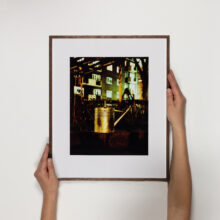
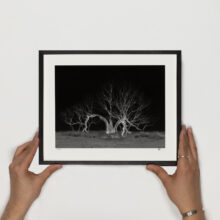
Launched at Arles 2019, HI-NOON is an artist-led initiative for photographic print editions which runs on the principles of mutual support and co-operation that characterises London based and international artist communities. They have worked with leading and emerging artists including Yushi Li, Wendy McMurdo, Anastasia Samoylova, Karen Knorr and Loreal Prystaj. Here artist Sarah Dobai asks Sophy Rickett and Rut Blees Luxemburg about this social and business enterprise, whose contribution seems especially apt in the light of the impacts of the pandemic & the possible opportunities for new ways producing art works and finding audiences.
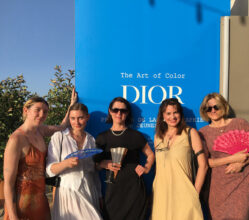
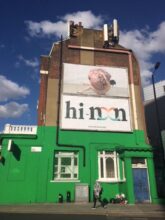
HI-NOON has participated in PhotoLondon, Les Rencontres d’Arles and initiated events and exhibitions at 4Cose, Tramp, FILET and Shoreditch House as well as campaigns on the streets of London, Manchester and New York.
__________
1/ How did the idea for HI-NOON first come about ?
We set up HI-NOON to propose new ways of opening out contemporary photographic practice to wider audiences.
We started developing HI-NOON almost exactly a year before Covid. Our vision at that point was to combine the dynamic energy of real world events – parties, street poster campaigns, exhibitions – with an active digital presence. Things have changed in the world so much since then – so it’s interesting remembering our rationale in the light of everything that has happened since we launched at Arles in summer 2019.
One of our strongest motivations at the time was the sense that as artists, we were in a position to contribute something positive, exciting and unique to an increasingly agenda-driven art environment that had begun to be unsustainable, as many of the terms were being set by people and organisations with interests other than, or peripheral to the ideas and interests of artists themselves.
HI-NOON is a tool for community building – a grassroots enterprise, inspired by the culture of support and co-operation that thrives in artistic communities around the world. Making art does not happen in a silo, and that’s something that HI-NOON celebrates.
HI-NOON amplifies our voice, enabling us to pool our energy, our resources and share the knowledge acquired from years in and around the worlds of art and photography and academia.
2/ There has been an expansion in the field of artist’s editions recently and Hi-Noon has is distinctive for the fact that it is artist led. What difference does this make to the kind of editions you make and how those editions circulate?
HI-NOON is a research organ, whose approach is as fluid and open as the artists we collaborate with. We are ever in the process of introducing a number of new works: the diversity of our roster continues to be expanded.
One of the aims of HI-NOON is to develop an economic proto-type for artists that supports a sustainable practice.
Essentially, HI-NOON is also an extension of artistic practice, similar to Warhol’s Factory, where modes of production, brand recognition and dissemination are part of the creative process, in order to assert autonomy from exclusive models of art circulation and appreciation. HI-NOON is engaged in opening up art ownership to new communities as well as proposing ethical and beneficial trading futures that are not just relevant for artists but can serve as a prototype for any loose collective of creatives and makers, such as writers, designers or even winegrowers.
As artists we completely understand the process of producing an edition, from the initial idea to creating the final, perfect print. This means being fully engaged in the production process, either in our own darkroom or working alongside our printing partner, Metro Imaging, to ensure that each work is produced to each artist’s exact specification; everything is bespoke; paper, process, size and frame. We shudder at commercial edition models where everything is printed generically on the same paper and available at three different sizes. Our approach, which is grounded in long term experience of both primary and secondary markets ensures that our editions retain their value, and in many cases accrue value.
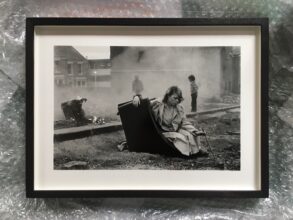
3/ I’m interested in the inclusion of the posthumous edition from Tish Murtha’s iconic series Youth Unemployment (1981). How did this edition come to be produced and is this historical aspect to the Hi-Noon project something that will grow?
There is a rich and diverse history of photography that has been overlooked and finally is beginning to get the critical attention it deserves. The work of Tish Murtha is a key example of this; her daughter is the guardian of her archive and had to do a ‘Kickstarter’ campaign to get the work published in book form, whereas male contemporaries of Murtha have had numerous door-stopper monographs dedicated to their work. This, despite the fact that Murtha’s work was in the public eye at the time of production and was even raised as a subject of debate in the House of Commons in the 1980’s.
With this in mind we are launching a Masterworks selection on HI-NOON, which will feature photographic works produced more than two decades ago, that have withstood the test of time and that are now starting to be recognized as seminal works. There is an urgent need to re-address the limited canon of art photography, to open up neglected or excluded histories – and HI-NOON is ready to play a part in that!
4/ Several of the artists represented are young artists and recent graduates. How do your roles as tutors at the Royal College and LCC respectively inflect on your thinking about the selection of editions and the types of work that are included ?
Tutoring at the Royal College of Art and London College of Communication gives us fantastic insights into the amazing range of work being developed by new generations of lens-based artists. It enables HI-NOON to function as a live conduit for collectors who would like to understand more, from first-hand experience, something of the range and depth of photographic art practice being created in the academy right now.
We are also proud to offer works by artists who have inspired us in our own art trajectory, such as Karen Knorr, who taught us, back when we were students.
Our collectors often buy more than one work from HI-NOON; the significance of the works becoming even more relevant in the context of a wider network or scene. Several of our collectors have purchased our complete curated edition; an investment that represents a cross-section of artistic production in contemporary photography, and that gives a tremendous insight into the visual and conceptual dynamics of now.
__________
For further viewing: