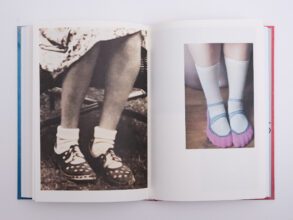

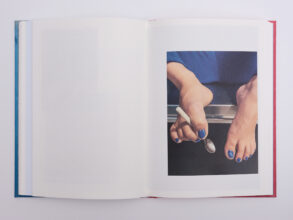
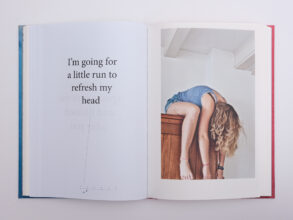
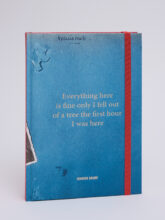

What a great title. I’m hooked. Meeting Jennifer Drabbe and learning more about her project have been highlights of the past year. There will probably never be anything like this project ever again: a personal journey through archives of letters and images that invite a glimpse into intergenerational wisdoms and relations many of us no longer have access to. Be prepared to fall in love with this work; in fact many already have – Drabbe’s book has been included in the selection of top ten best Dutch Photobooks of 2025 by the Dutch newspaper de Volkskrant. Below, our recent conversation explores the creation of this unique project and photobook.
__________
Christiane Monarchi: I am very intrigued by the idea that we are looking into a living archive of six generations of women in your family. That is such a special place to start. What was the genesis of this photographic project and book that I am holding now? Where and when did these archives come together?
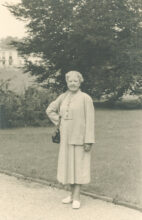
Jennifer Drabbe: It’s been quite a journey! It actually all began with a bunch of letters. I was inspired by a complete correspondence written towards the end of the Second World War, between my grandmother and her mum, and her mum with her mum. So written between three generations. My grandmother was pregnant but not yet married and her mother is in despair and writes with her own mother asking for advice. Abortion is one of the ideas but that doesn’t work out, luckily, as the baby is my mum. My grandmother gets married overnight and not long after she goes into hiding with her new husband and friends, as the Germans are looking for young men. The three women are therefore all in different parts of the country and write to each other on a daily basis. It reads like a book. The correspondence is interesting on all levels but I was particularly and immediately drawn to the personal and intimate words shared. Those really got to me. Also the fact that my grandmother was only 18 when writing these letters and I totally recognized her voice. That made me realize all the more how you don’t change as a person, you just get older. The getting older part changes your role perhaps but not your being. My mum always used to say: “my skin is getting older but I feel just the same as I used to.” I remember thinking “oh right” but now I feel that way too.
After having the letters simmer in my mind for quite a while my conclusion was that I could have written them too with my mother and daughters and that this would be the starting point for a visual project. That this connect between women, between mothers and daughters, has in fact not changed, not really. And definitely not in moments of need. For a long time I felt this particular and complete correspondence covered it for all six generations seeing the timeless nature of the texts and that they were applicable to all of us. It was only much later that I included letters (text fragments) of all of us, of all six generations.
The challenge of making a photographic project with this correspondence as it’s starting point was huge! It was quite a puzzle figuring out what the images should convey. The archives came together slowly, bit by bit, layer by layer.
Now the book is here it all seems so obvious but as I said, I didn’t set out to tell a story in this way. I just kept digging up more and more material and became totally immersed and obsessed and it gradually became clear as daylight that this was the right way to go about it. The difficulty being that there was so much to chose from: even school drawings, school reports, passports and also belongings and things, and at the start I wanted to keep all options open. I didn’t want to narrow things down too soon or push myself in one direction.
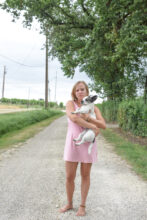
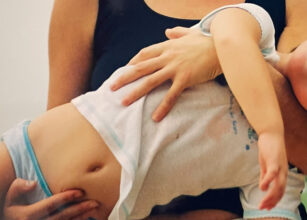
My daughters and my mother have always been a source of inspiration and I continued to photograph them intuitively as always, without a plan, not knowing what it would lead to. Meanwhile I was also exploring and examining existing photographs of them.
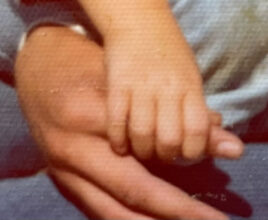
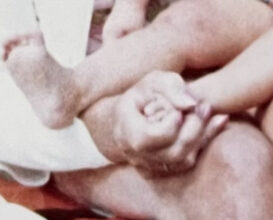
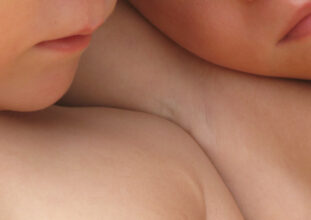
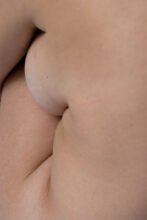
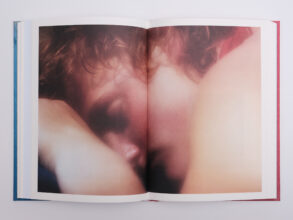
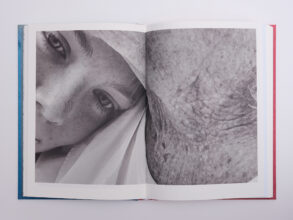
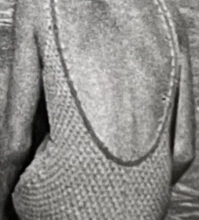
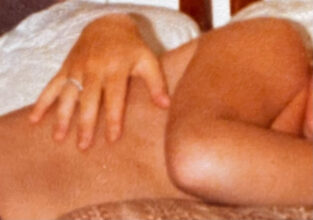
Going through the archives time and time again, like a detective, ever with a different mission, I kept finding new leads. Details I found and photographed were often minute and tiny parts of old photographs but they totally expressed what I was looking for.
Then there was a point, much later on, that I discovered more boxes with letters and even childhood letters written by my own mum with her mum and grandmother. That was the moment I also delved into my own personal treasures and letters. So the whole thing grew and grew. I can be grateful that we are a family who keeps stuff !
As you can imagine, making the project into a book was also a challenge, so a big thank you is due to the creative genius of the designer -SYB-. This is the second time I worked with him and that is a true pleasure. Highly recommendable.
CM: A letter from young Jennifer is included, in English, and other letters are photographed in many handwritings, often in Dutch. Such a special trove of secrets, yearnings, advice and confessions, as well as details often lost from the everyday conversations women might have had in person rather than in letters. How have you seen this type of communication change along the generations?
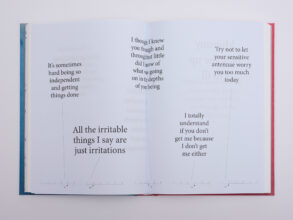
JD: Letter writing to me seems a much more private means of communication than we have nowadays. There is more room for sharing intimate details and searching for the right words to express yourself. The intimacy and openness in 1944 was what struck me most when first reading the correspondence. It felt very private and I feel privileged to have been able to get to know these women through their letters! My 18- year- old grandmother wrote: ‘Knowing if I tell you everything everything will be all right,’ to her mother. So sweet. I recognize that feeling, it is unexpectedly familiar. And her mother wrote to her: “I thought I knew you through and through, but little did I know of what was going on in the depths of your being.” I mean, wow!
Letters are so much more about musing and sharing your thoughts and feelings. Sitting down to write someone a letter means that you really take a moment to communicate and “talk” to the receiver. Reflection is a large part of the process. That happens with a pen in your hand, a specially selected piece of paper, an attention span and a dedicated moment to one specific person. I think with the arrival of email and the app we have become more to the point, rushed, and I think that is definitely a loss.
Browsing in an old box and recognizing handwriting is also different from scrolling on your phone or looking in your history of emails. I remember after receiving a letter that I would ponder for days about what I wished to tell and how, being active with the content before even sitting down to write back.
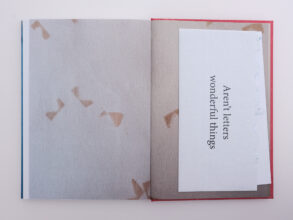
The “handwriting” fragments at the beginning of the book were added at a later stage. I suddenly felt that not the content of the letters themselves but the handwriting itself as a form was an added value, especially seeing it is something we are so clearly and so rapidly leaving behind. Handwriting used to almost be an essential part of our identity and recognizing the handwriting of others was heartfelt. Receiving a handwritten letter, even today, makes my heart lurch.
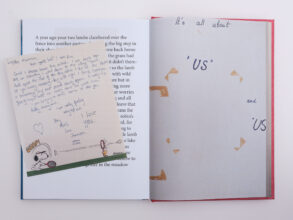
The specific letter you mention written by me as a child, and included as an insert, shows writing paper with a slightly aggressive Snoopy whacking a tennis ball, whereas I was politely trying to explain to my mum that I wasn’t happy and just wanted to come home. I find my choice of paper quite accurate. It was the only letter I could find that so clearly spoke of just one thing and was so very to the point. Perhaps it even functions as a core element in this story?
CM: I see so much feeling in your selections of archival photos with touch, holding, play and also vulnerability. How have you responded to the idea of childhood and girls growing up in your own photographic practice, are there triggers or themes that emerge in your practice of image making?
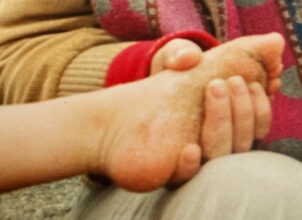
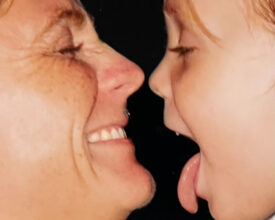
JD: I think the feeling you mention, this feeling of basic instinct, is most easily found in children and their purity, and perhaps my mission with this project was to find those same qualities, those small vulnerable moments, within and throughout all six generations in all the different phases of their lives. I totally dissected found photographs looking for these details.
Looking for this evidence. These are things I actively search for and want to see. Telling a story from this point of view, with this softness, positivity and humour, definitely says something about me and how I wish to look at the world around me. How I want it to be.
Isn’t it strange that as we grow up we are expected to leave our childlike qualities behind. What happens to our wonder, curiosity, playfulness?
A large part of my photographic practice is based around the question what it is that makes us so human. Defining our humanity with all our quirks, often found in our behaviour and the small, silly things of everyday life. Could these be things that will stick with us, things we will remember?
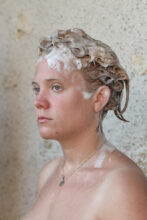
Becoming a mum made me reflect upon and relive my own childhood. Youth and its creativity, and growing up, do play a large part in my work. My daughters inspire me with their uninhibited behaviour and their open nature. Just watching them stirs up a sense of recognition and sparks my memory. Their honesty is hilarious and endearing and resonates with me. We can share stuff you never share with others and it’s so refreshing to know you’re not alone with your crazy thoughts, feelings or habits.
Observing how they grow up in the safety of a family home, with all its ups and downs (which is of course a very bumpy ride at times), makes me wonder how I coped at a boarding school. Their need to be alone, to pull back from a busy life, to do as they please in their own world, are eye openers to me. I realize that, although I have always had a very fantastical mind in which I could dream away, I was always surrounded by others and had to adapt to my environment. I didn’t see it like that at the time because it was the life I was living but in hindsight I do. My first book ‘today is my new favourite day’ (2021)’ is based on this idea.
CM: What has been the hardest part of this project for you, the selection of text or images? I note that while the texts are all in English, most of the letters I assume would have been in Dutch?
JD: Most definitively the images. The letters were my inspiration and starting point to make this project but that said, I had no idea yet what IT would look like. Everything was still possible. It was one big adventure and I had a lot of fun trying things out. It was immediately clear to which parts of the letters I was drawn to, but what the role of the images was going to be was a true exploration.
Most of the letters were indeed in Dutch but it felt totally natural to translate the fragments to English, as most of us have ties to England. I had old school friends look over the translation with me as I wasn’t aspiring perfect English, but English with a personal touch, and they understood me perfectly.
CM: Excerpts with annotations of which generation is writing to whom – these often read as timeless and current. One hopes that the project, archive and family will continue. For now, we close the book, but is it closed for you?
JD: Isn’t it fascinating that the communication feels so timeless? I actually feel that the texts relate more to a phase in our lives rather than a time in history. Almost as if wise words written by the “grandmothers” will be mine to say in the future, if that makes any sense. The designer, SYB, had the brilliant idea of creating the small timeline because it is important, and also fun, to see when things were actually written and to whom.
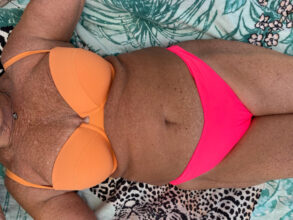
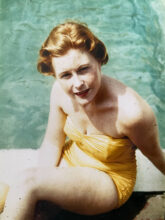
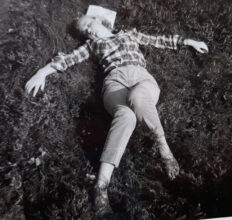
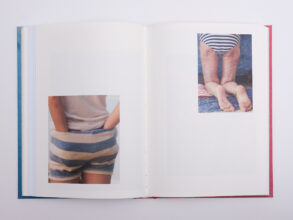
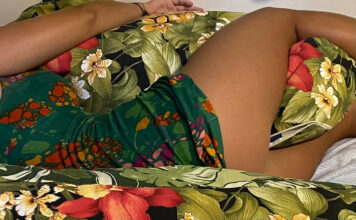
I also feel behaviour is timeless in a similar way, as you can see in the images, they are practically interchangeable too. It doesn’t matter who’s who, because we were all once the baby, then the child etc etc. We’re all living our life. Looking through old photographs made me realize that generations have been doing cartwheels, handstands, lying in the grass with friends, fidgeting, and have felt awkward or uncomfortable forever, illustrating that even how we behave is of all times. We sometimes tend to forget that the elderly have been young once too. In a way it gives me a sense of being part of a larger whole.
This specific book does feel complete but it has opened up a world of new ideas and a different way of looking and working so I wouldn’t be surprised if I were to follow one of these leads in the near future. There are also many things I had to ignore whilst looking through the archive as what I was looking for was very specific, but there are definitely other interesting stories in there that I overlooked for the time being.
CM: Have you given thought to how the images and texts here could be constructed into a physical exhibition? Or does this project live best inside the publication for you?
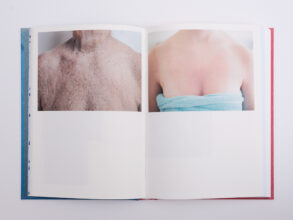
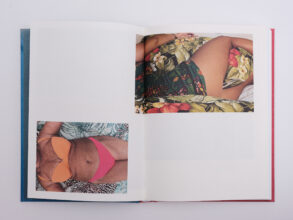
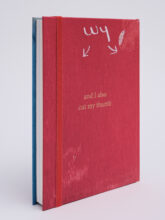
JD: As a book that can be felt and that is recognizable and dynamic, I can definitely imagine walking through it and experiencing it. The project absolutely called for a publication and that really suits it. In this case I knew from the start that I had to make a book of it but I do also think it would lend itself for a physical exhibition. There are so many different elements and layers in the project, and three of the six generations are still alive, kicking and willing, so I believe there are many possibilities. The book itself also has the qualities of an object with the title which continues on the back of the book, the elastic band, an insert and a torn open envelope containing a letter. I’m sure this could also inspire a potential exhibition.
I showed just a few images in an early stage, in a group exhibition, and I placed a wooden music stand before them with the text fragments printed out on heavy writing paper. Leafing through the letter fragments you could simultaneously look across at the images. I had initially recorded our voices (of three generations) reading the quotes but as it was a large, busy and shared space I felt the letters as a tangible object worked better and I liked the interactive aspect of it. With its colours and softness it turned out to be a warm and cosy corner in the exhibit.
Many images and things I made in the process weren’t suitable for the book in the end but could be interesting in an exhibition. I have a background as a theatre director so I do light up at the prospect of thinking along these lines although I do realize that creating an exhibition is a whole new ball game.
Lately my main focus has been to get my book out there and having self-published it I know nothing will happen if I don’t take charge, so I’ve been busy with that. It’s initially not my favourite part, I prefer to be in the making-mode, but the selling and the making don’t combine so easily for me. An exhibition would be a dream. Meanwhile I have two projects waiting to be rounded off. To be continued.
__________
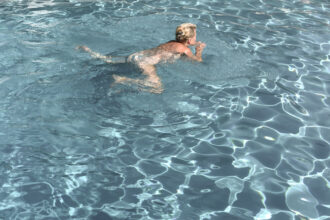
Jennifer Drabbe is a left-handed red-head, but also a visual artist and former theatre director. Most recently she self-published two remarkably personal books. With a laser focus on small, intimate and daily details she closely observes her direct family and their tender and playful behaviour, looking for traits that make us so human. Both books are part of the Rijksmuseum’s collection in Amsterdam. Drabbe’s work has been exhibited in various Amsterdam venues, including NDSM-Fuse, Amsterdam Museum and Museum Amsterdam North. Her work is also included in the monumental photo book Pools (Rizzoli), curated by Lou Stoppard. Read more about her work and recent book here.
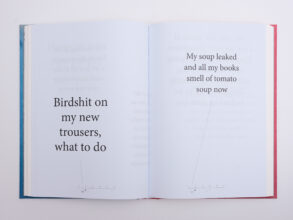
Everything here is fine only I fell out of a tree the first hour I was here and I also cut my thumb by Jennifer Drabbe was published in 2025 and is available here