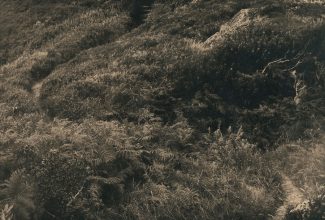
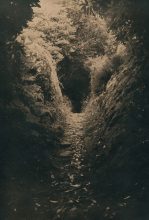
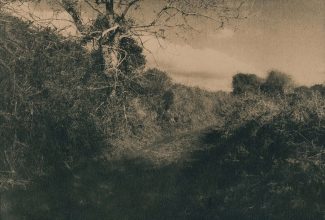
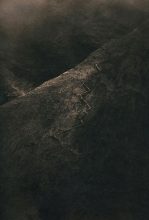
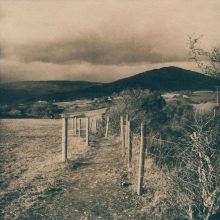
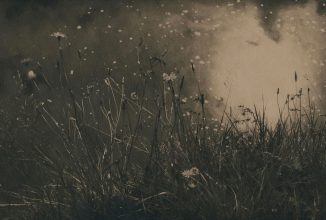
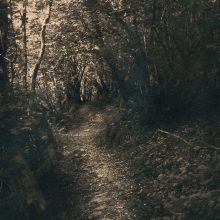
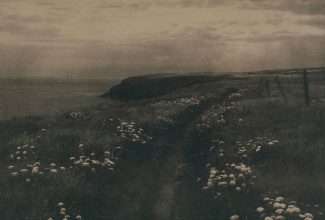
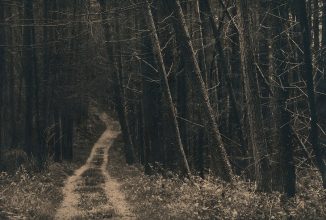
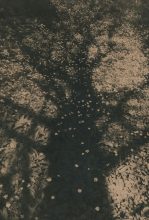
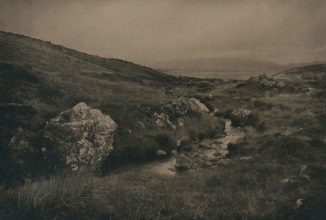
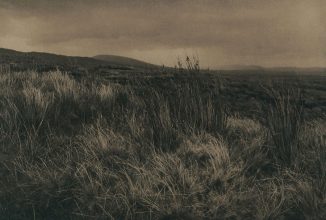
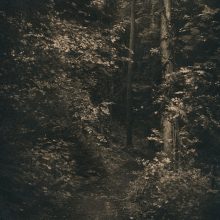
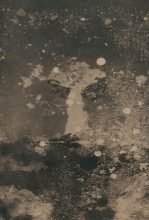
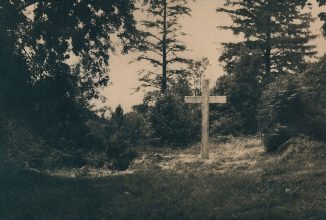
When seeing Caitriona Dunnett’s series ‘Mass Paths’ for the first time, one could be forgiven for thinking the images were vintage works. So timeless was their physicality, that the quiet nostalgia of these images lingered with me for days after my first viewing. In an image saturated world, it is sometimes surprising to find a strong connection to landscape that can translate to the viewer so effectively. Below, Dunnett answered a few questions about the creation of this series, which has been exhibited widely.
__________
Christiane Monarchi: Could you tell me a bit about the beautiful prints I am holding – they look like they may be from another era. I see stillness and serenity in the choice of paper and tonality, but also in the subjects that I am beginning to look through, which look removed from civilisation but still carrying the marks of us humans. Where did you start the idea of this project?
Caitriona Dunnett: My family and I spent our summer holidays in Kerry every year and I often walked the beautiful coastal mass path at Derrynane. One year I photographed it and remembered learning about hedge schools and mass rocks at school. My curiosity was piqued and from there the project grew. I spent years combing through word searches on the Internet, hunting for and photographing penal sites across Ireland.
At the time I was working on another project, experimenting with contact negatives and decided to test this approach on Mass Paths as well. I printed cyanotypes onto Fabriano paper and toned them with a variety of teas, coffee and wine tannin. The tannins in the drinks reacted with the cyanotype formula and produced a range of hues. I chose black tea. Over time the process became important to the project and I related the layering of the method to the landscape, which has been coated over time by personal and national narratives.
CM: As a city dweller who has no knowledge of this landscape, could you take me bit further into the background for mass paths? Are these, along with hedge schools and mass rocks current and in use, or something antiquated that still remains in the landscape?
CD: During the penal times in Ireland mass was secretly said at rocks, bushes, holly wells, in fields and graveyards. This information would have been passed on by word of mouth. Many years later when the laws were relaxed stories were still told of the penal times. People were scared of moving mass rocks and building on mass paths for fear of being haunted by the ghosts of priests and their congregation. Over time Ireland moved on and developed, these stories were forgotten, penal sites were overlooked, lost and built on.
Most of the paths I photographed survived because people found further uses for them. A lot of mass paths have been incorporated into national waymarked trails such as the Kerry and Sheeps Head Ways. Other paths remain because they are part of the landscape. In penal times people often walked through rivers to mass, so as not to leave footprints. One such stream still runs alongside a mass rock in the Knockmealdown Mountains. An annual mass is said at the rock.
CM: On your photographic walks would you encounter many other walkers?
CD: The majority of my walks were very quiet. Even though some of these paths are part of national trails, I only ever encounter at most 1 or 2 people. I researched most of this project over the Internet and was able to track down these paths through snippets that other people posted. Maps lead me to a point, but quite a few of these paths were hard to track down and I was lucky enough to find local people, who more than often went out of their way to help.
CM: What are you working on now?
CD: I have been printing A Well Trodden Path, a partnership project with Dr Hilary Bishop from John Moores University, Liverpool. It explores the heritage of post penal mass paths in Ireland and will be exhibited at the University Art Gallery, NUI Galway in the autumn. The project was funded by the British Academy. Also later in the year PhotoIreland is going to publish my project on Hill Close Gardens. It’s a portrait of one of the last groups of detached Victorian pleasure gardens in the UK.
__________
Caitriona Dunnett is an Irish photographer based in the UK. She investigates memory and its different genre, subjective, personal and forgotten narratives through nineteenth century photographic techniques. She is intrigued by the traces people leave behind. The paths they weave through time and the legacies attached to them.