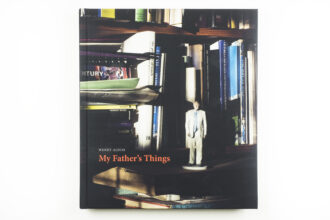
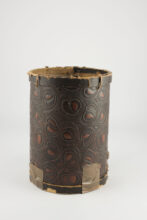
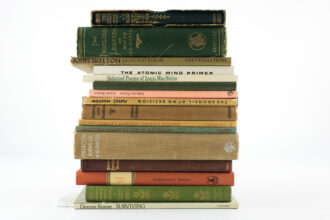
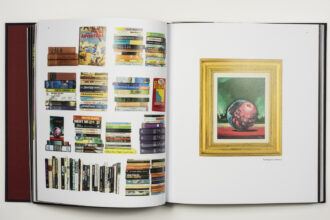
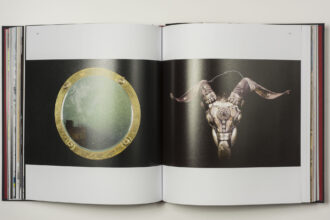
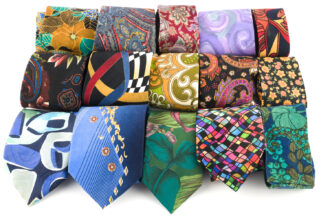
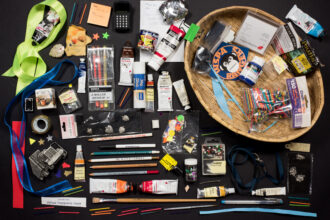
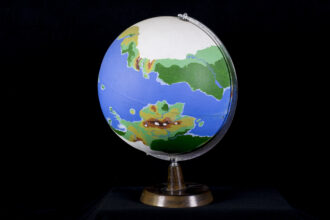
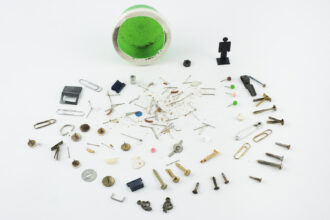
A new photobook arriving on the doorstep is always a cherished moment; to surround oneself with new thoughts and images in a carefully designed presentation is a privilege and a rare communion with the artist. In this case, it is also a glimpse into someone else’s family, and into a life lived to the full and celebrated through an exploration of the things left behind. Wendy Aldiss’ new publication, My Father’s Things is an important and epic project. Following the death of her father, Wendy realised that, in a way, she could continue to photograph him – by making images of his possessions. Wendy went on to photograph absolutely everything that he had in 2018, right down to his paperclips. This labour of love and grieving has resulted in a fascinating and complete catalogue of the items owned by a man of 92yrs; a writer, poet and artist.
__________
Christiane Monarchi: I have been immersing myself in your new photobook, which is quite a singular work – both in the idea of it being exceptional and also unique, in that only you could possibly have made this work. Can I begin asking you about what made you decide to want to pick up your camera and create this project in a very difficult time?
Wendy Aldiss: I’m so glad you like the book. As a photographer my camera is my ‘go to’ place when things are difficult or I’m having a bad time as well as when I’m celebrating something. I’d often photograph my Dad informally when I was with him and I found I was missing doing that (as well as missing him, of course. We were very close.) Photographing his things, in his home, was the nearest I could get to him after he died. I think for many of us taking photographs is a way of holding on, to people, to moments, to memories and to feelings. The work then took hold of me which happens to me occasionally when producing a body of work and it is a wonderful experience. Having captured all of my father’s things photographically, I could then let go of them too.
CM: You have written that there are 9,000+ images in this series, could you tell me how you went about editing and sequencing them for this book?
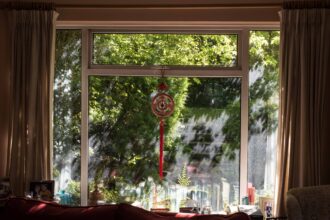
WA: Because it became a portrait of my Dad I started by selecting images of things that represented the many facets of his life. He was a marvellously creative person and was interested in everything and everyone. He managed to do in an average day what I might do in a month, if at all. So I wanted to touch on his writing life, his gardening, his artworks, love of poetry, his domestic world, our family, travel etc. For the sequencing and layout I worked with a brilliant designer, Maggi Smith, and we broadly organised the images in these groupings. We could have arranged them by room but I think the result would have been less successful. We included some room scenes to provide context and atmosphere.
CM: Perhaps the most affecting images, for me, include well worn garments and personal care items, which have corporeal echoes. Here I am brought back from considering their previous owner, to considering you, the artist creating these compositions, and me the stranger, the viewer. It is a heady mix. How did you feel crafting these images for the public to view?
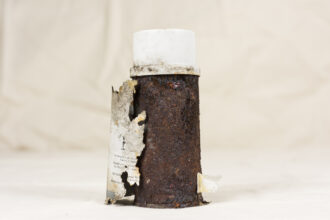
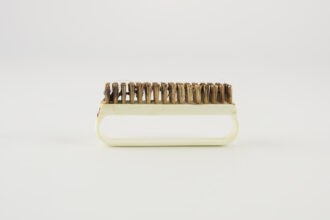
WA: There were many factors to producing the images that were totally new to my photographic practice – the use of lighting being the primary one. I have previously been a natural light person and positively fearful of studio lighting. I didn’t set out to make beautiful images, merely to document what was there, but somehow the singling out of the objects created a beauty. Also I see beauty in well-used everyday things so that, as for you, it is the items upon which my Dad had left his mark and his individuality that are my favourite. For example the Nailbrush which has been so widely appreciated. I have never been able to work out why it has the grime in the bristles that it has. It will remain a mystery forever. Another personal favourite is the old aerosol can from his outhouse. And his copy of Resurrection by Tolstoy which shows how often he read it by the condition it is in.
It wasn’t always easy, of course, to take the photographs, and there were highs and lows as I came across various items and notes and letters. In terms of revealing his possessions to the world I had no issues about privacy knowing that my Dad would have been totally on board with it. Putting one’s book out into the world is always daunting but My Father’s Things has been so well received I am delighted with the result.
CM: A brilliant foreword by Christopher Priest lends a welcome perspective of your father’s life and work, as well as a lighthearted touch to what could have been a sad book but isn’t. For me, it’s also down to your playfulness with design: foldouts for wonderful investigation, inclusion of a unique piece from your father’s things – in my case, a gorgeous note from Betty in 1963 – as well as the last page of your book (spoiler alert: tears may well up when turning over this little cleverly attached image of a painting) . It leaves me with a smile. Did it take some time to get the feeling just right for the flow of emotions in this book?
WA: I’m really glad that you picked up on the investigative element of the fold out pages. I was keen to incorporate these to echo the sense of discovery that I experienced as I worked my way through my Dad’s house, through rooms, cupboards and drawers.
The attached image at the end gives the reader as close an understanding as possible to the moment I had when I took the painting off the wall and turned it over. Readers will know that, as his daughter, his note would have affected me deeply. It also provides a perfect counterpoint to Chris’s wonderful foreword in which he describes ‘stuff’.
Getting the flow of emotions right in the book was part of our thinking throughout the design process which took just over a year, the latter half of which was during lockdown. By the way, the inclusion of an individual item – yours being a note to my Dad from his sister – was unique to those who made a pledge as part of my crowdfunding campaign. It was a way of saying thank you.
___________
Wendy Aldiss is a photographer living in Oxford. She interested in people and the human condition; her work is influenced by the people around her and key stages in life. Her images include the portrayal of people through environmental portraits and the depiction of emotions and experiences. Wendy’s work has been widely exhibited in solo and group shows and she was nominated for RPS 100 Heroines in 2018. My Father’s Things was published by Pannoval Press and Wendy is represented by L A Noble Gallery
For further viewing: aldissphotography.co.uk