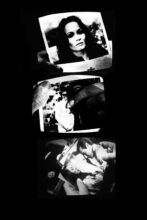
![Nicole Gravier. [That Night, Claudia Couldn’t Fall Asleep. Sad Thoughts Raced Through Her Head. “Right Now He’s Taking Off for America”], photomontage, color proof and photomechanical printing, Myths & Clichés series, Photonovels, 1976-1980. Courtesy of the artist.](https://photomonitor.co.uk/wp-content/uploads/2024/10/2023-GRAV-10-330x220.jpg)
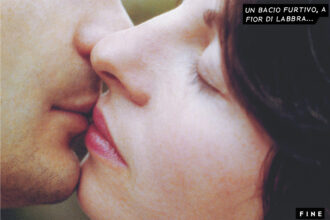
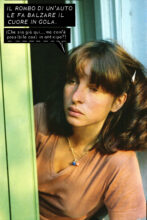
![Nicole Gravier. [Her “Little Room”... A Haven of Solitude Where She Can Dream. “I Will Always Love Him. Always.”], photomontage, color proof and photomechanical printing, Myths and Clicks series, Photonovels series, 1976-1980. Courtesy of the artist.](https://photomonitor.co.uk/wp-content/uploads/2024/10/2023-GRAV-04-331x220.jpg)
Nicole Gravier was one of the best surprises of this year’s edition of Les Rencontres d’Arles, where her work from the 1970s and 1980s was shown in a solo exhibition. The French artist was born in Arles, before moving to Italy in 1976. At that time she had already turned to photography, a medium she used with a great dose of humour to deconstruct the stereotypes disseminated in the mass media. From photobooth shots to postcards, from crime films to photo-novels, Nicole Gravier sarcastically turned the visual culture of her time against itself. These bodies of work titled Myths and Clichés had an international resonance then and could be seen, amongst others, at The Photographers’ Gallery (1974), at Martha Wilson’s Franklin Furnace gallery in New York (1979) and at the Venice Biennale (1980).
__________
Zoé Isle de Beauchaine: Nicole Gravier, you graduated with a fine arts degree from the Académie des Beaux-Arts of Aix-en-Provence in 1971 and then turned to photography, which you approached with a conceptual stance. Why this change ?
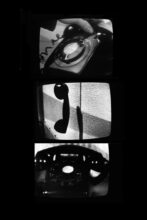
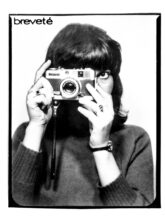
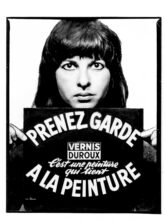
Nicole Gravier: The work ‘Prenez garde à la peinture [Beware of painting]’ from my series Photomatons Autoportraits [Photobooths Self-portraits] (1970-72) is the answer to this question. The late 1960s witnessed the emergence of new lifestyles and cultural practices. Rejecting traditional culture, many artists began to use everyday images, new instruments (e.g. video) and new formulas (e.g. performances, which I called ‘interventions’ in those years). All this to go beyond the concepts of painting in a museum sense. From the 1970s onwards, I began to favour photography as a medium, proposing an art in touch with life: I used images from the media as well as everyday life objects like postcards which I deconstructed to point out the stereotypes they conveyed. Like many other artists then, I wanted to glorify amateurism and improvisation, hence my use of Instamatic cameras. My approach was to disrupt media images in order to denounce their ‘occult persuasion’, as it was known at the time.
ZIdB: Several of your works quote Andy Warhol. Has Pop Art had an influence on your work?
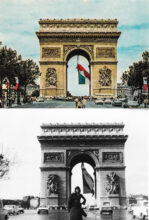
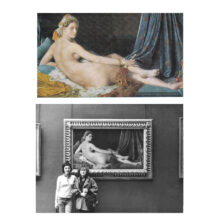
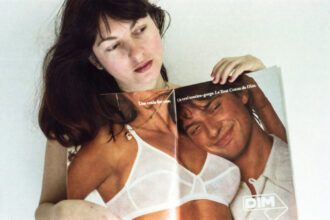
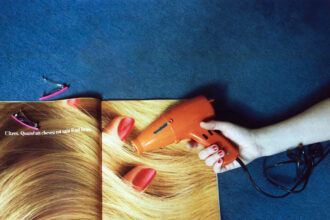
NG: There are many references to Warhol and other American artists in my work : my self-portrait as Marilyn as well as the ones I painted in colour, the photobooth shot in which I hold a Génie detergent pack alluding to his Brillo boxes or the one where I wear a Coca-Cola shirt… More than a taste for Pop art, these quotes are an ironic criticism of American artists who, in the 1970s, were invading the world and the art market. Other artists and movements are cited in my works. Jackson Pollock, Daniel Buren, Olivier Mosset and Giorgio De Chirico for instance. I also did a series of interventions on postcards showing reproductions of museum artworks that have become archetypes and convey strong cultural values. These interventions, subtle artistic subversions and derisory intrusions, stem from Dada and surrealist techniques : in my work, disrupting vision always implies an artistic and ideological ambition.
ZIdB: What I really enjoyed in the exhibition is that, from a Chanel perfume turned into a common deodorant to the way you pastiche Italian photo-novels, humour is fundamental to your dismantling of stereotypes.
NG: Ever since I was a teenager I’ve always had a Dada spirit. Transgressive humour is very much present in my work. The models of representation offered by the media are called into question with a subtle yet subversive form of irony that is to some extent my signature. In the pastiche images of the photo-novels, derision can be found in the ambiguity of the images, the combination of real and fake, the unlikely associations of certain small personal objects to consumer objects as well as in the insertion of feminist publications, scholars’ books analysing mass media issues or even art magazines, all of them carelessly strewn across the bed or carpet. Pointing out stereotypes by means of transgressive humour seems to me more effective than the vindicative violence that could be found in the performances of certain American feminist artists of the 70s.
ZIdB: You moved to Italy in 1976 where you discovered the cultural and social importance of photo-novels, a narrative genre born in the country and mainly spread in woman’s magazines. For the artists and intellectuals of the time, photo-novels were a source of both contempt and fascination. Perceived as a poor and stereotype-filled genre, they were nonetheless highly effective in terms of visual storytelling. You have brilliantly pastiched the genre. What was your approach ?
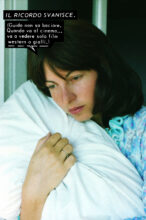
NG: In my Photoromans series I accumulate clichés about the representation of women in order to deconstruct the often identical canvas of the love story. The poses and attitudes I pastiche are borrowed from the images of women represented in their eternal moments of dream and expectation, with virtual promises of beauty and happiness through the male figure and marriage as a goal for social success. This critical approach points out a narrow stereotypical linguistic system that operates through repetition. The introduction of subversive elements in the image, such as cultural references and signs bringing the viewer’s attention to the art world, political ideas, philosophical thoughts or feminist denunciations, disrupts the original image — and therefore the whole system — with a subtle irony. Working with collage, I directly transferred the photo-novels’ texts onto the reproduced image. By using their own language against themselves I unmask their false underlying ideology.
ZIdB: In the Photoromans series you put yourself in front of the camera, recreating the stereotypical attitudes of the heroines of this sentimental genre. You are often the main character of your work.
NG: In Photoromans I assume the role of the protagonist in an exasperated process of identification with the heroine of the photo-novel as artistic behaviour. Paradoxically, I am continuing the story of the photo-novels but parodying it to offer a second-degree reading. By placing myself in front of the camera as much as behind it, I am both object and subject, offering a post-conceptual art form that is anti-establishment and close to a social linguistic search. A work that critically questions the links between art and society.
ZIdB: Your work has been brought back into light thanks to the recent feminist rereading of art history. How do you place yourself within this history?
NG: I think I was one of the first women artists to work with and on the medium of photography along with mass media communication by referring to the visual models linked to mass information and using small-scaled staging photography. I have always worked on my own, following my own artistic approach while keeping in touch with artists of my generation at an international level. In the 1970s I had friendships and professional relationships with Annette Messager, Katharina Sieverding, Marina Abramovic, Iole de Freitas, Verita Monselles, Ulrike Rosenbach, Tania Mouraud, Lea Lublin and others.
ZIdB: Analogies can be drawn between your work from this period of the late 1970s and that of Cindy Sherman, particularly her Untitled series (1981). Was there any artistic exchange between the two of you?
NG: I never met Cindy Sherman, but I know from Martha Wilson that she visited my 1979 « Myths & Clichés » exhibition at her Franklin Furnace gallery. Cindy Sherman also works with staging. She assumes a very theatrical approach to criticise stereotypes. Unlike me, she uses a lot of artifice, costumes, make-up and even prostheses. Her recent transformations have sometimes been pushed to extremes. My work is much closer to the cinematographic aesthetics of the French New Wave : a sober, minimalist staging, rather amateurish and without any artifice.
ZIdB: This edition of Les Rencontres d’Arles was an opportunity to discover your work from the 1970s and 1980s. How has your practice evolved since then?
NG: From 1982, after the birth of my two children Giotto and Primavera, and up until today, I have continued to produce an abundance of artworks. My interest has shifted to more intimate and universal models. Drawing inspiration from ancient sacred texts and poetry relating to cosmology, alchemy and the Kabbalah, I developed a whole glossary of signs and objects, beginning a body of work in which painting and drawing are combined with photography to create enigmatic and mysterious symbols on esoteric themes.
__________
Nicole Gravier lives and works in Arles, France. Gravier has used photography as her preferred medium for her research since the 1970s, and participated in the European artistic avant-garde that animated that period. From Arles to Paris, via Geneva, Rome, and Milan, she investigates and plays with the conventions of mass media imagery. Through performative appropriation, she conducts an ironic reflection and critique of the female condition, fashion, consumer society, and the art system. She taught at the Academy of Fine Arts, Brera, Milan until 2017. Her work has been the subject of numerous group and solo exhibitions in France and abroad. Nicole Gravier is represented by the Ermes-Ermes Gallery, Rome. Nicole Gravier’s exhibition ‘Myths and Clichés’ was presented in the 2023 Les Rencontres d’Arles
Zoé Isle de Beauchaine is a Paris-based art historian and journalist specialising in photography. She is a regular contributor to The Art Newspaper France and The Eye of Photography and has collaborated with international titles such as Photograph, AD, Primary Paper, Beaux-Arts Magazine. She also works for museums as a researcher and curator. Recently, she contributed to several exhibitions at the Institut pour la Photographie in Lille, including The Photobook : A visual experimental space (2021); Homage to William Klein: The photographic book as a visual object (2023); and Industrial commission and the photobook (2023).