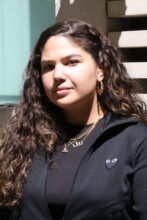

To give insight into commitment The Photographers’ Gallery have to inclusivity and youth education we invited Jacqueline Ennis-Cole to interview Curator, Youth Programmes Rawanne Koumaria.
Jacqueline Ennis-Cole: Could you introduce us to some of your primary roles and responsibilities at The Photographers’ Gallery (TPG) and beyond?
Rawanne Koumaira: I am the Curator, Youth Programmes at The Photographers’ Gallery in London, and a photographer. I’m quite new to the position, within my role as a curator at TPG I manage and implement the youth and teachers’ programmes here. This includes our Develop programme, which is an initiative that is there to support young people (14-24) in their creative careers through workshops, talks and events. I also oversee the Teen Tour programme, which invites a young person (14-19) to come into the gallery and give a tour of a chosen exhibition along with 6 weeks of 1:1 mentoring sessions beforehand. This really supports young people with public speaking and empowers them with growing their confidence. I also manage the Teachers’ Sessions, which happen frequently that invites teachers and other educators to have a space to discuss photography in the Arts. Lastly, is our Extended Project Qualification (EPQ) in Photography programme here at the gallery, that is in its third pilot year and taught by our two brilliant teachers, Elle Andrews and Eva Jonas. When I am not working at The Photographers’ Gallery, I shoot a lot of film! I would describe my personal practice as an exploration of my identity and heritage.
JEC: What do you characterise as young people?
RK: I believe youthfulness is within every person. Yet, I do understand that our government describes ‘young people’ as up to the age of 24. And perhaps having a space that is safeguarded and tailored to their specific needs is crucial. Saying that, it’s difficult as when you reach 25, things don’t instantly get easy, you don’t figure everything out straight away and therefore it’s still important to have that support, but perhaps in a different way.
JEC: What challenges would you say are facing young people today as well as their families, teachers, schools, youth services and other support systems that they may have access to?
RK: That is a deep and weighty question to answer, I almost feel like it’s not my place to answer because there is so much that could be said, I would be here all day! I’d never want to make anyone feel like one challenge is harder than another.
Young people are constantly facing new challenges, the list seems to grow every day. There are so many socio-economic barriers that affect everyone due to the lack of funding within education and youth systems within the UK. The cost-of-living crisis has not made this any easier; we are seeing education and basic rights for young people becoming so inaccessible, even for things like a healthy lunch. The system is really letting down our young people. The cost-of-living crisis has really impacted teachers and staff delivering youth programmes, as they are so underfunded right now. Many young people are neurodivergent, and they may face challenges due to services not being accessible, such as physical barriers and/or prejudice in the form of inappropriate language or perhaps making them feel uncomfortable. Institutional and systemic racism has caused challenges for a lot of young people and there should be a requirement that for educational/youth staff to have necessary Equality Diversity and Inclusion (EDI) training to support young people.
We can talk about the many barriers that young people face; however, we need to remember intersectionality; so many young people identify in multiple ways and are facing more than one challenge, some face numerous challenges at the same time. Listing them all is a challenge but something we can do is ensure that I am providing a safe accessible space for young people to feel heard, be welcomed and celebrated. I value the importance of young people having an accessible place to express themselves. Cultivating strong professional relationships and bonds outside of school and home life supports creative potential.
JEC: What opportunities do you feel that the photographic industry and infrastructure could offer young people in the context of their practice, education and learning, and photographic development?
RK: Accessible opportunities! To offer young people opportunities in the form of events and workshops is great, but if they are not accessible to all young people then they will not have the impact that they could and should. When I am curating a youth event, I think about all the barriers that could inhibit access and ensure that I find solutions. I think workshops, talks and providing spaces to communicate and network is useful for young creatives, in terms of their development, education and learning. Offering young people, a safe and open environment supports them to grow with each other. I also believe, especially with the cost-of-living crisis, that young people should be paid and given commissioned opportunities. I think the industry can do more.
JEC: How does photography and related media have the potential to play a positive and important role in expression, enjoyment, and learning?
RK: I think photography can be used as a tool to communicate as young people may find communicating through other means more difficult. Photography brings us together, creates communities, safe spaces and allows us to connect with each other through shared learning and common interests. Photography teaches us about other communities and as a visual tool is a way of engaging with the world that surrounds us. Photography also helps us to learn more about ourselves especially as a way of focussing on our own lives for example, through a series of self-portraiture or documentation exploring heritage.
Photography may become a platform to express feelings, opinions, and ideas and because of this I think photography is such an important tool in children and young people’s learning and in a wide spectrum of adult development. Photography is important, and we need to ensure that the Arts in general are accessible within the education system in the UK. The cuts to funding are scary and I really hope young people still feel they can enjoy photography as a tool to learn. The UK government approved a huge cut in funding for arts and design courses in higher Education in 2021 and with the costs of higher education already at 9.5k a year, this cut will mean that arts education will become even less accessible. Ensuring that photography as an enjoyable activity remains accessible to young people is important to me as I too have experienced barriers.
JEC: How does the term ‘generation gap’ play out or express itself within the field of photography? And how could we counteract those deep-seated patterns? How is knowledge, experience and skill transmitted from one generation to the next and is this transmission always a one-way process?
RK: Knowledge, networks, and communities are shared through generational gaps. Passing along things we have learnt is an action we do every day, even without knowing! Young people teach me new things every day. I strongly believe in listening, sharing knowledge, and speaking to people as I am where I am today due to the kindness, patience and learning I received from other people. D Wiafe was my lecturer at London College of Communication (LCC) whilst I was studying my BA in Photography. He really opened my mind to envision what my career and what my purpose could look like. He really gave me foothold opportunities and believed in me, which gave me the confidence to be where I am today. The power of having a mentor, someone with more experience in the industry, creates such a strong foundation in influencing and shaping who a young person will become. But I also know I taught him so much along the way too! As humans it’s all about sharing and being generous and kind.
JEC: Are there any specific support needs that you feel diasporic people of colour, disabled young people, non-binary and LGBTQIA+ communities have identified? How could we better support our communities?
RK: As someone who works with young people from various communities, it is important for me to educate myself and ensure that I can give the best possible advice. I also look out for signs of when someone needs that extra support. I strive to implement equality and equity in my programmes. I think that this is necessary and a must for the creative industry in general. As mentioned above, ensuring that spaces are inclusive and safe is a vital way of better supporting our communities who may have a lived experience of feeling judged, anxious, and generally uncomfortable.
JEC: What role if any does literacy, learning difficulty and English as a second language play in young people’s art and photography practice?
RK: I do my best to ensure that young people feel at ease and that we still have an avenue to communicate without the additional stigma of feeling judged. I grew up translating for my mum and through that lived experience I always sought ways of communicating without words. As a young person whose second language is English, photography has always been a way for me to communicate without being scared that I’m doing it incorrectly. But it has also allowed me to connect to my heritage in ways that language can’t, through visuals. This process has also helped me connect to my British-ness; capturing communities around me that I grew up with.
JEC: What are your goals for the next 12 months?
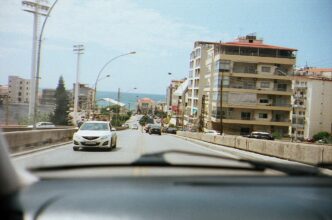
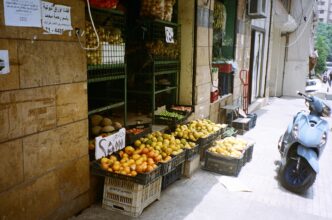
RK: To continue championing, empowering, and celebrating young people. To keep listening to what young people need and continuously evolving TPG into a space that young people feel even more comfortable and heard in! And in my personal practice, I hope to dedicate more time to expressing myself through lens-based media and using photography as the powerful tool it is whilst exploring my personal identity and heritage. I travelled back to Lebanon for the first time in 16 years and plan to return often and create a publication that documents my home community and my experience with cultural identity.
__________
Rawanne Koumaira (b.1999) is Curator, Youth Programmes at The Photographers’ Gallery and a London based Photographer of Lebanese descent. Rawanne champions and empowers young creatives to have a voice and be heard, leading on all youth and teachers’ programmes at the gallery. Within her own practice, Rawanne focuses on identity, community and exploring her heritage through lens-based media.
Jacqueline Ennis-Cole is in the early stages of a practice-led Ph.D. at the Slade School of Fine Art in London, where she is the recipient of an ROS Scholarship. Her Ph.D research is attending to expanding notions of the diaspora as an intergenerational site and experimental writing. Jacqueline will be curating a group exhibition at the Gallery at the Station from June 2023, the second iteration of her intersectional programme. She will also be showing her work at the Rook Lane Chapel Gallery, another highlight of the Photo/Frome Festival 2023.