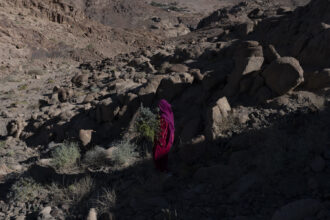
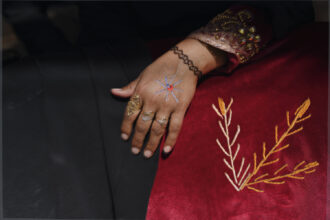
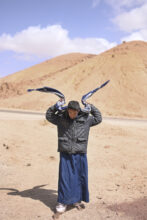
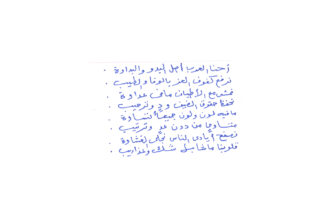
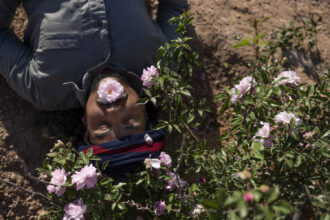
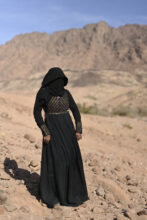
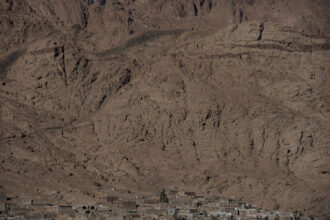
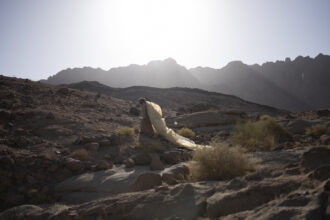
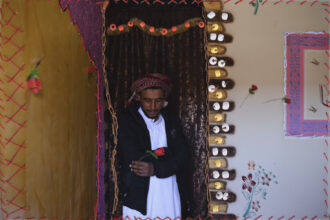
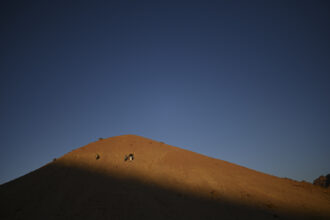
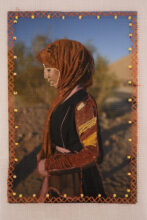
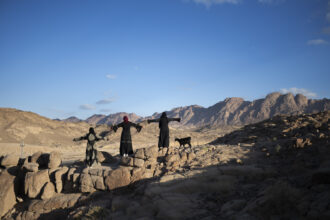
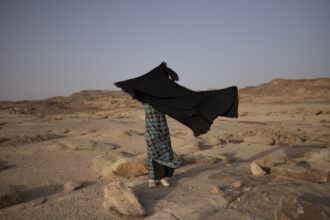
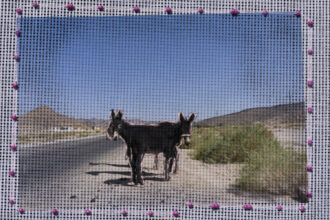
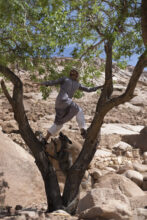
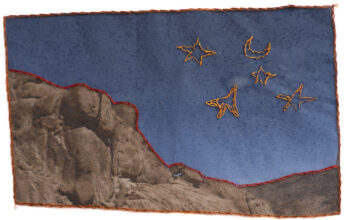
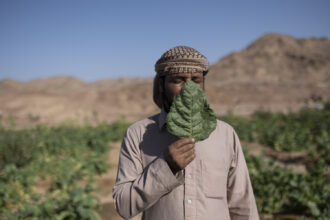
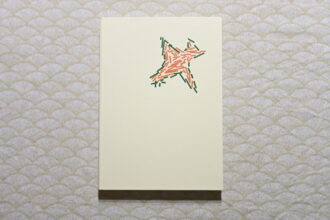
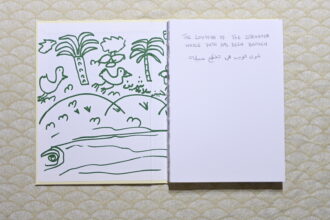
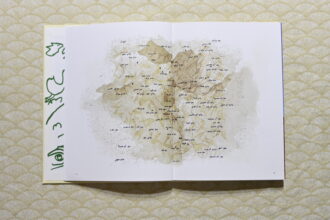
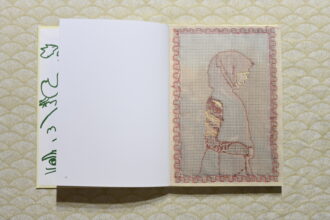
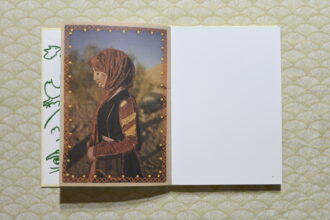
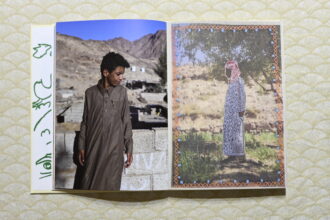
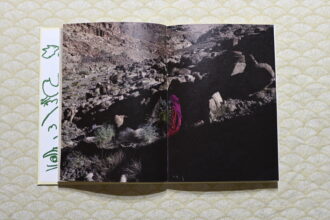
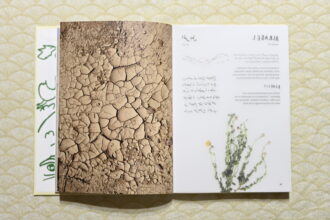
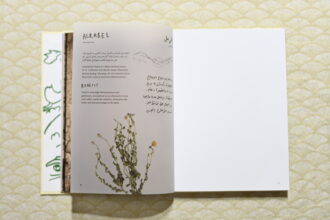
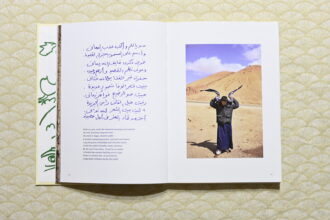
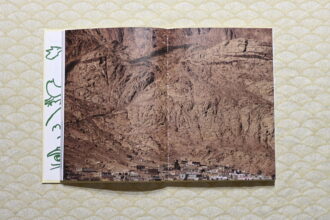
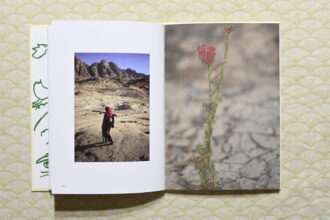
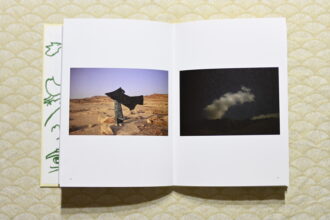
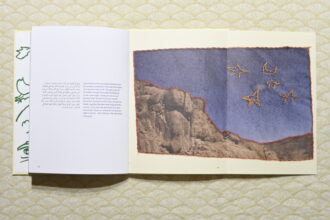
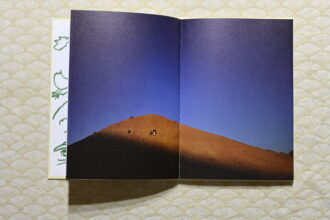
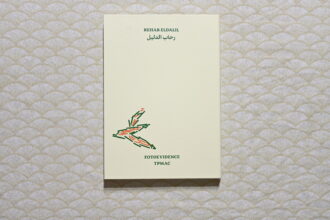
Rehab Eldalil’s award winning publication, The Longing Of The Stranger Whose Path Has Been Broken is the result of more than 10 years of work and evidences centuries of heritage and the importance of place. Within the 182 pages of this unique photobook, there are 44 colour images and 9 images with embroidery created in collaboration with Sinai Bedouin community members involved in the project, as well as images of native plants foraged in the region. Last summer Photomonitor had the pleasure of meeting Rehab in between her exhibitions and book launches; we continued the exchange during the following months, delving into the background of this important project.
__________
Christiane Monarchi: What were the initial ideas that lead you to begin the project which we now see in your book?
Rehab Eldalil: I’ve been brought up in a family whose majority of older generations, including my father, participated in the war against the Israeli occupation of Sinai. This has planted in me the love and respect for the Sinai land and its indigenous Bedouin community. We spent many of our holidays in Sinai listening to war stories and how precious this land is to get it back. Fast forward when I started university to study photography, I would go to Sinai specifically St. Catherine to practice. With the many stereotypes around Bedouins, I felt maybe my photography could change that narrative. This is when I started the initial steps for the project.
Photography became a way to connect further with the community which led to a life changing conversation with a tribe elder who mentioned my family name El Dalil as Bedouins. I went to Cairo with questions to my father about our family history and returned to Sinai with a drive to learn about the existing Bedouin community as a way to connect with my ancestors. The project transformed to be more than a story about me. It became a celebration of the Bedouin community and the indigenous experience as well as a space to explore the pure notion of belonging. That has happened throughout a long 10-year process in which I also have been transformed personally and professionally, opening a volunteer-run free clinic, and getting really involved within the community while developing my visual voice and expanding beyond photography to invite the community to be part of the creative process.
CM: Could you tell me a little bit about this clinic and building relationships with the community? It looks like you have intergenerational participation and collaboration here in your book.
RE: The dream to build a clinic and a community center in Gharba Valley, in the middle of the desert where there are some of the most underprivileged villages in St. Catherine, South Sinai, started in 2014. During that time my work primarily focused on The Longing project and I became very connected to the community and established close relationships with many, including Omar who was 16 years old then but looked like a 5 year old due to a medical condition he suffered from. At that time his condition started affecting his mobility, hindering him from walking to school and going back and forth to Cairo (6-hour drive) for treatment. He was the main inspiration for the clinic and community center. He lived 10 minutes away from the clinic. The clinic started operating in 2018 in collaboration with the community who donated land to build the clinic and it ran by volunteering doctors coming from all across Egypt. It provides free medical services to all Bedouin tribes and families around South Sinai. Omar died in 2021 and I consider the clinic as his legacy.
The clinic allowed me to expand beyond being a photographer, it allowed me to be human as I developed both the clinic and the photo-based project. But it also raised many ethical questions as I worried that with my position being the manager of the clinic, I would be pressuring the community to take part in the project. So I needed to be more conscious of when I can bring out my camera and when to let it go. I was encouraged to be more open about the project and think beyond my photographic gaze. This is when I started researching collaboration in visual storytelling and I invited the community to contribute with their mediums of embroidery and poetry. The project became a community project, just like the clinic. Engaging with women, men, elders and children. It was pushed to another level thanks to the community’s engagement. I wasn’t even thinking of making a book until I was asked by one of the community members to do so.
CM: I’m interested also in how you navigate your own integration into this community, and what that means to your photographic project. Quite possibly it may be hard to ever ‘finish’ a project like this, do you see this book as a part of a longer project to be explored more in future?
RE: I consider the book as the first chapter of the project, where I questioned the notion of belonging and collected the community’s input. The decision to publish the book came when the landscape of Sinai became compromised. In 2021, the Egyptian government launched a “new nation” project with the ambition to create a “new Dubai”. Natural valleys have been paved, historical monuments demolished and native communities have been displaced including the Bedouin community of South Sinai. Since the government’s intrusion, concrete has been creeping over the mountainous land and many families have become homeless. The natural and cultural state of the land and its keepers (the Bedouin community) is under threat. This is when I decided to publish my book, for its urgency to document life before the big change and as a form of protest amid an oppressive regime. The book was distributed to the many families in St. Catherine as a form of an alternative archive of the contemporary Bedouin identity. I’m hoping that maybe in 10 years or so I can recollect some of the book copies that include the community’s thoughts and diaries throughout this time. To reflect on the community’s life after the “big change” has occurred. But for now the project is being exhibited and talked about but not produced further. But my connection with the community has not stopped. Although I moved back full time to Cairo after the demolishing started, I’m still quite engaged with the community. It is a life-time friendship and companionship beyond the photographic project.
CM: Could you share with us your next plans for this body of work, and what you are working on next?
RE: For this body of work, I’m working to exhibit it in various forms. I was selected for the 2024 FOAM Talent which includes a massive group exhibition in Amsterdam where the project will be shown. I’m also planning to work on further exhibitions in the coming year.
I’ve recently started a photobook collective with my friend and Algerian photographer Abdo Shanan. The collective which is called aka TAWLA focuses on supporting, showcasing and producing photobooks, dummies and zines from the SWANA region. Our first publication is Tarweedeh which is a zine that features work by 9 photographers from Palestine. The zine was launched during Paris Photo and Polycopies as a tool for resistance and solidarity. Tarweedeh is planned to be distributed in further fairs as well including Cairo Art Book Fair in December.
I’m currently working on a long-term project that explores the notion of motherhood and maternal lineage through personal stories including my own as a mother of a 2 year old. The project connects personal stories with ongoing political, societal and environmental events. I’m also working on a project that expands from the Sinai Flora Field Guide.
CM: Thank you for sharing your thoughts, Rehab, and best wishes for your upcoming projects.
__________
The Longing Of The Stranger Whose Path Has Been Broken by Rehab Eldalil was published by FotoEvidence/ Trobades & Premis Mediterranis Albert Camus in 2022.
Follow these links for more information on Rehab Eldalil and Tarweedeh by aka TAWLA