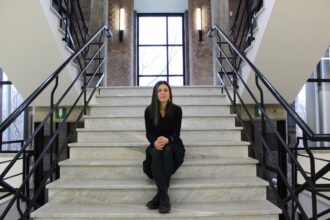
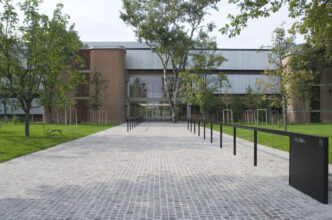
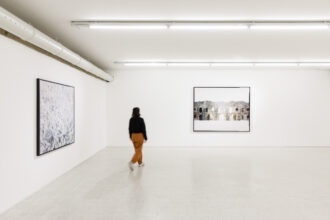

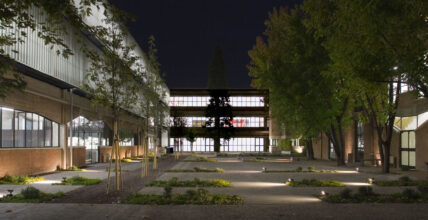
Since January 2021, Sara Piccinini has been the Director of the Collezione Maramotti in Reggio Emila, Italy. After graduating from the Universita’ di Bologna and soon after completion of an internship at the Peggy Guggenheim Collection in Venice, Piccinini joined Collezione Maramotti in 2007. Housed in the former Max Mara company industrial building, Collezione Maramotti is the private collection of the Maramotti family, who owns the Max Mara fashion company, and it offers a public program of exhibitions all year round as well as organising the prestigious Max Mara Art Prize for Women in collaboration with the Whitechapel Gallery in London. Below, Romina Provenzi spoke to Sara about her current work and how her role has evolved.
__________
RP: Was it a conscious decision for you to pursue a career in the arts?
SP: Luckily for me, my passion and my work coincide. I love the visual arts because they feed into my genuine curiosity for everything that is different from me as a device that serves well my type of sensitivity. Additionally I am passionate about contemporary art because it is about connecting with something that could potentially change you even when it doesn’t belong to you. Everything that helps to have a different vision of the world with a consequent impact on the world has fascinated me ever since I was at high school, and contemporary art in particular, which consciously led me to pursue a career in the visual arts.
RP: What are the challenges and the highlights in your role as Director of Collezione Maramotti?
SP: All aspects of my job are fantastic and challenging at the same time. Certainly one of the highlights has been the opportunity to develop close relations with some artists at the aim of getting to know their work in a time span and to evaluate the possibility to activate a project with them. Another positive aspect is that each exhibition in our space is the outcome of an entirely new project developed just for us. Undoubtedly, there are also challenges in my role as Director because implicitly the collectors are deeply involved with their private collection and they take the final decisions about what project we will go ahead with. Although others might see that challenge as an obstacle, I personally find it interesting and I treasure the fact that paradoxically the collection offers numerous possibilities of exploring and a unique freedom in a very fluid and familiar way. Specifically I am thrilled about continuously finding new ways of reading the collection, which is so rich of ideas if continuously seen from new angles. I believe that inevitably there are always new ways of reading a work!
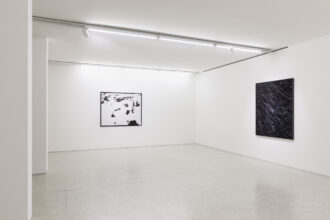
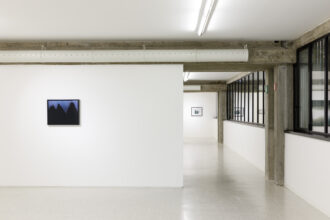
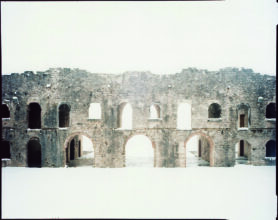
RP: Artist Carlo Valsecchi’s solo exhibition ‘Bellum’ is now on show at the Collezione Maramotti until the end of July. Could you tell us about it?
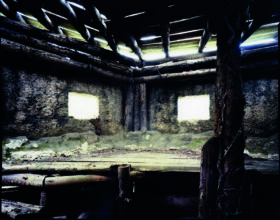
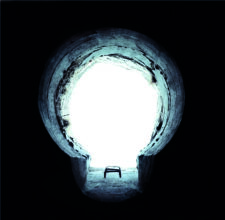
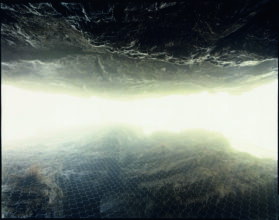
SP: Firstly we commission an exhibition only after we have built a reciprocal relation of trust and mutual understanding with the artist because asking an artist to begin a new project with us can be risky for both. We can’t foresee if a project will be successful until we reach the point when it is taking shape, although we support the artist with our know-how all along the way. In the case of Carlo Valsecchi, the collector Luigi Maramotti has appreciated his work for some time and therefore he supported our idea to invite the artist to work on a project for a new body of work based on the First World War’s locations and their landscapes in the mountains of the north east of Italy. The project took the artist to extremely remote places, where he had never been before, for shooting the images with his optical bench. Sometimes he went back to the locations more than once to find the right conditions for his images. After three years since the project started, Valsecchi created a series of 44 large photographic works, some of which are now in his solo show ‘Bellum’ at the Collezione Maramotti. We have been very pleased with the outcome of his project and his new works that go far beyond what we would have ever imagined.
RP: The Max Mara Art Prize for Women in collaboration with the Whitechapel Gallery is a prestigious award aimed at emerging UK based women artists. How important do you think it is to support emerging and mid career women artists?
SP: Definitively it is important to support emerging and mid career women artists. In particular the Max Max art prize embodies our vision in giving the very rare opportunity to an emerging artist to spend six month in residency in Italy so to concentrate on developing a new body of work during a phase in their career when support is most needed. In the end, the new body of work will be exhibited at the Whitechapel Gallery and at the Collezione Maramotti. For most of the awarded artists, it is wonderful and life changing to live such a super immersive experience with no deadlines in a totally different place, meeting new people, seeing different and unfamiliar landscapes and having not to worry about the logistics and financial aspects of it. There are no other distractions than your work, and there are no strings attached with the use of the time at disposal because it is entirely up to the artists to make the most effective use of it. It is a once in a lifetime chance to walk the unbeaten track and discover something totally unexpected, take risks and allow yourself to be surprised by your findings. For us at the Collezione Maramotti, it is interesting to follow the artist’s work evolution during the residency giving the length of time. In retrospective, we can say that the prize has opened up many opportunities for all the past winners. Definitely we can admit that all of us at Collezione Maramotti wished to live some of the experiences of the artists in residence at one point or another during their time with us!
__________
With thanks to Sara Piccinini, Director of Collezione Maramotti and Romina Provenzi for this interview. Carlo Valsecchi: Bellum continues at Collezione Maramotti until 31.07.2022