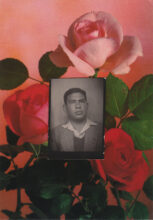
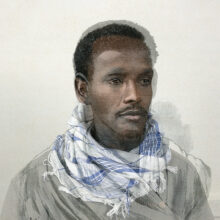
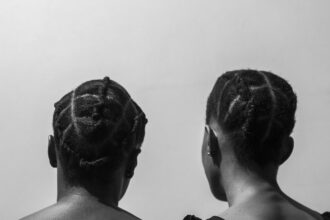
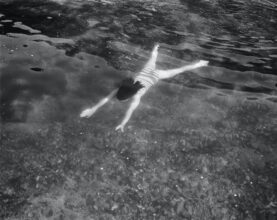
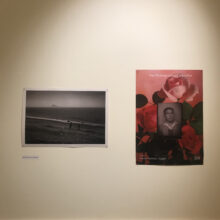
The Photographic Collective is an organisation founded in Spring 2020 with an idea that is long overdue and very welcome: to showcase photographic artists working in Africa. A simple proposition, and one which has created a groundswell of interest in the lens-based works that are shown online and in physical exhibitions, features and interviews, highlighting the diversity of photographic practice in Africa. Below, the collective’s founder, Julie Bonzon discusses the background to the formation of this organisation and its plans for the future.
__________
Christiane Monarchi: I enjoyed encountering your stand at the recent 1-54 Contemporary African Art Fair in London, exhibiting photographs from your organization, The Photography Collective. And that these engaging prints were there for exhibition, not sale, was intriguing. I’d like to learn more about your role in presenting these photographers to the public. Could we start at the beginning, and tell me a little bit about why you decided to start The Photography Collective?
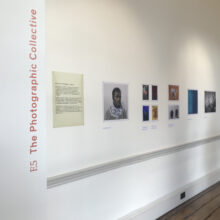
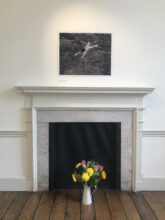
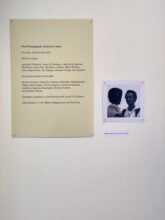
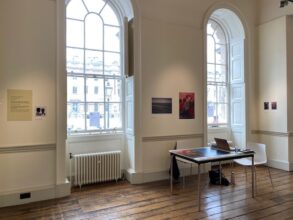
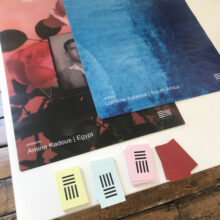
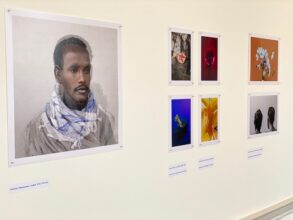
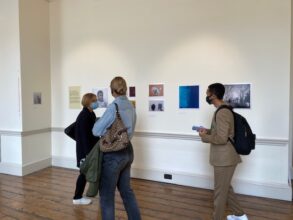
Julie Bonzon: Thank you so much for this. We were so grateful to have had an exhibition in the special project section of 1-54. It was our first public event off-line. The Photographic Collective was created during lockdown and officially launched in June 2020. I finished my PhD thesis last spring, writing about the young generation of South Africa photographers and I realised during my research and discussions with artists based in Johannesburg and Cape Town that most of the work I would see displayed in exhibitions and art fairs in Europe tended to showcase the same artists, either already established or represented by a gallery guiding them and pushing them forward. The Photographic Collective was born from a wish to fill this gap. I wanted to work collaboratively with artists based on the continent, especially those not currently represented by a gallery, and feature a selection of their work on a platform available to any individual in the world with a good Internet connection. The Photographic Collective was designed with the intention to provide content alternative to and complementing mainstream and established institutions. Our stand at 1-54, curated with artist Laura El-Tantawy, member of the board of The Photographic Collective and myself, offered us the opportunity to present the work of ten artists who wouldn’t necessarily have been seen in this context in usual circumstances.
CM: How have you chosen the artists you work with in the Collective? Are there criteria that you and your advisors have discussed?
JB: As mentioned, The Photographic Collective aims to present the work of African lens-based artists, living and working in Africa, especially the ones who are not currently represented by a gallery. From the start of the project, I wanted to collaborate with artists and photographers living and working on the continent, teaching and mentoring and actively engaged with the local art scene. I mobilised my network in South Africa, and the connections kept growing. The Photographic Collective is today composed of an advisory board including:
Jabulani Dhlamini (South Africa), Laura El-Tantawy (Egypt), Lebohang Kganye (South Africa), Ala Kheir (Sudan), Laila Hida (Morocco), Michelle Loukidis (South Africa), Mário Macilau (Mozambique), Uche Okpa-Iroha (Nigeria), Nii Obodai Provençal (Ghana and Mozambique), Léonard Pongo (Congo) and Rijasolo (Madagascar)
Each month, we exchange ideas, discuss the work of artists and decide whose photographs should be presented on the platform. The selection is subject to an anonymous vote by the advisory board and myself. Every vote counts. I present the work of two artists nominated every month on The Photographic Collective website and Instagram page. There are so many incredible artists working across Africa today, restricting the number allowed us to manage expectations. We aim to highlight the diversity of lens-based practices across the continent, and try to privilege personal projects reflecting a wide range of issues such as identity politics, memory, post-colonialism and gender, instead of commissions. So far, we have nominated the following artists:
Ibrahim Ahmed (Egypt), Nonzuzo Gxekwa (South Africa), Maheder Haileselassie (Ethiopia), Pippa Hetherington (South Africa), Godelive Kabena Kasangati (DRC), Amina Kadous (Egypt), Matt Kay (South Africa), Lorraine Kalassa (South Africa), Amilton Neves (Mozambique) and Etinosa Yvonne (Nigeria).
While Instagram offers the opportunity to present a relatively large overview of the artists’ work to the public, The Photographic Collective website adopts a different strategy, more in-depth and intimate, by featuring five images from one specific series and a text. So far, our audience consists primarily of our Instagram followers who have been fantastic in supporting the mission of The Photographic and sharing and reposting the work of the artists. Still, I would strongly encourage anyone interested in the work of a particular artist to look at the images from the website, and if possible, on a computer instead of a phone, to get a better sense of the texture, the contrasts, and the incredible nuances in each image.
CM: I am really enjoying the artistic dialogues on your online platform, putting artists in direct contact with each other for creative exchange in the ‘In Conversation’ section. It’s a really fresh approach to finding out more about the works. It could lead to further exchanges. Do you have more of these planned?
JB: Thank you so much. The idea behind these conversations was not only to contribute to discussions surrounding the medium of photography in an African context, but also connect practitioners based in different parts of the continents. I tried to pair artists sharing similar interests in their artistic practices, but engaging different geographical and cultural contexts and sometimes at various stages of their career, often a member of the advisory board and a nominated artist. The conversations happen on Zoom and are then transcribed and published on The Photographic Collective website. So far, discussions between artists Maheder Haileselassie (Ethiopia) and Jabulani Dhlamini (South Africa) and Ibrahim Ahmed and Laura El-Tantawy (Egypt) have been published on The Photographic Collective website. I will feature a conversation between artists Pippa Hetherington (South Africa) and Nii Obodai (Ghana, Mozambique). Moving forward, I would very much like to invite writers, musicians, painters and other cultural actors to participate in these discussions. I feel that conversations between artists are often underexplored and I consider these discussions as primary material for research and inspiration for artistic projects and collaborations. Considering the extremely challenging times we are currently living in, these conversations have created a network of solidarity between artists which appear more important than ever.
CM: What would you see as a possible trajectory for The Photography Collective, in 10 years’ time perhaps? And what are your near term plans for the organization?
JB: The Photographic Collective is composed of a curator and a growing team of artists and photographers and its evolution will certainly reflect everyone’s sensibilities and interests. I would love to continue the work we are currently doing, nominate more artists and lead more conversations between practitioners. We would like to organise mentorships and workshops and offer guidance to our nominated artists. I have focused on artists and photographers based in Africa so far, but I am not against the idea of inviting guest artists from other countries to join the discussion on what it means to be a lens-based artist today. The mission of The Photographic Collective is to challenge the status quo. Curating exhibition and presenting the work of our artists in fairs, festivals and museums will certainly have a profound impact on the way their work is seen and circulated. I would also be keen to lead collaborative projects with universities and art schools over the world. The work of the artists from The Photographic Collective deserves to be seen, researched and written about and become part of the mainstream and established art historical discourse. In 10 years’ time, I hope that The Photographic Collective will be considered as a key actor of the photography scene, a network and a research hub for artists, curators and academics.
__________
With thanks to Julie Bonzon for this interview.
For further viewing please visit The Photographic Collective’s website and Instagram