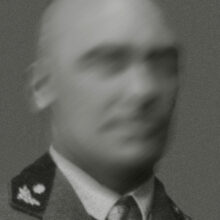
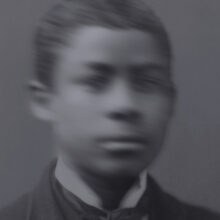
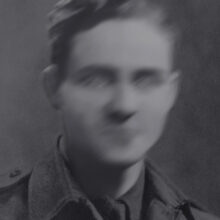
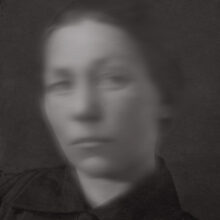
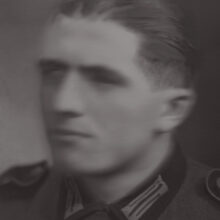
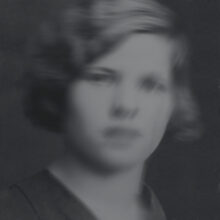
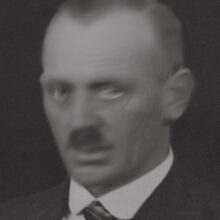
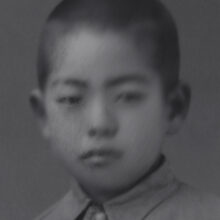
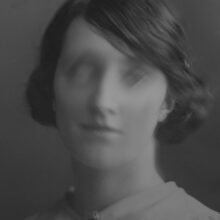
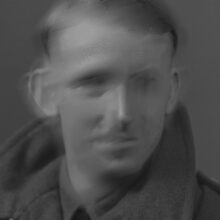
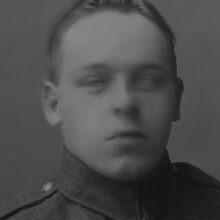
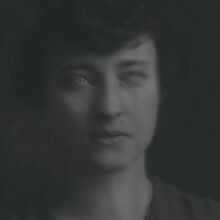
When these recent works by John Goto landed in Photomonitor’s inbox recently, here’s how the exploration unfolded.
____________
CM: Thank you for sharing your latest series with me, which comes, unusually, without a text or statement accompanying it. Is this a new approach in your work? I am honoured to be allowed the space to investigate it with you.
JG: Thank you, I appreciate your continued interest in my work.
As viewers I feel that we have become over-dependent on explanatory texts. In galleries you see visitors glance at a picture and then become glued to the accompanying text. I prefer to offer the viewer space and time to muse on the image, to imaginatively engage with it. In my earlier work regarding historical events, I was obliged to offer some contextualising notes, as I couldn’t expect the viewer to have an intimate knowledge of, for example, the Stalinist period in Russia, or iconoclasm during the English Reformation.
But this new work’s meaning is unspoken, and maybe unspeakable.
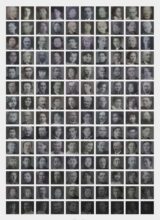
CM: From one sentence that you have shared, we learn that this work was composed of a multitude of unknown faces, during the first year of the Covid-19 pandemic. That’s interesting, as rather than a supposed grid of snapshots of victims of this pandemic, one quickly discovers visual cues of antique photographs. Who are these subjects, even if they are unknown to us?
JG: I hesitated to include even that information, but I didn’t want to be secretive, and in time it’s conceivable that the year 2020 might become uncoupled from the Covid-19 pandemic.
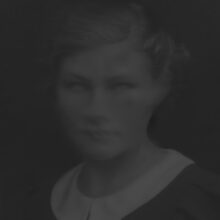
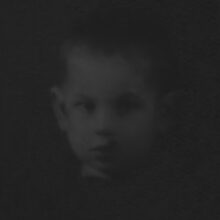
The series consists of 140 portraits, each identified by the date on which it was made during the year. There are few images from the first month or two, but then it gathers pace. Towards the year’s end the images become darker.
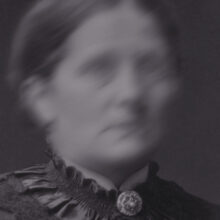
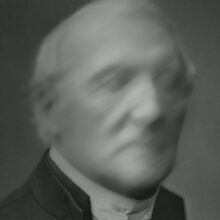
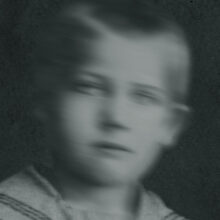
As you suggest, on close inspection there are clues as to the possible location and date of the portrait. Although the heads are cropped closely within the square format, we can pick up on details of clothing, hairstyle, jewellery etc. The period covered seems to stretch from the 1860s to 1945.
The pictures are all based on original photographs I have collected over the years. They come from across Europe, including Russia, and others from the Near East, Japan and North America. They were all abandoned and discarded, and the subjects are nameless.
But each photograph suggests a corporeal existence, an individual presenting themselves to the camera in an attempt to assert their being-ness, their fragile presence in this world. There is a common belief in the permanence of the photographic image – this is me, as I am. But sadly it is not the case for long, sooner or later the images will be lost or destroyed, and the subject forgotten.
The Ancient Egyptians believed that we die twice, once when the soul leaves the body, and finally with the death of the last person to speak our name. Maybe for us it is the last person to view our image.
CM: Closer inspection reveals manipulation in each image, blurring or even disfiguring some of the faces to make them less / unrecognisable. And perhaps a harmonisation of background. They are representative, and at the same time anonymised by your transformation. Could I ask why you have decided on this treatment for these subjects?
JG: Each portrait might be thought of as at a particular point en route to forgotten-ness. To begin with they are more ethereal, more ghostly. Later they regain some of the corporal presence, resembling disinterred corpses. I tried to always respect the individuality of the sitter whilst developing the artwork as a whole.
Because of the disparate sources, qualities and conditions of the original photographs, I had to impose a unifying look to the series, and this I did through cropping and background tonality. The material things depicted like clothes are left intact, and it is only the flesh that has been changed. Each image is printed with an individual colour cast.
CM: Taking a step back, why are you looking at portraiture now? It makes me think of a nostalgia for loved ones long gone, but also the lack of interpersonal contact right now taking even recent memories to a distant past.
JG: I see this work as related to my earlier Loss of Face series, which was comprised of photographs of defaced rood screen paintings.
The post-war generation to which I belong has been fortunate in not facing war, pestilence or famine directly, as have most previous generations. And you are right, I have had little social contact since March of last year due to the pandemic. My daily meetings with these faces from the past became both a chronometer of time spent, and a place of contemplation and dialogue. I feel that the changes and distortions I have made actually revive these individuals, bringing them back from the edge of oblivion and giving them new life, even if only as a lowly artwork.
John Goto
01/2021
__________
Further viewing:
Untitled 2020, complete series
http://www.johngoto.org.uk/untitled/index.htm