


Statement
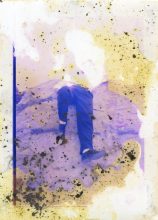
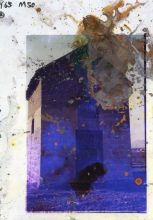
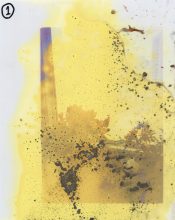
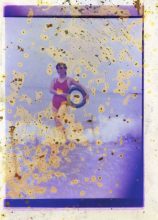
When faced with an archive of over 500,000 images of partially destroyed negatives of Beijing-based vernacularism spanning twenty years, intertwined with a tale of rescue and destruction, archived under Silvermine, the very idea of the ‘future’ comes into question.
Negatives salvaged from a predetermined Acid-induced demise, fill kilo rice bags and are rescued by the transference of finance, that of collectors in the city. Their ultimate lifespan is dramatically increased, as their resulting doom was to become a product of the traditional photographic compound, that of Silver Nitrate. This act of salvation is inherently linked to the notion of the future, a loss reverted, and something so intrinsically connected to the ideas that surround the Archive, the preservation of the object.
What is important, is this very idea of future varies between cultures. You have on one side, the ideology that histories are intrinsic in our imminent development, so are to be saved, sacred and showed; but another, where the progressiveness of a culture recycles histories into products that are used worldwide. These differences are paramount for creating the foundations of an intervention, the re-visioning of this type of material, alongside the contexts in which this work has already been digested and exhibited.
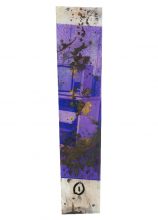
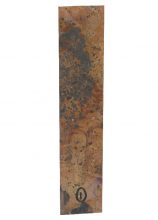
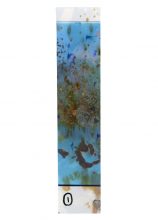
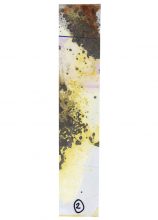
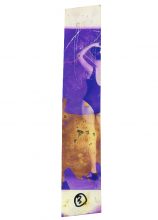
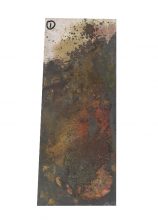
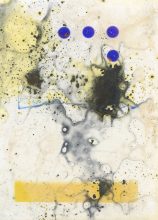
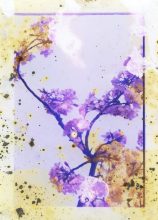
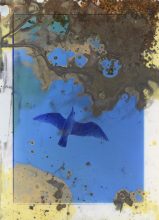
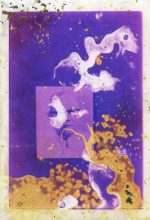
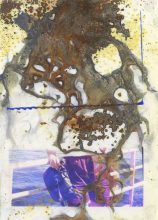
The tactile, tangible quality of the source material is juxtaposed against these ideas, as the interference takes on a new role. Images ultimately destined for ruin are now taken to the threshold of disappearance, frozen between stages, part rescued and part destroyed by the very compounds used and created. This binding of the two processes creates a new space for interpretation, elevating the simplicity of the process, the final product, but furthermore echoing the spontaneous, uncontrollable nature of the damaged negatives, where gradual matter grows over the imagery.
Patience, pause and prolonged vision resonate over a reaction as you start the process of taming the organic, a notion set for failure. An insight into the once commonly used art of black magic, where alchemy and photography were at one with one another and Science played an important part. A granulated compound that has worked its way into the paper, blackened by sunlight, but has magically drawn back parts of the image lost through the Acid bleaching, a motion to a profound tale of process and the post photographic.
There is a wonderful temporality to each image produced. The pieces twist, turn and evolve in their own unstable manner, until they choose when is the time to rest in existence, ultimately in their own demise.
This intervention speaks of the resurrection and destruction of photography. The idea that our understanding and requirements of the medium are changing, that through watching more closely, losing control, we can discover and honor both the historical and the contemporary, the anthropological and the already digested, offering up new ways to see the seen, understanding the understood and blurring the boundaries of what we want the medium to be.
Biography
Melinda Gibson & Thomas Sauvin have been in collaboration and this year will see the debut of their series of work entitled Lunar Caustic, a project two years in the making.
Melinda Gibson was born 1985 in the UK, and currently lives and works in London. She studied for a BA (Hons) in Photography at the London College of Communication and is a HPL Lecturer in Photography at Nottingham Trent University. Melinda was nominated for the Foam Paul Huf Award 2014, selected as 1 of the Jury members for the Unseen Dummy Award 2013, and winner of the Foam Talent Call and Magenta Foundation Award in 2010.
Gibson exhibits and is published internationally, selected shows include: The Constructed View: UK Photography Now at Dong Gang Museum of Photography, South Korea, Houston Centre of Photography, Centro del arte Contemporáneo de Cadiz Spain, Perth Institute of Contemporary Art, ACP in Sydney, Flowers Gallery, Quad Gallery as well as exhibitions in Pittsburg, Hamburg, Turku Finland and Amsterdam. Selected publications include, Nowness, AnOther Magazine, BJP, Objektiv, MB! by Mercedes Benz, Foam Magazine, Harpers Bazaar, AOP, Independent, with current publications including, Aperture’s new title, The Photographer’s Playbook and Magenta Foundation’s 10th Anniversary Top 100 Photographers.
Melinda has published two books, The Photograph As Contemporary Art which was awarded Best Books of 2012 by Photoeye and Miss Titus Becomes A Regular Army Mac. Both publications are in collections of The National Art Library at the V&A Museum, Foam Photography Museum as well as numerous Private Collections worldwide and the Louis Vuitton New Bond Street Library in London exclusively represent the Special Editions.
Thomas Sauvin is a French photography collector and editor who lives in Beijing. Since 2006 he has worked as a consultant for the UK-based Archive of Modern Conflict (AMC) for whom he collects Chinese work, from contemporary art photography to period publications and anonymous photography. A glimpse into this collection is presented in the photobook Happy Tonite published by AMC in 2010.
Sauvin has participated in exhibitions including Photographic Oddities from the AMC, Caochangdi Photo Festival, Beijing (2012), and more recently his project Beijing Silvermine has been presented by Singapore International Photo Festival (2012); FORMAT Photo Festival, Derby, UK (2013); The Salt Yard, Hong Kong (2013); and Lianzhou Foto Festival where it received New Photography Award of the Year (2013), 4A Center for Contemporary Asian Art, Sydney (2014), Museum of Contemporary Photography, Chicago (2014).
Sauvin’s Silvermine, a limited edition five-album set of photographs from his archive, was shortlisted for the Paris Photo Aperture Foundation First Photobook Award 2013 and was selected by renowned English photographer Martin Parr as one of the Best Photobooks of the Year for The British Journal of Photography.
———-
Notes:
Lunar Caustic debut exhibition Beijing Silvermine will be showing at Galerie Paris-Beijing – Brussels from 20th September – 1st November 2014.
Please visit these sites for further reading and images from Melinda Gibson and Thomas Sauvin.