In the liminal space where art meets science exists a space for exploration where the concept of the Garden of Eden serves as a profound metaphor to tell a story as ancient as the genesis of life intertwined with the creative process itself. This story is about light, shadow, profound beauty, and relentless chaos. In this primordial garden, where every leaf trembles with the whisper of eternity, lies a profound analogy for the human odyssey— a journey marked by the ceaseless pursuit of understanding, articulation, and expression.
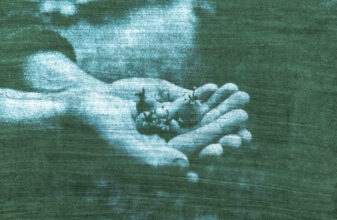
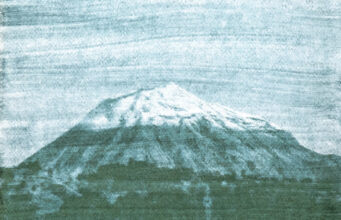
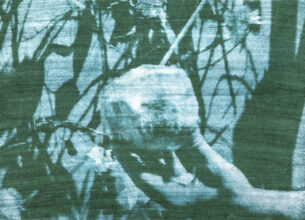
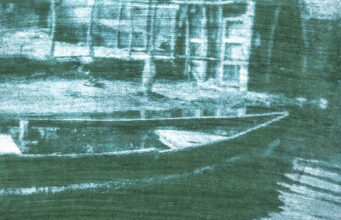
Baños de Agua Santa, Ecuador is a place where the world divides into two hemispheres, where life unfolds amidst an ethereal sonata of creation. This sacred land became the foundation of “The Garden of Eden: Solar Equator”, a photo series made using a research-based, experimental anthotype process that seeks to illuminate the ethereal beauty and complexity of cyanobacteria showcasing a sustainable alternative to conventional photographic methods fraught with environmental hazards.
In the shadowy corners of my Bogotá study, surrounded by ancient texts and photographs echoing the past, I drew inspiration where shelves groan under the weight of obscure tomes and faded photographs whisper tales of times long past. It is here, amidst the dusty relics of forgotten knowledge, that I seek inspiration for my next artistic endeavor.
Central to this series are cyanobacteria — single-celled organisms ubiquitous in aquatic environments yet often overlooked despite their historical significance. These primordial species, which are frequently neglected in the great narrative of life, are not only objects of scientific fascination but also of significant artistic and existential value. This significance is significantly greater than its simplicity.
Cyanobacteria are regarded as the architects of life, having played a critical role during the Great Oxygenation Event approximately 2.4 billion years ago by transforming Earth’s anoxic atmosphere into an oxygen-rich environment, paving the way for complex life forms.
Cyanobacteria convert carbon dioxide and water into glucose and oxygen via photosynthesis. This method highlights not just the biological success of these creatures, but also their significance as a linchpin in the Earth’s ecological and atmospheric evolution. Their presence, then, is a monument to the power of light as both a literal and figurative source of life, an idea that connects strongly with the thematic essence of “The Garden of Eden: Solar Equator.” Cyanobacteria are lowly organisms with secrets as ancient as time itself. I’ve long been captivated by their ability to harness light and convert it into energy through photosynthesis. But it’s not their scientific relevance that intrigues me; it’s their intrinsic connection to the very essence of life and creation.
An inspiration is Anna Atkins, a pioneer in both botany and photography. Her major work, “Photographs of British Algae: Cyanotype Impressions,” captures the subtle nuances of maritime algae using ‘new’ cyanotype printing techniques.
Atkins’ cyanotypes were more than just scientific records to me; they were a glimpse of the sublime—a depiction of nature’s craftsmanship in its purest form. Inspired, I set out on a journey to capture the essence of cyanobacteria through my artistic vision. I engaged myself in the world of future materials, analog photography, and alternative processes to capture the elusive beauty of these small beings.
In a similar spirit, “The Garden of Eden: Solar Equator,” is a living canvas on which the story of creation unfolds, using the anthotype process, a technology that exploits the photosensitive qualities of natural pigments found in plants and, by extension, cyanobacteria. This process entails coating paper with a photosensitive solution made from Cyanobacteria (microalgae biomass) to extract their unearthly blue-green hues reminiscent of ancient seas, which, when exposed to sunlight, undergo a chemical reaction that creates hauntingly beautiful visuals. This process not only mimics the photosynthetic activity of Cyanobacteria, but it also acts as a metaphor for light’s transformational power—both in the context of life’s birth and the production of art.
With these images, I invite viewers on a multifaceted trip that includes scientific discovery, artistic innovation, and philosophical reflection. Cyanobacteria provide us with a look into the primordial forces that fashioned the world we know today—a world in which light acts as the eternal architect of life and beauty. In this garden, each anthotype print is a leaf etched with creation’s secrets, a quiet monument to the exquisite interplay of light, life, and the search for existential significance.
By drawing comparisons between the human state and the microbiological world of cyanobacteria, the series invites contemplation on the interdependence of all living forms. In creating this Garden, I set out on a quest not just to explore the outside world, but also to go into the depths of the human soul, to discover the spiritual gardens that exist within. This series, then, invites the audience to begin on their journey of discovery, to explore the landscapes of their own inner worlds, and to find the Eden that awaits them within.
In the end, this project is more than a collection of images; it is a declaration of faith in the power of art to heal, reveal, and unify. It is a tribute to the beauty of the earth, the tenacity of nature, and the enduring spirit of humanity. Through this work, I offer a vision of hope, a reminder that even in the face of chaos and destruction, the garden remains, eternal and untouched, a symbol of what we can aspire to be.
The journey of creating these works has been one of profound transformation, a voyage that has led me through the realms of light and shadow, into the heart of creation itself. It has been a pilgrimage of the soul, a journey that continues to unfold with each passing moment. In this garden of light, shadow, and color, I have found not just an artistic vision but a way of seeing the world, a lens through which the mysteries of existence are revealed in all their intricate beauty.
This is my Garden of Eden.
__________
Alejandra Orjuela Caicedo (1995) – Photographer, Visual Artist & Filmmaker, I am an artist and photographer from Bogotá, Colombia with a background in filmmaking. My artistic practice is rooted in research and experimental practices; I work with biobased future materials and alternative processes using analog mediums depicting changing territories. My practices stand at the crossroads of art, science, and technology, highlighting social issues such as climate change and migration. My work has been exhibited and published in festivals, venues, and platforms such as Noorderlicht Photography Festival (Netherlands) Jakarta International Photography Festival (Indonesia) Photoworks (United Kingdom), Analog Cookbook (USA), Der Greif (Germany), Future Materials Bank (Amsterdam) FINI (Mexico).